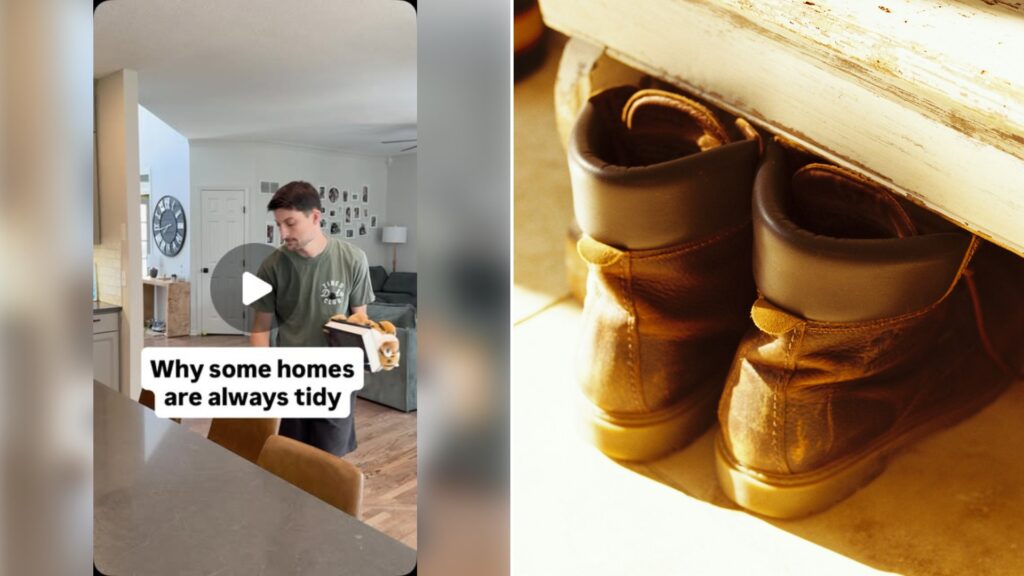
It started with a soccer ball. “Yesterday around 6:30, Ryker was showing me a trick and ended up kicking his soccer ball into the neighbor’s backyard,” @madisonsisson22 writes, laying out the sequence of a day that turned into one of the scariest few minutes of her life.
She was cleaning the garage when her younger son, Rhett, wanted to walk with his older brother to retrieve the ball. It seemed like no big deal — Ryker had already been keeping an eye on Rhett that day, the way older siblings often do. After Ryker repeatedly told Rhett no and kept walking ahead, Rhett got upset, so she told him to go, watching him head toward the corner. She heard him yell, “Make it?!” and Rhett answer, “YEAH!” — and walked back to the garage, satisfied.

Looking back at it now, she says plainly: “I should have said Ryker stop and wait for your brother.” Rhett jogged to catch up, and she assumed he was close behind his brother. Instead, as Ryker made his way to the front door, Rhett kept walking past the house.
After about four minutes felt too long, she walked to the sidewalk. She could see Ryker. She couldn’t see Rhett. “When I asked him where he was he said, ‘I don’t know, he never came with me?'” That’s when panic set in. “I went full panic and started running,” she writes. She and Ryker searched driveways and streets, yelling his name, before she turned to her older son and said, “RUN — FIND HIM! I’m getting the car.” She ran home, checked the garage, grabbed her keys and phone, and called 911.
“It was the scariest few minutes of my life,” she writes. She stopped every neighbor she passed while driving, asking if anyone had seen her baby boy. Nobody had. Dispatch asked what he was wearing, how long he’d been missing, and whether he’d go with a stranger — which is where the fear sharpened into something worse. “He really has no fear and no stranger danger,” she admits. “As much as I’ve tried to instill it into him, he’s my social butterfly.” At four years old, unable to run far or fast, she assumed the only explanation left was that someone had taken him.
Then, in the distance, she saw his silhouette — walking with Ryker. A woman had apparently stopped to try to find out where he lived, but Rhett wouldn’t answer her and kept walking. He later explained why: “He said he didn’t want to talk to her because he didn’t know her.” When he spotted Ryker, he was proud he’d made it around the back of the neighborhood on his own. He wasn’t prepared for how his mom looked when she reached him. “I was a mess,” she writes. “I freaked him out a bit when he saw me bawling.”
What Every Parent Can Take From a Few Minutes That Felt Like Forever
What makes @madisonsisson22’s account so widely resonant isn’t just the fear — it’s how ordinary the setup was. Nothing about this moment looked reckless from the outside: two brothers, one already tasked with watching the other, a short walk to retrieve a ball, in what she describes as a familiar, low-risk routine. Child safety experts consistently point out that most “lost child” scares happen in exactly this kind of situation — not a dramatic lapse in supervision, but a few seconds where a child moves out of sight faster than expected, in a spot a parent had every reason to trust.
Her afterthought — “I should have said Ryker stop and wait for your brother” — is a genuinely useful, concrete takeaway for other parents managing kids of different ages and independence levels: a sibling walking ahead, even with good intentions, can unintentionally leave a younger child alone faster than anyone realizes. Safety experts also point to the value she stumbled into afterward: spending the rest of the day practicing his phone number and reviewing what to do if he’s ever lost again, rather than treating the scare as a one-time event to simply move past.
Her son’s lack of stranger danger — friendly, trusting, happy to wander toward anyone — is common in kids his age and is exactly why safety experts recommend teaching specific, actionable rules rather than vague warnings: knowing a parent’s phone number, knowing to look for a mom with kids or a store employee if lost, and understanding that it’s okay to say no to an unfamiliar adult, even a well-meaning one trying to help.
Her closing advice is the line worth remembering most: “Even if you think you’re being safe, do not let them out of your sight until you know for certain they are safe, where they are supposed to be.” It’s not a criticism aimed at other parents — it’s a hard-won reminder from someone who lived through exactly how fast “a few minutes” can turn into the scariest ones of your life.
You can watch the full video and follow @madisonsisson22 on TikTok for more.