Roughly 41.6 percent of Americans are now nearsighted, up from about 25 percent in 1971, according to the National Eye Institute, and eye doctors are watching a growing share of that shift show up in elementary school classrooms rather than waiting until the teenage years. Global projections cited by the same federal research office suggest nearly half the world’s population could be myopic by 2050. Screens get most of the public blame for the trend, and they’re part of it, but researchers studying the condition keep landing on a second factor that has quietly changed just as much over the same fifty years: how much time kids actually spend outside. The pattern eye doctors are now describing centers less on what’s on a screen and more on what isn’t happening anywhere else during a typical school day.
Outdoor Time Is the Variable Researchers Keep Coming Back To
A long-running, NEI-funded study known as CLEERE found that children who spent more time outdoors had a meaningfully smaller chance of developing myopia in the first place, independent of how much near-work or screen time they were also doing, according to NEI’s own summary of the research. The effect appears to be preventive rather than corrective: once a child already has myopia, more time outside doesn’t reverse it or slow how fast it progresses. That distinction matters for timing, since it means the outdoor exposure has to happen before nearsightedness sets in to do much good. Taiwan tested this directly by mandating roughly two hours of outdoor recess time in schools starting in 2010, and researchers tracking the policy saw measurable improvement in students’ vision outcomes afterward, a result the NEI cites as some of the clearest real-world evidence for the outdoor-time theory.
Where Screens Fit Into the Actual Research
Screen time hasn’t been cleared of a role in rising myopia rates. A meta-analysis of multiple studies on children and adolescents found a measurable association between screen exposure and myopia risk, published in the peer-reviewed literature and summarized on the National Library of Medicine’s research archive. But researchers studying both variables together increasingly describe screens as one part of a larger shift in how children spend their unstructured hours, rather than the sole driver. A kid replacing an hour of screen time with an hour of a different indoor, close-focus activity, like reading at a desk, wouldn’t necessarily see the same protective benefit that outdoor time provides. The outdoor exposure itself, likely tied to natural light levels the eye doesn’t get indoors, appears to be doing something screens simply don’t undo by their absence alone.
When Eye Doctors Now Recommend the First Screening
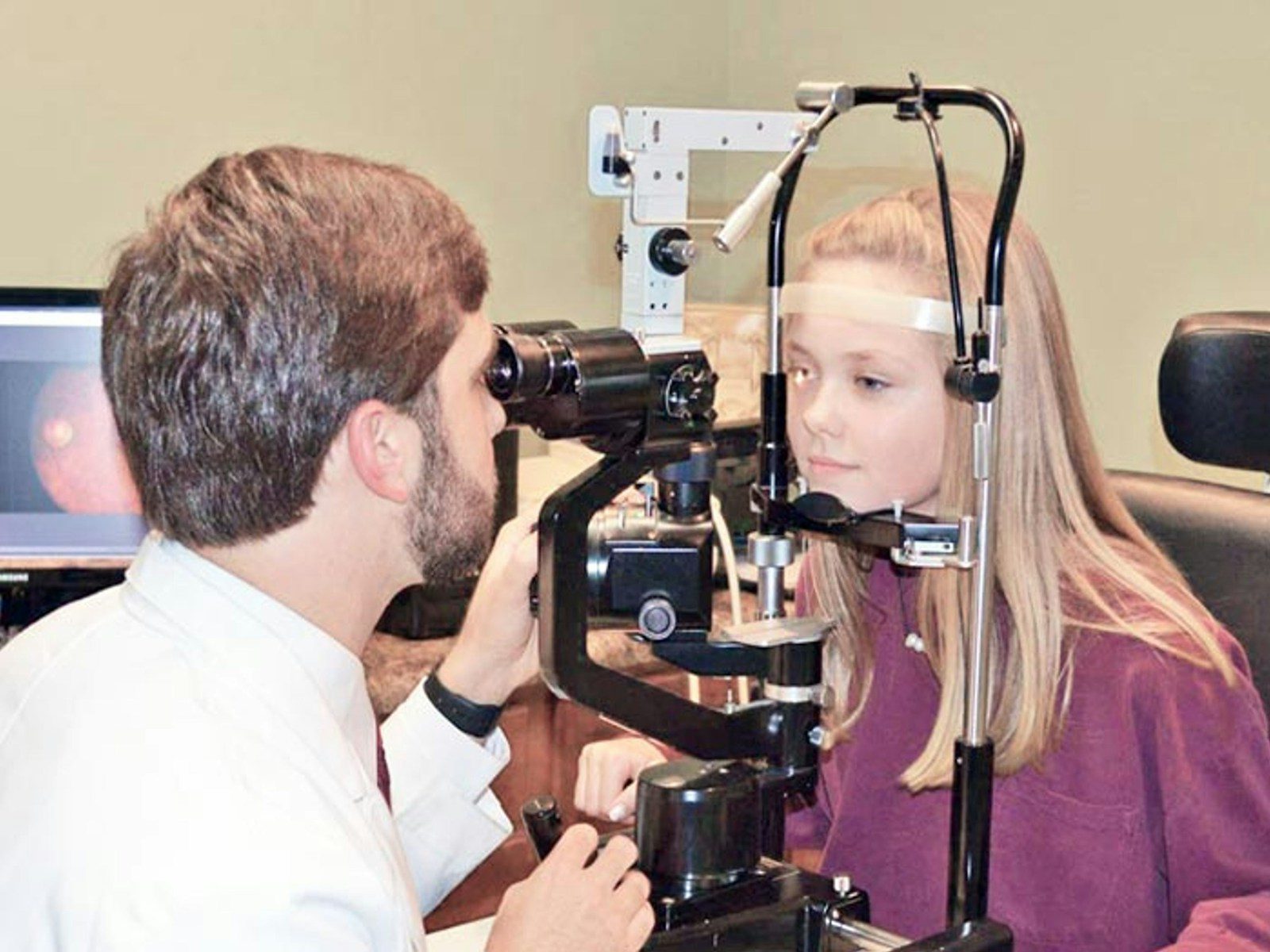
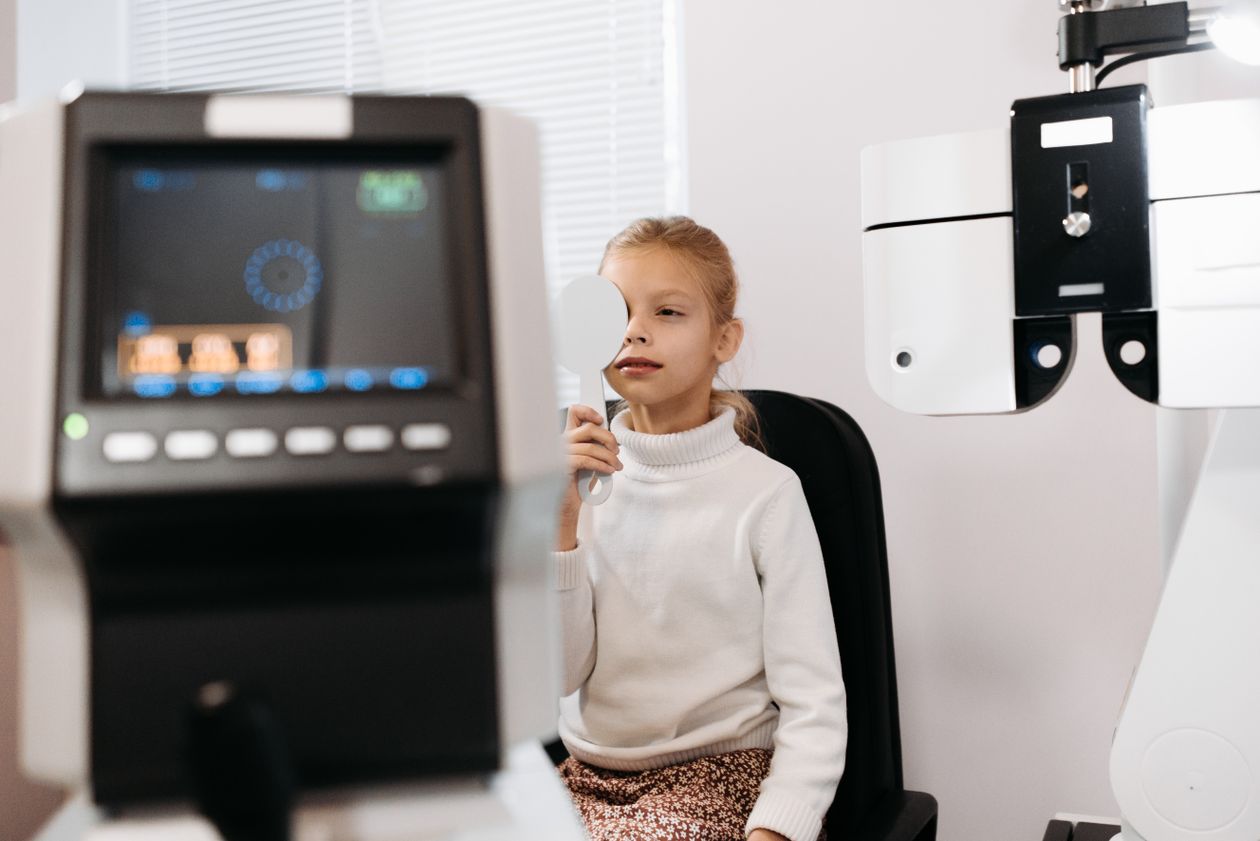
Because myopia is increasingly showing up earlier, pediatric vision screening now starts well before a child can read an eye chart. The American Academy of Pediatrics recommends eye checks beginning at birth, red-reflex and alignment testing through the first year, automated photoscreening tools introduced around ages 1 to 2, and formal visual-acuity screening at ages 4 and 5, with some cooperative 3-year-olds screened as well, according to guidance published on the Academy’s HealthyChildren.org patient resource. Catching myopia at that stage, before a child has spent years struggling to see the board without knowing anything looks different, gives both glasses and outdoor-time interventions more room to work before nearsightedness has fully progressed.
The generation of kids growing up more nearsighted than their parents were is spending measurably less time outside, alongside more time on screens, and that outdoor gap may be doing more of the damage than the phone in their hand.
Why the Numbers Look So Different in Parts of Asia
The NEI’s research summary also points to East and Southeast Asia, where roughly 20 percent of high school graduates now have high myopia, a more severe form of the condition tied to greater lifetime risk of retinal detachment, glaucoma, and early cataracts. In the U.S., about 4 percent of the population falls into that higher-risk category, still notable but a fraction of the rate seen in countries with historically longer school days and less unstructured outdoor time built into the academic calendar. Researchers studying the disparity treat it less as a genetic difference and more as a natural experiment in how much time children across different school systems actually spend outside before their eyes finish developing.
What a Family Can Actually Do With This
None of the research suggests screens need to disappear from a child’s day entirely, and no study has found a magic number of outdoor minutes that guarantees protection. What the evidence does support is treating outdoor time as its own scheduled priority rather than whatever is left over after homework and screen time, particularly before age eight or nine, when the CLEERE data suggests the preventive window is most active. Pairing that with on-schedule vision screenings, rather than waiting for a child to mention blurry vision on their own, gives a family the best shot at catching myopia early enough that glasses and daylight exposure can still do meaningful work together.