
When a sightseeing helicopter suddenly lost power and dropped roughly 500 feet toward the Utah mountainside, a dad’s voice cut through the chaos. He focused on one job: keeping his teenage daughter calm as metal screamed and the ground rushed up. They both survived, but in the stunned quiet after impact, her first words were a dazed, almost childlike check on the man who had just talked her through their worst fear: “Are you alive?”
What happened in those seconds, and in the raw hours that followed, has turned one family’s nightmare into a story about instinct, faith and the strange clarity that shows up when everything is falling apart. Their account, shared in interviews and family updates, sketches out a crash that should have killed everyone on board, yet somehow did not.
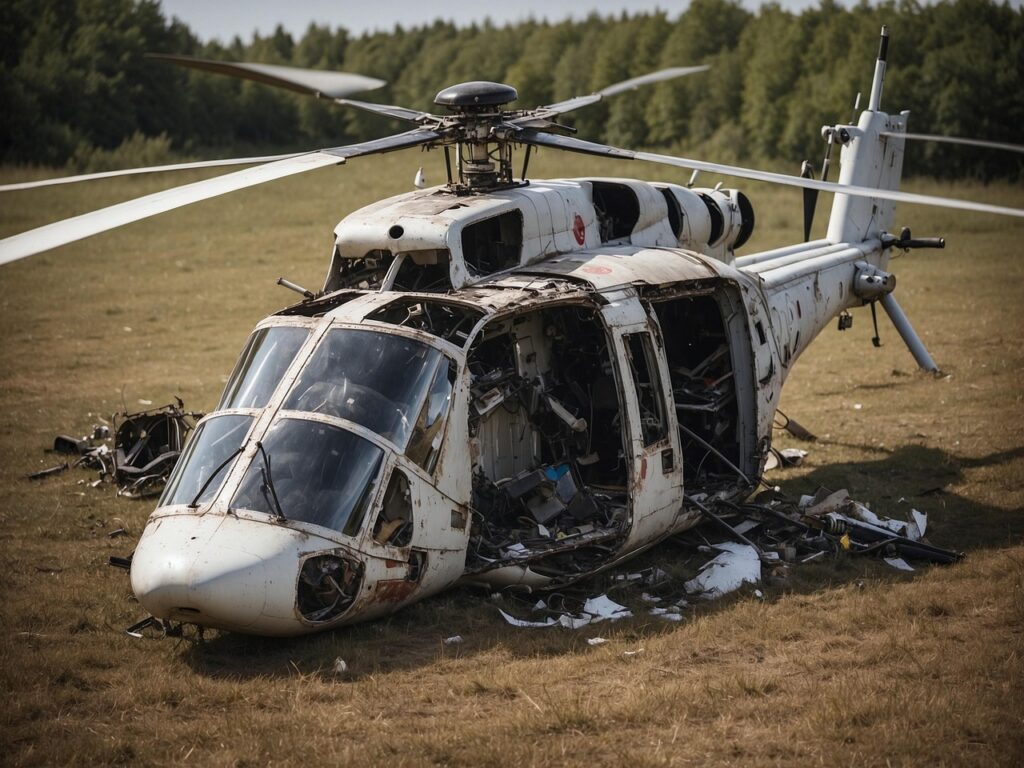
The Flight That Was Supposed To Be Pure Fun
For the family climbing into the helicopter that day in Utah, the mood at the landing site was light, almost giddy. They were in the Wasatch Mountains, surrounded by snow and big sky, and the plan was simple: a quick scenic flight, some photos, a memory to file under “best days,” not “worst.” Relatives later described how, just before liftoff, there was that familiar mix of nerves and excitement, the kind that comes with buckling into something loud and powerful that promises a better view of the world.
That sense of adventure is part of what drew them to the chopper in the first place, according to family members who talked about the build up to the ride and the moment the rotors started to spin. One report described how, right before takeoff, there was a buzz of anticipation at the pad in the mountains outside SALT LAKE CITY, the kind of preflight chatter that makes it hard to imagine how quickly things can go sideways.
When The Helicopter Started To Fall
Once the helicopter was in the air, the first minutes felt normal. Then something went wrong. The aircraft began to drop, not in a gentle descent but in a sudden, sickening plunge that ripped away any illusion of control. Passengers later described the moment as a free fall, a vertical drop that left their stomachs behind and turned the windows into a blur of rock and snow.
Investigators are still sorting out exactly what failed, and relatives have been careful to say that the cause of what happened in the Wasatch range is still being examined. What is clear from their accounts is that the helicopter lost altitude fast, dropping nearly 500 feet toward the ground. In that kind of fall, there is no time to process, only to react.
A Dad’s Voice In The Middle Of Free Fall
Inside the cabin, one reaction cut through the panic. The father, strapped in next to his teenage daughter, shifted into a kind of calm that his family says is just who he is. Relatives later said that “Something you got to know about my dad is he’s a rock,” a line that has become shorthand for the way he handled those seconds. Instead of screaming, he started coaching his daughter through what was happening, trying to steady her breathing and her mind as the helicopter dropped.
Witnesses to the audio and the family’s retelling say that Hearing him talk to her, keeping his tone level and his words simple, made the difference between total terror and a fragile sense of control. One family member described how he kept telling her to stay calm, to hold on, to focus on his voice, even as the aircraft plunged. That steady presence, captured in the way relatives talk about Something and Hearing him, is part of why they are still here to talk about it.
The Impact And A Daughter’s First Question
When the helicopter finally hit the ground, the force of the crash was brutal. Metal crumpled, glass shattered and bodies were thrown against harnesses and seats. In the first seconds after impact, there was that eerie, ringing silence that follows a violent collision, the kind that makes it hard to tell if the sounds in your ears are real or just your own pulse trying to catch up.
Out of that silence came a small, stunned voice. The daughter, dazed and hurt, turned to the man who had just talked her through the fall and asked the question that would later anchor the family’s retelling: “Are you alive?” According to one account, the Dad had been knocked around hard enough that she could not immediately tell if he was conscious. The detail surfaced in a narrative that described how, After the crash, she reached for him and blurted out that raw, unfiltered line, “Are you alive?”, a moment that has been repeated in coverage of the Dad, the seconds right After impact and her stunned “Are” you alive check.
“It Really Is My Worst Nightmare”
For relatives who were not on board, hearing what happened has been its own kind of trauma. One of the most vivid reactions came from Baylee Demars of the family, who has spoken publicly about how close she came to losing both her dad and her sister in the same instant. She did not sugarcoat it, calling the crash “my worst nightmare,” a phrase that lands with the blunt force of someone who has spent days replaying what could have happened.
Baylee Demars of the family has described the moment she learned about the crash and the long hours that followed as a blur of phone calls, hospital updates and quiet, private panic. In one interview, she repeated that line about it really being her worst nightmare, underscoring how the story is not just about the people inside the helicopter but also about the ones waiting outside it. Her words were captured in coverage by Sam Gillette and Sam Gillet, who both highlighted how that nightmare framing has stuck with the family.
Why The Family Calls It A Miracle
Given the physics of a helicopter dropping nearly 500 feet into rugged terrain, the family has not hesitated to use a word that some people reserve for church. They call it a miracle. From their perspective, the fact that everyone on board survived, and that help reached them as quickly as it did, defies the odds. They talk about angles of impact, the way the helicopter came down, and the presence of people with medical training at exactly the right moment as pieces of something bigger than luck.
Relatives have pointed out that one of the first people to reach the wreckage happened to be a nurse, a detail that has become part of their sense that something beyond them was at work. In retellings shared with local reporters, they have described the survival of every passenger as “a miracle” and have tied that language to the way the aircraft hit the ground and the chain of responders who showed up in the minutes after. That framing shows up repeatedly in accounts that trace the crash from the initial excitement of Getting on board in the mountains near Trinity Audio country outside SALT LAKE CITY and in follow up pieces that quote family members talking about how it “really is my worst nightmare.”
Inside The Cabin: What Everyone Was Thinking
While the father was focused on his daughter, others in the helicopter were locked in their own mental loops. One relative later summed up what was going through his mind in a single line: “You’re thinking about people, your family, your friends, your loved ones.” That quote has become a kind of shorthand for the way time stretches in a crisis, how a few seconds of falling can hold entire lifetimes of memory and regret.
That same family member said the dad expressed that those were the thoughts running through his head as the helicopter dropped, even while he was trying to sound steady for his daughter. It is a detail that shows how split second survival mode can sit right next to a flood of emotion. The line about You thinking of your people has been cited in coverage that also notes how the cause of what went wrong continues to be investigated, a reminder that the emotional story is unfolding alongside a technical one about what failed in the air, as described in one account of what You think about when you are not sure you will survive.
From Worst Nightmare To Long Recovery
Surviving the impact was only the start. The injuries, surgeries and rehab that followed have turned the family’s life into a long, grinding second act to the crash. Relatives have talked about broken bones, internal injuries and the slow process of learning to walk and move again. The dad and his daughter are both facing months of recovery, and the emotional fallout is layered on top of the physical pain.
To help cover medical bills and lost work, relatives set up a fundraiser that has circulated widely, with friends and strangers chipping in after reading about how the father tried to keep his daughter calm as the helicopter plunged nearly 500 feet and about the moment After the crash when she asked, “Are you alive?” That same narrative has been echoed in other coverage that lays out the NEED to help and the KNOW that their time together could easily have ended on that mountainside, as described in a summary of what the family is facing in the wake of the NEED to KNOW what comes next.
How The Story Has Landed Beyond The Family
Outside their immediate circle, the crash has resonated for a simple reason: it is easy to imagine being in that cabin, or getting the phone call that someone you love was. People have latched onto the image of a dad talking his daughter through a fall and the almost surreal question she asked him afterward. The story has been shared widely, not just as a freak accident but as a snapshot of what parental instinct looks like when everything is on the line.
Coverage has circled back to the same core beats: the excitement before liftoff, the sudden drop, the father’s calm, the daughter’s “Are you alive?” and the family’s insistence that surviving a plunge of nearly 500 feet is nothing short of miraculous. One detailed feature walked through those moments step by step, quoting Baylee Demars of the family on how close they came to losing both her dad and sister and highlighting the way relatives keep returning to that word “miracle” when they talk about the crash. That narrative has been reinforced in local reporting that describes how Jan, You, Jan and others close to the family have tried to make sense of a day that started as a joy ride and ended as a survival story.
More from Decluttering Mom: