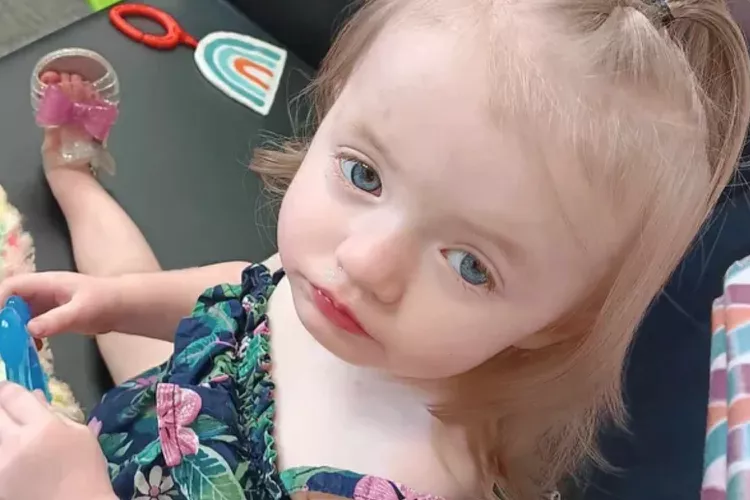
A toddler in Philadelphia foster care died after being left alone in a bathtub filled with water, a moment of everyday distraction turning into a criminal case and a family’s worst nightmare. Authorities say the foster mother walked away from three young children in the tub, and by the time she came back, 20‑month‑old Syvir Hill could not be revived. The case has now spiraled into a murder charge, a wrongful‑death lawsuit, and a broader reckoning over how a city is watching over its most vulnerable kids.
What Investigators Say Happened In The Bathroom

Investigators say the basic outline is painfully simple: three small children in a bathtub, water running, and an adult who stepped away. According to court records, foster parent Apalosnia Watson, 39, was caring for 20‑month‑old Syvir and two other children when she left them alone in the bathroom so she could go downstairs after hearing the microwave. Prosecutors say the tub was filled and the children were still inside when she walked away, and when she came back upstairs, Syvir was unresponsive and later pronounced dead at a hospital, a sequence that now underpins a criminal case and a civil claim against her.
Authorities have charged Watson with murder and related offenses, including endangering the welfare of a child, arguing that leaving toddlers unsupervised in a full tub crossed the line from a tragic mistake into criminal negligence. Police affidavits describe a chaotic scene when first responders arrived, with efforts to resuscitate the boy failing despite CPR and emergency care. The charging documents, which identify Watson as a foster parent and detail the counts she faces, frame the drowning as the direct result of her decision to leave the children alone in the water.
The Foster Mother At The Center Of The Case
Watson’s role in the system was not casual or informal, it was sanctioned by the city. At the time of Syvir’s death, she was a licensed caregiver through Philadelphia’s Department of Human Services, responsible for multiple children placed in her home. Officials have said that when she left the bathroom, she went to the downstairs kitchen after hearing the microwave, a detail that has become a flash point for public anger because it suggests a routine household task took priority over direct supervision of three very young kids in a dangerous setting. In interviews and filings, city representatives have acknowledged that Watson was part of a network of contracted foster homes overseen by private agencies working with the department.
Those agencies and the city are now under scrutiny for how they vetted and monitored Watson, and for how many children were placed in her care at once. Court records note that she had three children in the tub and other minors in the home, raising questions about whether she was stretched too thin and whether anyone checked on her capacity to manage that load safely. One filing points out that, at the time of Syvir’s placement, Watson was already working with the city’s department of human services, a fact that now sits at the center of arguments about oversight and accountability.
From Criminal Charges To A Wrongful‑Death Lawsuit
The criminal case is only one front in the fallout. Syvir’s biological family has also filed a wrongful‑death lawsuit that targets not just Watson but the broader foster‑care apparatus that put him in her home. The complaint argues that the city and its contracted agencies failed to protect the toddler by placing him with a caregiver who, they say, was not properly supervised or supported. It describes the drowning as preventable, alleging that basic safety protocols, like never leaving toddlers alone in a bathtub, should have been drilled into every licensed foster parent and enforced through regular home visits and checks.
In that civil case, attorneys for the family point to a pattern of alleged red flags, including the number of children assigned to Watson and the physical setup of the home, with the bathroom upstairs and the kitchen on a different floor. They argue that the system effectively set up a scenario where a caregiver could be “at her max,” juggling multiple needs at once, and that no one stepped in to reduce the risk before tragedy struck. The lawsuit, which names city agencies and private providers alongside Watson, echoes concerns raised in other reporting about wrongful‑death claims tied to foster placements, arguing that the responsibility does not end with the person standing in the bathroom doorway.
A System Already Under Pressure
Syvir’s death did not happen in a vacuum. Philadelphia’s foster‑care system has been under pressure for years, with high caseloads, a shortage of available homes, and a heavy reliance on private agencies to manage day‑to‑day oversight. Advocates say that combination can leave children in placements where caregivers are overwhelmed and caseworkers are stretched too thin to catch problems early. In one earlier case, a report described a Philly toddler who apparently drowned while a foster mother, described as “at her max,” tended to a microwave downstairs, a scenario that sounds hauntingly similar to what investigators now say happened to Syvir.
That earlier drowning prompted questions about whether training and supervision were keeping up with the realities inside crowded foster homes, and whether the city was doing enough to reduce the number of children placed with any one caregiver. The new case has revived those concerns, with critics arguing that the system keeps repeating the same mistakes. A video segment on Philadelphia foster mother charged after a child died in her care highlighted how often the same themes show up: caregivers alone with multiple toddlers, distractions like cooking or phones, and a lack of immediate backup when something goes wrong.
Microwaves, Minutes, And The Thin Line Between Accident And Crime
One detail that keeps surfacing is almost painfully mundane: the microwave. In Syvir’s case, authorities say Watson left the bathroom because she heard the microwave downstairs and went to retrieve food, leaving three children in a full tub. In another account of a foster‑care drowning, a caregiver was described as tending the microwave while a toddler was in the bath upstairs. The image is jarring precisely because it is so ordinary, a reminder that in homes where adults are juggling kids, chores, and work, the line between safe multitasking and catastrophic distraction can be measured in seconds.
Prosecutors have seized on that detail to argue that this was not just a tragic accident but a criminally reckless choice. In a court appearance captured on video, a speaker questioned what food could possibly be so important that someone would leave three small children alone in a bathtub to get it, underscoring how the microwave has become shorthand for misplaced priorities. Legal analysts have noted that juries are often asked to decide where that thin line lies, weighing whether a caregiver’s split‑second decision was an understandable lapse or a level of disregard that meets the legal definition of murder.
More from Decluttering Mom: