Waiting 12 weeks is a long time to wait on an envelope. For Tampa reseller Picking and Punching, that envelope held the answer to a question that could swing his week by thousands of dollars: were the signed treasures he had hauled home from garage sales and flea markets the real deal, or just expensive paper and ink?
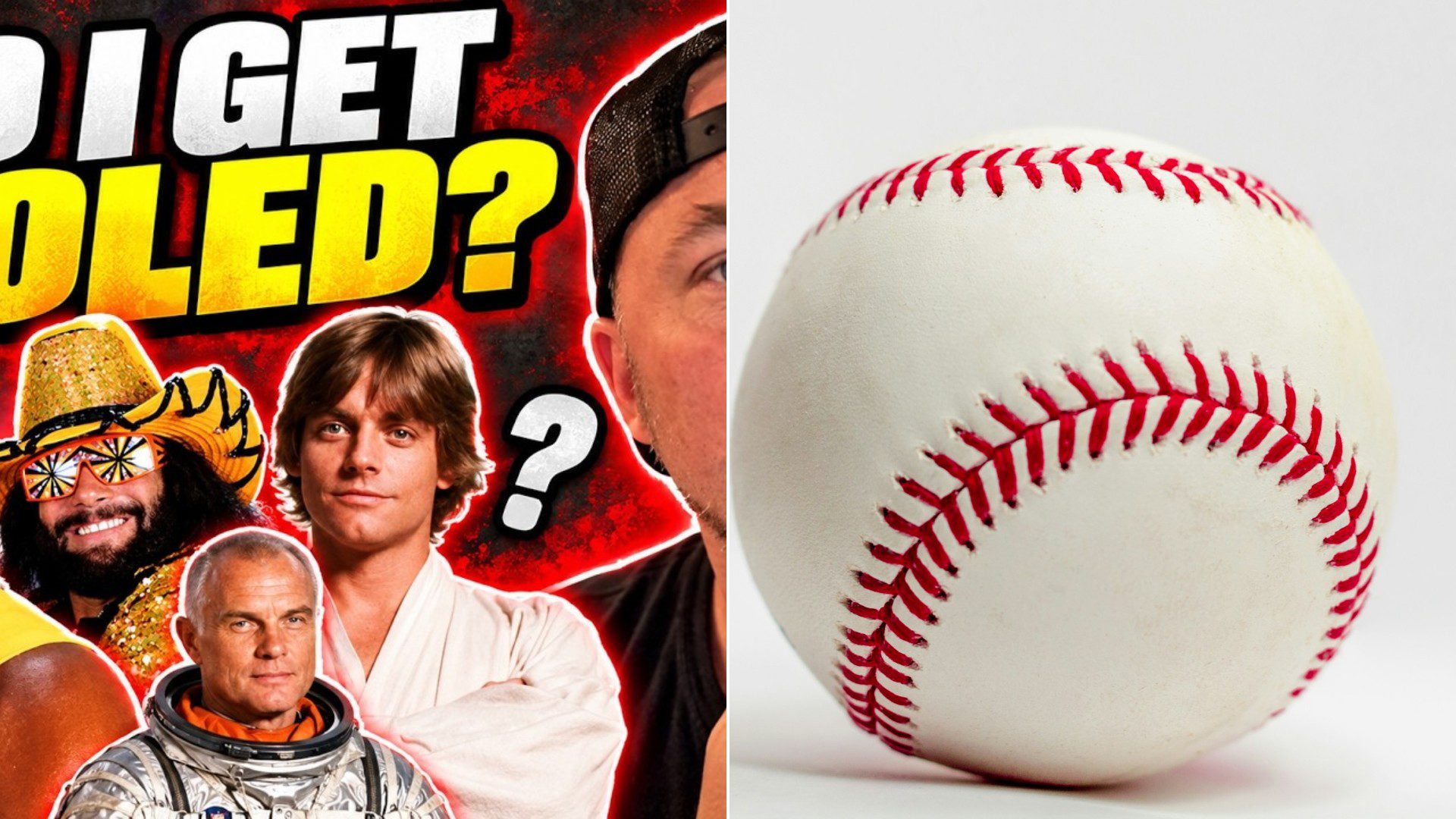
“I can’t believe it’s finally here,” he says as he picks it up. By his own math, what was inside meant the difference between losing hundreds of dollars and making thousands. He had taken three autographed items to a sports card show earlier this year, and because of a few issues the table could not sign off on them in person. The pieces had to travel to headquarters for a final decision at James Spence Authentication, better known as JSA. Then came the waiting.
He knew the risk going in, because he has been burned before.
Why He Rarely Gambles on Autographs
Picking and Punching says he has walked hundreds of garage sales, flea markets, swap meets and highway sales, and he usually steers clear of signed items because the chance of a fake is high. He has the scar to prove it. At a flea market he once bought a pitcher said to be signed by LeBron James and Kobe Bryant, paid $100 to have it authenticated, and learned the autographs were judged fake. The $100 did not come back, because, as he puts it, he was still paying for a service.
Even a real autograph can fail. He explains that a signer in a hurry can leave a shaky signature, a marker can skip, and stopping and starting breaks the natural flow of the pen. Signatures also change over the years, and he points to LeBron James, who has used several different versions across his career. Fabric makes it harder still, so hats and jerseys worry him most.
The First Two Envelopes
First up was a John Glenn autograph he bought at a garage sale in Virginia. The seller told him he had worked for NASA and offered to show him more items from his collection. The photo itself came from the NASA gift store, and the signature was clean. When he read the letter aloud, it said the signature matched known examples on slant, flow, pen pressure, letter size and formation. “And there it is, guys. It is real.”
Next was a Mark Hamill photo as Luke Skywalker, mounted in a plaque with a Lucas Studios mark on the back from 1992. The letter for this one is notarized and carries a certification sticker he says buyers can look up on the company’s website. He points out that the 50th anniversary of Star Wars arrives next year and that Star Wars memorabilia is already in demand. He believes the piece is limited to about a thousand copies.
The Hat That Kept Him Up
The last item was the one that worried him most: a hat signed by Hulk Hogan and Randy “Macho Man” Savage. He bought it for a single dollar at a garage sale in Tampa, and it sat on his shelf for three or four years. The backstory is what hooked him. The signatures were collected at the grand opening of a Gold’s Gym in Tampa, and the man selling the hat told him his wife used to babysit for the gym’s owner. That owner, Bryant Blair, is a former WWF wrestler from the Killer Bees of the 1980s.
Picking and Punching says he has seen Hulk Hogan’s signature plenty and owns some, so he trusted that half. The Macho Man half was the problem, since he had never handled one before. He adds that the two wrestlers went from on and off friends in the 1980s to a bitter feud by the early 2000s, so a hat carrying both names from a gym opening around the late 1990s, by his estimate, is a rare thing. Both men have since passed away, which means nobody can add new signatures to the pile.
Then he opened it. The letter listed the subject as Hulk Hogan and Randy Savage, and both signatures passed. “Ah. Yes, I am so happy right now,” he says. He calls getting the two names together extremely rare and says he almost does not want to sell it because of the story attached.
What the Three Pieces Could Be Worth
He then walks through the numbers. One piece cost him $100, plus about $50 to have it authenticated, so he has $150 in it. He figures it could bring $300 to $500 and says he has seen similar pieces sell for $500 to $700. It is already framed and comes with its letter, which helps.
Another piece came from a large lot of books he would have paid $150 for. He already made his money back selling the books, so he calls this one free, with $0 in it apart from roughly $50 for authentication. He has seen the same item sell for $800 and listed at $1,000, though a recent sale landed around $300 to $350, which he thinks undervalued it. He plans to list it high and wait for the right buyer.
The hat is the wild card. A program or 8 by 10 signed by both men recently sold for about $1,000, and he says the hat could land anywhere from $300 to $1,500. He plans to list it very high, and if someone makes the right offer, he will let it go. As the Million Dollar Man used to say, everybody has a price.
His Two Tips for Spotting Real Autographs
Before signing off, he offers two tips for anyone browsing signed items at garage sales and flea markets. Number one: search eBay for pieces already graded by PSA, JSA or Beckett, the ones sealed in a slab, and compare those signatures to the one in your hand. Look for any differences in how the letters are formed.
Number two: study the signature itself. Forgers tend to work slowly, and every stop and start leaves tiny ink dots where the pressure changes. A real signature, like signing a check or writing your name, flows in one steady motion.
The lesson reaches past autographs. If you buy something at a sale that looks too good, the gamble is part of the fun, but only if you can afford to lose the price of the test. Picking and Punching spent a dollar on a hat, a modest sum on authentication, and 12 weeks of nerves. This time the bet paid off, and he says it was a nice change after the pitcher that cost him $100.
More Stories You May Like
- Professional Organizer Lists the Bathroom Items to Get Rid of as Soon as Possible Before They Cause Problems
- Couple Paid Sixty Dollars For A Vintage Ethan Allen Piece And Loved The Solid Maple So Much They Nearly Kept It Before Listing For Eleven Hundred
- Thrift Flipper Paid Forty Dollars For An Italian Leather Couch At Goodwill And Says One Hour Of Work Means Five Hundred Sixty Dollars In Profit