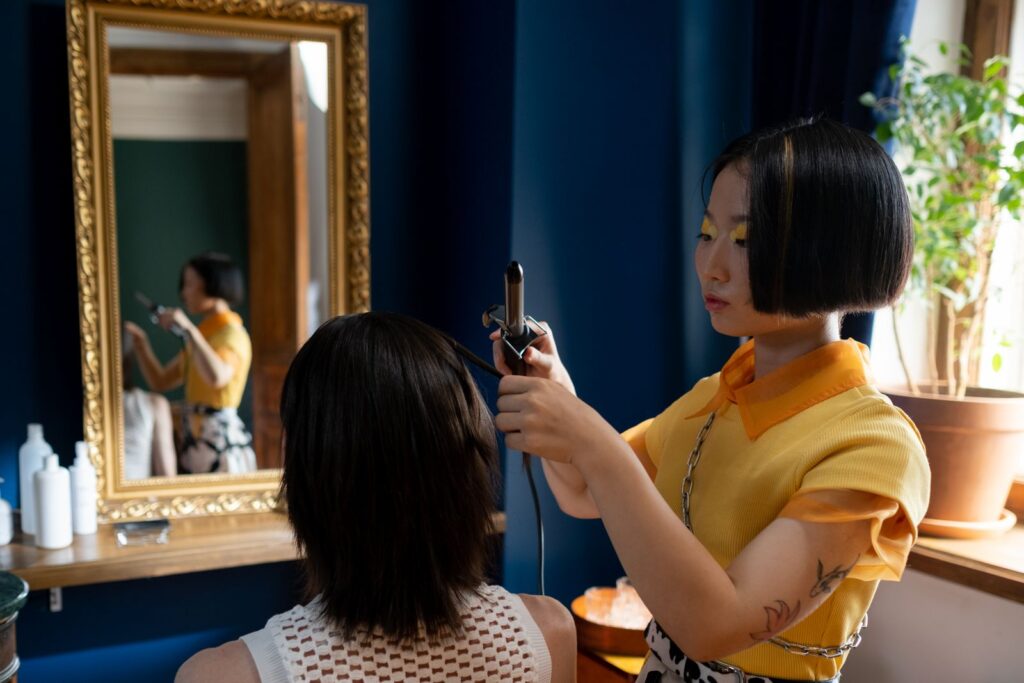
One woman found herself mired in an unexpected conflict after her longtime hairdresser decided to drop her as a client. This wasn’t just any hairdresser; she had been cutting the woman’s hair for 25 years. The shake-up started when she missed an appointment during a family tragedy, leaving her feeling hurt and blindsided by the hairdresser’s response.
The situation unfolded after the woman’s mother-in-law passed away, leading the entire family to wrap themselves in grief. In the chaos of those weeks, she completely forgot about her Saturday haircut appointment. Realizing her mistake later, she tried calling to apologize and reschedule, but the hairdresser never returned her calls. Instead, the hairdresser informed her husband that she was done with his wife as a client, citing a history of no-shows.
Some might argue that the hairdresser had every right to refuse service after a missed appointment, but the woman felt deeply hurt that she wasn’t even given a chance to explain herself. “I understand she has every right to stop seeing me as a client, but after 25 years, it stings,” she shared. To her, this felt like a harsh penalty for a mistake made during a particularly tough time. After all, it was just one missed appointment out of many over a long relationship.
Now, she found herself grappling not only with the loss of her hairdresser but also with the idea that her husband might continue to support the business that had just fired her. Some people quickly sided with her, suggesting her husband should stop going there too, as a way of standing in solidarity. Others questioned whether it was reasonable to expect him to abandon a service he had relied on for decades. It’s a sticky situation that many can relate to—balancing personal loyalties with long-standing relationships.
People had very different reactions to her dilemma. Some thought the hairdresser was justified. They pointed out that repeated no-shows could be frustrating for anyone in a service business, especially for someone as busy as a successful hairdresser. On the other hand, others felt empathy for the woman, suggesting she deserved a little understanding given her circumstances. “It’s just hair,” one commenter pointed out, emphasizing that compassion should win out in times of personal loss.
Amidst the various opinions, the underlying theme was clear: relationships in service industries can be complicated. The woman felt dismissed after years of loyalty, leading her to question whether it was fair for her husband to continue seeing the hairdresser. Some argued that loyalty should flow both ways and that the hairdresser’s refusal to communicate directly felt unprofessional.
Ultimately, the woman is trying to find a new hairdresser while keeping an open mind. She admitted to making a mistake and acknowledged that maybe she has taken her hairdresser for granted. However, the nagging hurt still lingers, leaving her wondering if she will ever want to go back, even after the dust settles. “Maybe sometime in the future I will reach out and try again,” she mused, but that future seems uncertain.
This situation raises questions that many people might face: how to navigate loyalty and personal relationships when boundaries are crossed in a professional context. It isn’t just about hair; it’s about feelings and connections built over years. How does one balance personal disappointment with continuing to support a business that has a history? Would the husband’s continued patronage send the wrong message, or should he separate his loyalty from his spouse’s grievances?
More from Decluttering Mom: