Half of Halloween Shoppers Have Already Started Buying — in September
By the time your kids start floating costume ideas at the dinner table, nearly half the country has already checked Halloween off their shopping list. The National Retail Federation’s annual Halloween Consumer Survey found that 49% of shoppers had started buying decorations, costumes, or candy in September or earlier this year, up from 47% the year before. That is not a one-year blip. It is the direction the entire holiday has been drifting for a while now, right alongside back-to-school and even early winter-holiday shopping. If you are only just now typing “costume ideas” into a search bar, you are not behind some small group of overachievers — you are behind roughly half of all Halloween shoppers, and that gap has real consequences for what is left on the shelf and what you will pay for it. The good news is that catching up does not require panic. It requires knowing exactly what to prioritize first, and in what order.
Why So Many People Are Shopping Before Fall Even Feels Real
It is tempting to assume early Halloween shoppers are just the string-lights-in-August crowd, but the data tells a more practical story. Decorations, not costumes, have become the single biggest Halloween spending category, and NRF’s own research shows why that pushes the whole season earlier. In its breakdown of this year’s survey, NRF found that 78% of shoppers plan to buy décor, up from 72% back in 2019, with décor spending reaching $4.2 billion — more than shoppers are expected to spend on candy this year. Nearly half of that group, 45%, prefers to have their homes decorated in the first half of October, which means the actual buying has to happen well before that, in September, so the porch is ready to go the moment they want it. Add in a record $13.1 billion in total projected Halloween spending and a per-person average of $114.45, both all-time highs according to NRF, and you can see why retailers are stocking earlier every year to meet shoppers who are showing up earlier every year, too.
There is also a pricing story underneath all of this. Nearly eight in ten consumers, 79%, told NRF they expect higher prices this Halloween because of tariffs. When people believe costs are only going one direction, the rational move is to buy before the increase lands rather than wait and hope. NRF Vice President of Industry and Consumer Insights Katherine Cullen put it simply: “Even with concerns about price increases due to tariffs, Halloween continues to resonate with consumers of all ages.” That resonance is exactly why the shopping window has stretched into what used to be back-to-school season.
What to Buy First: Costumes, Decor, or Candy
This is the part that actually matters if you have not started yet, because not everything runs low at the same pace, and shopping in the wrong order wastes both time and money.
Costumes should be your very first stop. They are produced in limited runs tied to whatever character, show, or trend is popular that particular year, and once a specific size or style sells through, most retailers do not restock it mid-season; they move straight to clearance instead. This hits kids’ sizes especially hard, since a handful of popular characters absorb most of the demand every year, along with plus-size and pet costumes, which are typically stocked in smaller quantities to begin with. If your child has their heart set on a specific character or you need a costume in a less common size, that is the purchase to make now, not the one to leave for the week before Halloween.
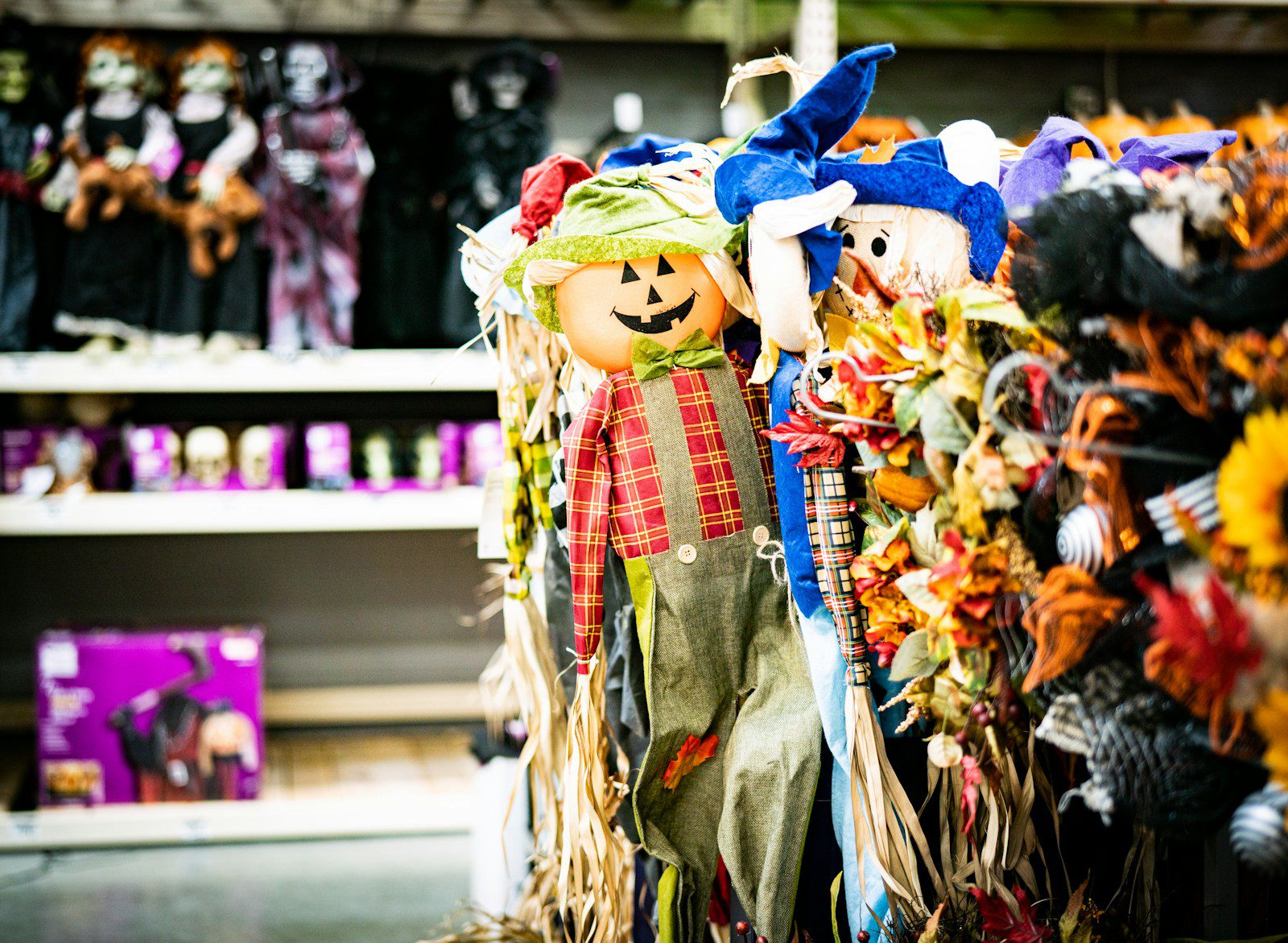
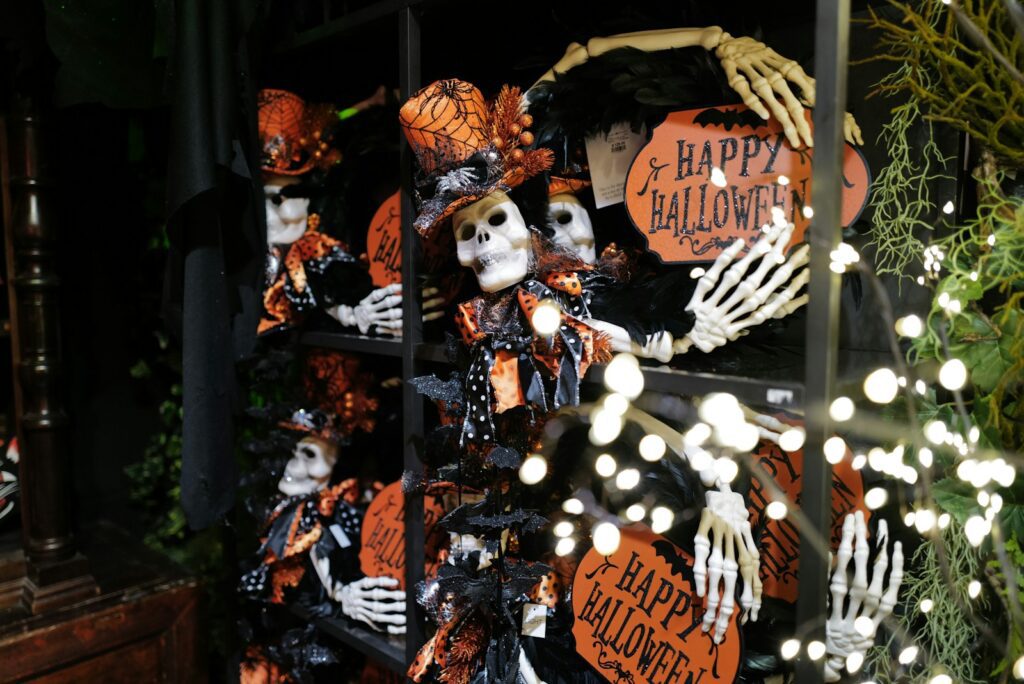
Decor comes next, and it deserves more urgency than most people give it. With décor now outpacing costumes as the category shoppers spend the most on, the standout pieces — animatronics, themed collections, anything that tends to show up on neighbors’ porches and get talked about — move fast. The basics like string lights, cobwebs, and stake-in-the-ground pumpkins tend to stick around longer because they are simple to restock, but the pieces that make a display actually memorable are usually the first to disappear. If there is a specific look you are going for this year, buy the centerpiece items early and fill in the basics later.
Candy is the one category where waiting actually works in your favor, and it is worth saving for last. It is continuously manufactured and restocked all the way through October, so scarcity is rarely the issue. The real risk with early candy buying isn’t an empty shelf; it’s an empty bag, since a house with a full candy bowl sitting around for six weeks tends to get quietly raided before trick-or-treaters ever show up. Budget for it, but hold off on the actual purchase until the final week or two.
The Real Cost of Waiting Until October
Beyond the risk of missing out on the exact costume or decoration you wanted, there is a straightforward financial argument for shopping earlier: pricing pressure tends to build as the holiday gets closer, especially in a year where tariffs are already pushing costs up. NRF found that 70% of consumers are taking at least one cost-saving step this year, and the single most common tactic is reusing costumes or decorations from previous years rather than buying new. That is a smart move if it works for your household, but it also signals something worth noticing: people are actively working to avoid paying full price for Halloween right now, because they expect prices to be less favorable the longer they wait.
The financial strain shows up even more clearly among younger shoppers. NRF’s research found that 25% of consumers ages 18 to 24 have picked up overtime or extra work hours specifically to cover Halloween costs. That is not a small, quirky data point — it is a sign that procrastinating on a growing-in-cost holiday can translate into real budget strain by the time you are shopping in the final week, when selection is thinner and the temptation to overspend on whatever is left tends to be higher.
Building a Realistic Budget If You Are Starting Late
Use the $114.45 per-person average NRF reported as your benchmark, then split it deliberately rather than spending as items catch your eye. Put your largest early dollars toward the costume, since that is the purchase with the least flexibility once specific sizes and characters sell out. Set a smaller but still meaningful amount aside for one or two standout decor pieces, buying those now while selection is good, and plan to fill in decorative basics closer to the date when they are still easy to find. Leave the candy line item for last, both because it is the least scarce category and because buying it too early just invites it to disappear before October 31st ever arrives.
If your budget is tight, lean into the reuse strategy that a majority of shoppers are already using. Check what costume pieces, string lights, or yard stakes are still usable from last year before buying new, and put those savings toward the one or two items you actually want to be new this year. Buying costumes early also gives you room to use a store’s return or exchange window if a size does not work out, which is a much better position than discovering a fit problem the week of Halloween with nothing left on the shelf to swap it for.
Shop the Calendar of Scarcity, Not the Calendar of the Month
The real lesson buried in NRF’s data is not that you need to start shopping in September specifically. It is that the smartest shoppers are matching their purchase order to how retail inventory actually behaves rather than to a date on the calendar. Costumes and standout decor pieces are produced in finite batches and vanish for good once they sell through, so they belong at the front of your list no matter what month it is. Candy gets restocked continuously and holds its position on the shelf until the very end, so it belongs at the back of yours. Whether you are reading this in late August or scrambling in the second week of October, that ordering logic holds, and it is a far more useful compass than simply knowing that half the country beat you to the store.