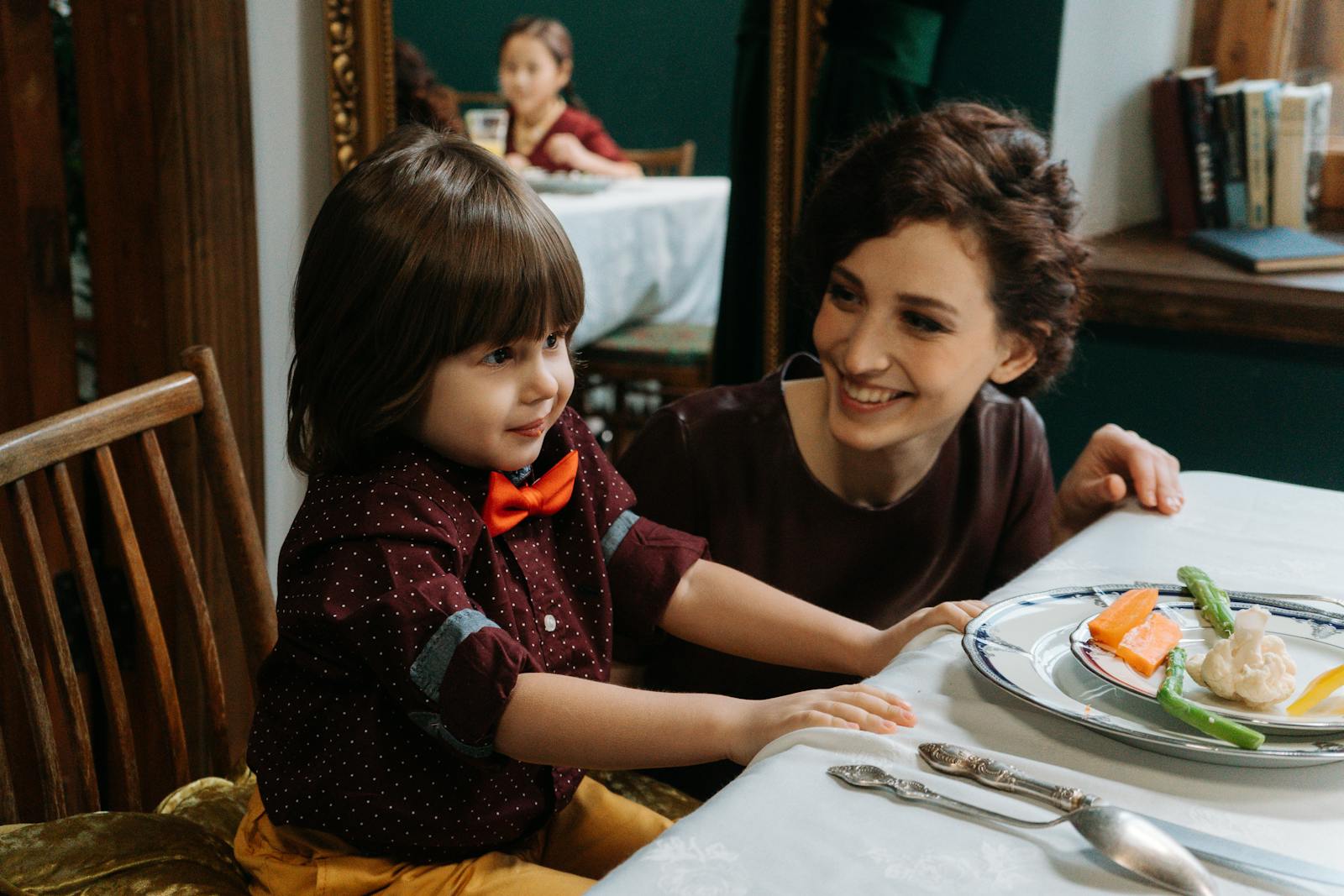
Family dinner was supposed to be the easy part. Everyone seated, food on the table, a rare window for conversation. Instead, one mother watched her mother-in-law lean inches from her young son’s face, chanting “you’re eating” on a loop while he tried to chew. The boy froze. The mother sat there calculating whether to say something, cause a scene or just white-knuckle it through dessert. She chose none of the above. She decided she was done.
Her account, shared in an online forum dedicated to in-law conflicts, struck a nerve not because it was extreme but because it was so recognizable. Thousands of parents responded with their own versions: grandparents who police portion sizes, sneak forbidden foods to kids with allergies, or narrate every bite a child takes as though meals are a spectator sport. What looks from the outside like an overeager grandmother often feels, to the parent managing the aftermath, like a slow erosion of authority that has been building for years.
The dinner that broke the spell

In the story that sparked the discussion, the grandmother didn’t just encourage her grandson to eat. She positioned herself so close that her face hovered beside his plate, repeating the same phrase in a tight loop. The mother described it not as affection but as a performance of control: the grandmother, not the child or his parents, would decide what counted as acceptable eating, and she was willing to invade his personal space to enforce it.
Parents who describe similar scenes say their children often stop eating altogether, become anxious before family gatherings, or later ask why grandma “watches them like that.” In one widely shared holiday post, a mother recalled her own parent leaning in at lunch and whispering, “You need to stop relying on the village,” a comment that drew hundreds of responses from people who recognized the same pattern of quiet undermining disguised as concern.
The intensity is a common thread in online communities where parents compare notes. Members post about mothers-in-law who grab plates away, critique lunchbox contents, show up uninvited with “approved” food, or insist a child finish everything served. In one active Facebook group, these accounts have become a running catalog of mealtime boundary violations that members reference when they need reassurance that they’re not overreacting.
Why food battles with in-laws cut so deep
Food is never just food in families. It carries memory, culture and unspoken rules about love, and that’s exactly why fights over a child’s plate feel so disproportionately loaded. In a Reddit thread asking people to share the most shocking things their in-laws had done, a striking number of replies centered on meals: grandparents slipping allergens to “prove” a child wasn’t really allergic, mocking a toddler’s weight, or refusing to follow a pediatrician’s dietary guidance because “we didn’t do that in my day.” The thread became a sprawling archive of mealtime power struggles across generations.
Pediatric feeding specialists have a framework for why this matters. Ellyn Satter, a dietitian and family therapist whose Division of Responsibility model is widely used in pediatric practice, draws a clear line: parents decide what food is offered, when and where; the child decides whether to eat and how much. The model, endorsed by the American Academy of Pediatrics and numerous pediatric nutrition guidelines, is built on decades of research showing that pressuring children to eat, whether through coaxing, hovering or chanting, tends to backfire. Kids who feel controlled at the table are more likely to develop anxiety around food, eat less and have a harder time recognizing their own hunger and fullness cues.
When a grandmother looms inches away and narrates a child’s chewing, she is overriding both sides of that equation. She is telling the parent their job isn’t being done right, and she is telling the child that his own body signals don’t matter as much as her approval. For many parents, that’s the moment the conflict stops being about dinner and starts being about who gets to raise the kid.
How online communities turned private tension into public pattern
A generation ago, stories like the “you’re eating” dinner stayed behind closed doors, filtered through a spouse’s loyalty or a relative’s insistence that “she means well.” Now they surface in real time across Facebook groups, Reddit forums and private group chats, where thousands of people compare notes on what they will no longer tolerate.
The shift is not just anecdotal. A 2023 survey by the American Psychological Association found that younger adults are significantly more likely than older generations to set explicit boundaries with family members and to view boundary-setting as a healthy practice rather than a sign of disrespect. That cultural change shows up clearly in online parenting communities, where members dissect screenshots of passive-aggressive texts, recount holiday disasters and workshop scripts for difficult conversations. The tone is often darkly funny, but the underlying pattern is serious: people are less willing to absorb discomfort to keep the peace, especially when their children are the ones absorbing it too.
Platforms also shape the language people use. Terms like “boundary violation,” “emotional enmeshment” and “gaslighting” have migrated from therapy offices into everyday posts, giving people a vocabulary for dynamics that previous generations might have dismissed as “just how she is.” That shared language helps normalize a difficult idea: that a grandmother’s behavior can be genuinely loving in her own mind and genuinely harmful in practice.
From simmering resentment to clear boundaries
Reaching the point of “I’ve had enough” is rarely spontaneous. It tends to follow years of swallowed comments, tense car rides home and late-night arguments between partners about whether a line was actually crossed. Some parents say a single incident, like the invasive chanting at dinner, becomes a catalyst because it finally makes the pattern undeniable. Others describe a slower shift, shaped by therapy, books or conversations with friends who are navigating the same thing.
Family therapists who specialize in intergenerational conflict generally recommend moving from vague resentment to specific, communicated expectations. That means telling grandparents, in advance and in plain language, that comments about a child’s eating, weight or body are off limits, and then following through with a consequence if those limits are ignored. The consequence doesn’t have to be dramatic. Some families leave the gathering early. Others switch to meeting at restaurants, where the public setting and natural time limits curb the kind of extended hovering that happens at a home dinner table. A few institute a “one warning” policy: the first comment gets a calm redirect, the second ends the visit.
The common thread, according to therapists, is that boundaries work only when both parents are aligned. If one partner dismisses the other’s concerns as oversensitivity or sides with their own parent out of guilt, the boundary collapses before it’s tested. That spousal dynamic, not the grandmother’s behavior itself, is often what finally pushes families into counseling.
Who gets to decide “what’s best” for the child
Underneath the awkward dinner scenes sits a question about power and how it’s justified. Older relatives often frame their involvement as generosity. They hosted the holiday. They bought the groceries. They raised kids of their own and those kids turned out fine. That history creates a sense of earned authority that can be very difficult to challenge, particularly when the grandparent also provides childcare, financial support or housing.
But generosity with strings attached is not the same as respect. A grandparent who pays for weekly dinners may feel entitled to dictate what’s on the plate, how much a child eats and whether the parent’s choices are good enough. When that entitlement meets a parent who has done their own research, consulted their pediatrician and made deliberate decisions about feeding, the collision is almost inevitable.
The parents sharing these stories online are not, for the most part, cutting off their families. They are trying to find a way to stay in relationship while refusing to let someone else override their parenting. That distinction matters. Setting a boundary at the dinner table is not an act of rejection. It is an act of clarity about who is responsible for the child sitting in that chair. And for the mother who watched her son freeze while his grandmother chanted in his face, clarity was long overdue.
More from Decluttering Mom: