
The morning Sarah brought her twin daughters home from a 47-day NICU stay, she sat on the couch with a baby on each arm, NG tubes still taped to their cheeks, and felt something she hadn’t expected: not relief, but dread. A prescription for sertraline — generic Zoloft — sat on the kitchen counter where her OB had told her to fill it two weeks earlier. She hadn’t touched it. “I kept thinking, they’ve already been through so much,” she later wrote in a support group for parents of multiples. “How could I add one more chemical to their bodies through my milk?”
Sarah’s dilemma is common. Across NICU parent forums and twin-parenting communities, mothers of medically fragile babies are asking the same question: Is it safe to start Zoloft while breastfeeding preterm infants who are still on feeding tubes? The answer, according to current clinical evidence and perinatal psychiatrists, is more reassuring than many parents expect. But the decision still requires weighing real data against real fear, and understanding why untreated postpartum depression may pose a greater risk to these babies than a low-transfer SSRI.
Why NICU stays and twin births intensify postpartum depression risk
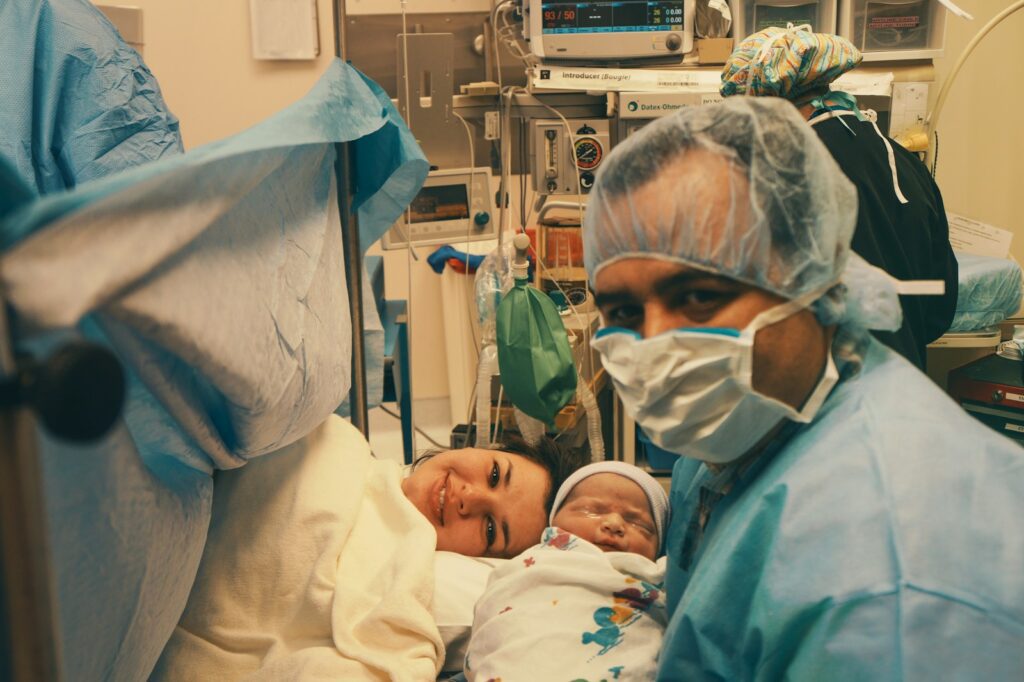
The NICU saves lives, but it also reshapes a parent’s nervous system. Weeks of monitor alarms, weight checks measured to the gram, and the helplessness of watching strangers care for your children create a kind of sustained hypervigilance that doesn’t switch off at discharge. Dr. Ruta Nonacs, a perinatal psychiatrist at Massachusetts General Hospital’s Center for Women’s Mental Health, has written that having an infant in the NICU is “understandably stressful” and has pointed to research showing elevated rates of anxiety and depression among NICU parents compared to those with healthy full-term newborns.
For mothers of twins, the load compounds. Two feeding schedules, two sets of specialist appointments, two babies who may be at different stages of medical stability. A 2023 meta-analysis published in JAMA Psychiatry estimated the period prevalence of postpartum depression at roughly 21.9% across all mothers in the first year after birth. When researchers isolate subgroups with preterm delivery, NICU admission, or multiple birth, the rates trend significantly higher, though precise figures vary by study. The takeaway is consistent: a mother of NICU twins with feeding tubes is not unusually anxious. She is responding predictably to an unusually stressful situation.
What the evidence says about sertraline in breast milk
Sertraline is one of the most studied antidepressants in lactation research, and the findings have been consistent for more than two decades. A detailed review published in the Journal of Clinical Psychiatry examined sertraline concentrations in mother-infant pairs and found that infant serum levels were either undetectable or far below maternal levels. The drug’s pharmacologic profile — relatively high protein binding and a short active metabolite — helps explain why so little crosses into milk and even less reaches the infant’s bloodstream.
The National Institutes of Health’s LactMed database, a peer-reviewed reference used by pediatricians and lactation consultants, states that because of the low levels in breast milk, the amounts ingested by a nursing infant are small and usually undetectable in the baby’s serum. It adds that breastfed infants whose mothers take sertraline have shown developmental outcomes similar to, or in some measures better than, formula-fed infants. The American College of Obstetricians and Gynecologists (ACOG) and the Academy of Breastfeeding Medicine both list sertraline among the preferred SSRIs for breastfeeding parents, in part because of this accumulated safety record.
None of this means zero risk. Clinicians still recommend monitoring preterm or medically complex infants for subtle changes in feeding behavior, sleep patterns, or irritability after a mother starts any SSRI. But the evidence base for sertraline is strong enough that most perinatal specialists frame the conversation not as “medication vs. safety” but as “treated mother vs. untreated depression,” because the downstream effects of untreated PPD on infant bonding, feeding consistency, and developmental outcomes are well documented.
Why so many NICU mothers still hesitate
Data doesn’t always override instinct, especially when your baby has already spent weeks tethered to machines. Parents in NICU and multiples communities describe a specific kind of protectiveness that makes any additional variable feel threatening. One mother in a preterm-birth support group wrote that she lay awake imagining sertraline slowing her daughter’s breathing, even though her neonatologist had told her the risk was negligible. Another described feeling that starting medication meant “admitting I couldn’t handle it,” a framing her therapist spent weeks helping her dismantle.
These fears are not irrational. They are the predictable output of a nervous system that spent weeks in crisis mode, scanning for threats to a fragile baby. Perinatal psychologists note that NICU parents often develop a pattern of hypervigilant caregiving that can look like — and sometimes coexist with — postpartum anxiety or PTSD. In that state, the idea of introducing anything new to a baby’s environment triggers alarm, even when the evidence supports it.
What often helps is hearing from mothers on the other side. In one widely shared thread, a parent of former 32-weekers described how starting sertraline at six weeks postpartum “didn’t make me happy — it made me functional,” allowing her to keep up with tube-feeding schedules and attend follow-up appointments she had been canceling. Another wrote simply: “Give it 4 to 6 weeks to kick in fully. If the side effects are too much, your doctor can adjust.” The reminder that starting Zoloft is not an irreversible commitment can be the thing that gets a hesitant mother to fill the prescription.
Therapy, support groups, and the options beyond medication
Sertraline is not the only intervention with evidence behind it, and for some mothers it may not be the right first step. Cognitive behavioral therapy (CBT) and interpersonal therapy (IPT) both have strong research support for treating postpartum depression, and many perinatal mental health specialists recommend them alongside or instead of medication, depending on symptom severity. A mother with mild-to-moderate PPD and good access to a therapist experienced in perinatal mood disorders may find that structured therapy is enough. A mother with severe symptoms, intrusive thoughts, or an inability to care for her babies may need medication to reach a baseline where therapy can work.
For NICU families specifically, institutional support is expanding. Some children’s hospitals now run dedicated programs — like the NICU Postpartum Support Program at Children’s National in Washington, D.C. — that screen parents for depression and anxiety, provide counseling, coordinate medication management with the medical team, and continue follow-up after discharge. These programs treat parental mental health as part of infant care, not separate from it.
Outside the hospital, Postpartum Support International (PSI) maintains a directory of peer support groups, including specialized networks for NICU parents and parents of multiples. Dr. Nonacs and other perinatal psychiatrists frequently point families toward PSI’s helpline (1-800-944-4773) as a starting point, particularly for mothers who feel isolated after discharge and don’t know where to begin. Twin-parent organizations also run support groups that address the specific logistics and emotional weight of caring for multiples, offering a kind of practical solidarity that generalized parenting resources often miss.
How to start the conversation with your care team
If you are a mother of NICU twins weighing whether to start sertraline, the most productive first step is a direct conversation with your prescribing provider — usually your OB-GYN or a perinatal psychiatrist — and your babies’ neonatologist or pediatrician. Bring your specific concerns: the feeding tubes, the prematurity, the breastfeeding. Ask what monitoring they recommend for your infants. Ask about therapy options that could complement or replace medication. And ask what untreated depression could mean for your recovery and your babies’ development, because that side of the equation deserves equal weight.
The goal is not to eliminate uncertainty. It is to make a decision with the best available evidence, the support of clinicians who know your babies’ medical history, and the understanding that taking care of yourself is not a compromise — it is part of taking care of them.
More from Decluttering Mom: