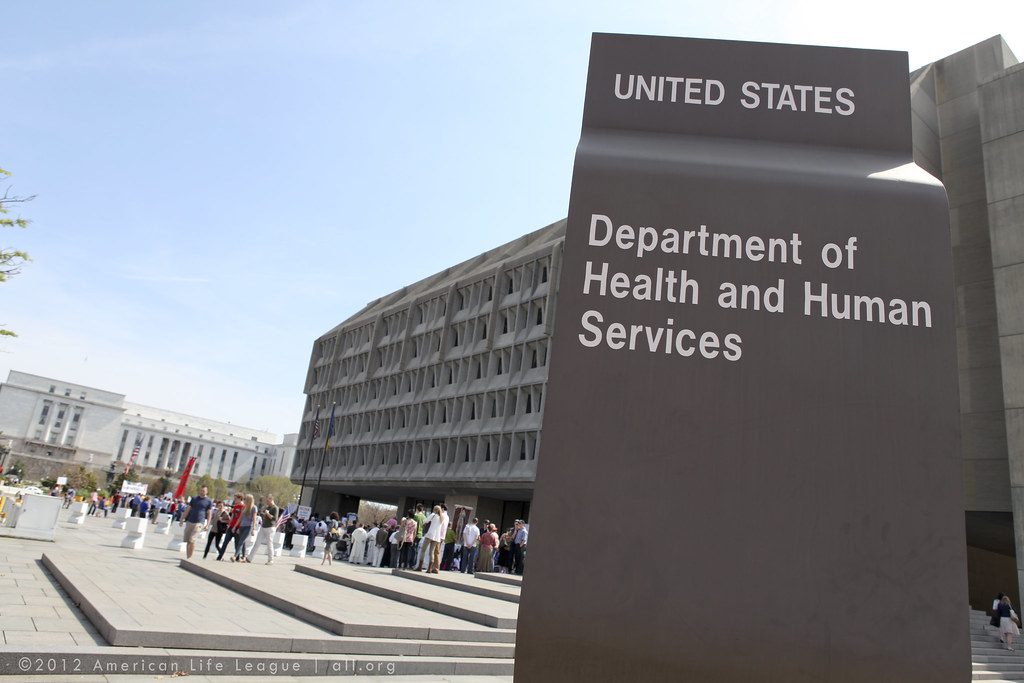
The federal government has slammed the brakes on key child care and family assistance dollars in five states, and you are the one stuck in traffic behind that decision. A fraud probe at the U.S. Department of Health and Human Services has turned into a sweeping freeze that reaches from big cities to small towns, threatening the stability of care that lets you work, study, or simply stay afloat. The fight now is over whether rooting out abuse justifies cutting off support that millions of children and parents rely on.
Instead of a quiet accounting review, the move has exploded into a national showdown between President Donald Trump’s administration and state and local leaders who say families are being used as leverage. If you live in one of the affected states, or depend on subsidies anywhere, the outcome will shape how secure your child care feels the next time Washington decides to flex its power.
What exactly HHS froze, and where the money was headed
The U.S. Department of Health and Human Services, through its Press Room, announced that it is halting Child Care and Family Assistance Grants in five states while it investigates alleged fraud. The action, carried out by the HHS Administration for Children, targets three huge pillars of the safety net: the Child Care and Development Fund, Temporary Assistance for Needy Families, and the Social Services Block Grant. In plain terms, that means the freeze reaches everything from your child’s subsidized day care slot to the cash and social services that help low income parents keep a roof overhead.
The five states on the chopping block are California, Colorado, Illinois, Minnesota, and New York, all run by Democratic governors and all heavily dependent on these federal streams to keep child care slots affordable. HHS has separately detailed how the Freezes Child Care order affects each state’s totals, underscoring just how much day to day stability is tied to decisions made in Washington.
How the freeze hits cities, parents, and the courts
Once the funding threat became real, the States of New York, California, Colorado, Illinois and Minnesota quickly turned to the courts, filing a lawsuit in federal district court to block the move before any federal payment is released under the new terms. That legal push, described in detail by On Jan, is not just about state budgets, it is about whether your city can keep paying providers on time. Local leaders warn that if the freeze sticks, municipal agencies will be forced to cap enrollments, delay payments, or raid other programs just to keep child care centers open.
City level fallout is already visible. In Chicago, advocates are bracing for what they describe as a potential billion dollar hit to federal aid, with union leader Erica Bland of SEIU Healthcare Illinois warning that “the kids suffer” when centers lose stable funding. Her comments, captured as she rallied outside the Chicago Metro YMCA, highlight how the freeze is not an abstract budget line but a direct threat to the routines your children rely on, from breakfast to after school care, as detailed in the account of Erica Bland.
Parents of school age kids are feeling the squeeze first. Afterschool programs that depend on Child Care and Development Fund dollars are warning that they may have to cut slots or raise fees, leaving you to scramble for coverage between the final bell and your own quitting time. One analysis of the Federal child care warns that the disruption will land hardest on low income families and on the well being of young people who rely on structured afterschool time for safety and enrichment. At the same time, a federal judge has already stepped in once, ordering the Trump administration to keep funding child care subsidies in the five states for now, a temporary reprieve described in the Judge ruling that shows how fluid your situation still is.
Fraud concerns, political crossfire, and what it means for your options
The Trump administration is framing the freeze as a necessary crackdown, arguing that federal child care and social service funding has been used fraudulently and that taxpayers deserve tighter oversight. HHS has said the action applies to three programs overseen by the Department of Health and its Administration for Children and Families, and allies of the president have amplified that message in public briefings. One policy explainer on Safeguarding Access notes that the Child Care and Development Fund has a long history of bipartisan support but is now being pulled into a broader debate over fraud and accountability.
Critics counter that the White House is using fraud as a pretext to punish states led by Democrats and to shrink the federal role in child care. A detailed look at how the Child Care and works points out that even in normal times, only about 15 percent of eligible children actually receive subsidies, so any freeze hits a system that is already rationing help. Another national overview of how the HHS Freezes Child decision is playing out describes families facing “impossible choices,” from cutting work hours to leaving jobs entirely, as they try to cover gaps that public dollars used to fill.
More from Decluttering Mom: