

Ask most people what the hardest part of decluttering is, and they will say the work: the sorting, the hauling, the sheer number of boxes. A mom named Laura thinks that is not the real answer at all. After weeks of clearing out her home, she says the hardest part is facing the feelings attached to the things.

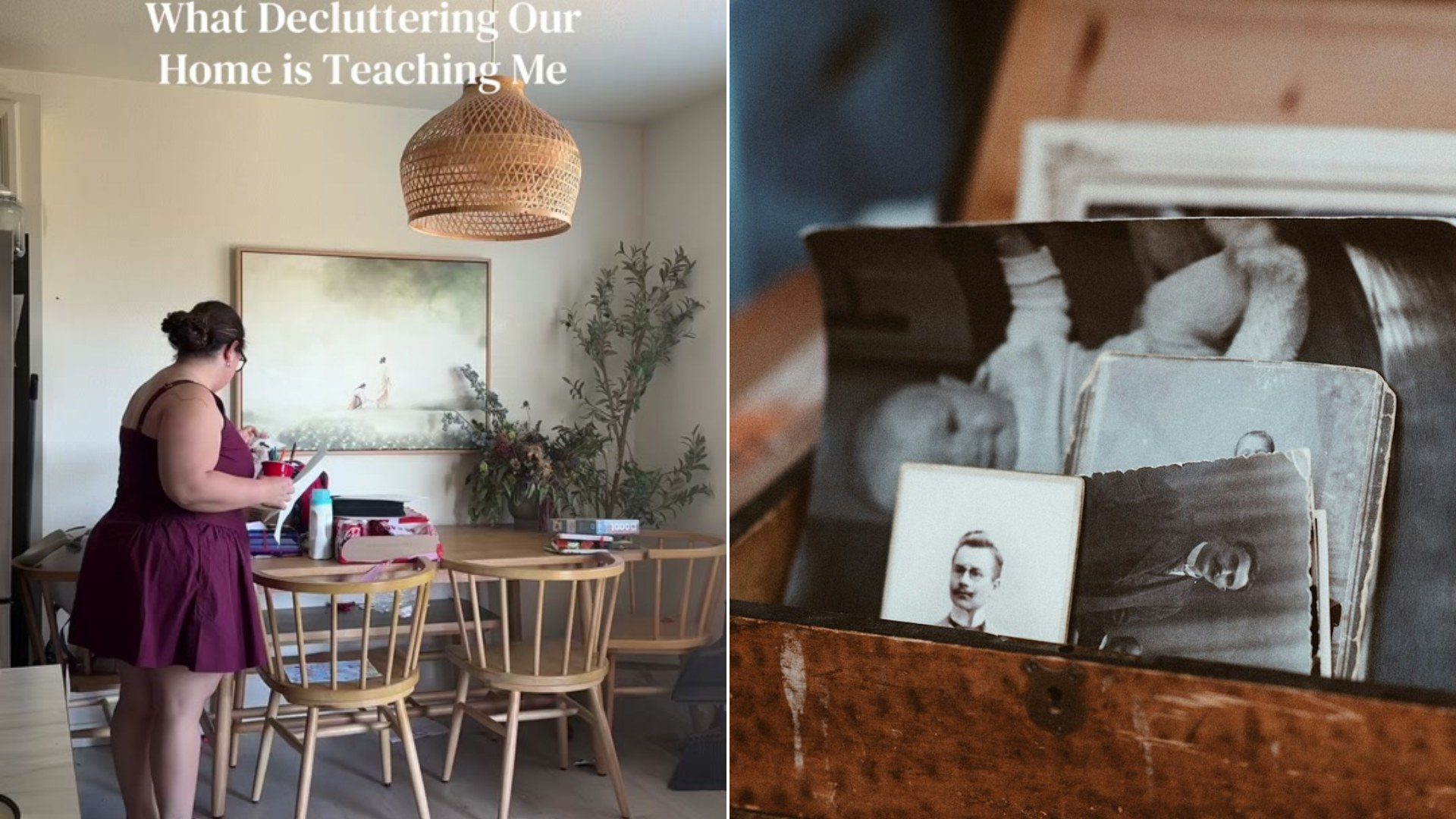
Laura, who shares her journey on TikTok as @lauraelizabethschroeder, has spent this October documenting her goal of getting rid of at least 500 things from her home. She is about 100 items from the finish line, and she says a “hot take” has become clear to her: we use our homes to store emotions we do not want to deal with.
Her list of what we are really holding onto is one many of us will recognize right away.
@lauraelizabethschroeder
What the clutter is really made of
There is the guilt of money wasted, such as the gadget or outfit that cost too much and never got used. There is the gift you never really liked, sitting in a drawer because getting rid of it feels rude. There are the books you swore you would read, the workout equipment you planned to use, the hobby supplies for a hobby you never quite started.
Laura says all of these things represent versions of ourselves that we truly intended to become, but never did. And then there are the kids’ clothes. Going through them, she says, means realizing your children will never be that little again.
Here is where her perspective shifts. Keeping these things, she says, does not change any of it. She cannot undo a bad purchase by holding onto it forever. She cannot make herself love a gift. And she definitely cannot stop her kids from growing up.
It is okay for it to be hard
Laura does not tell people to just toss it all and move on. She says it is okay to let the feelings be hard: to admit the money was wasted, to acknowledge the goals you have not reached, and to accept that there are memories you are not ready to let go of yet. Getting rid of something, she says, does not mean it did not matter. And keeping it does not change what has already happened.
You can appreciate what something meant to you, learn what you can from it, and still give yourself permission to let it go. In her words, we all deserve homes that are not weighed down by things we keep simply out of guilt or fear.
How to let go of guilt items, one type at a time
Here are practical ways to handle each of the categories Laura mentions.
Money-wasted items. Try to think of the cost as already spent. The only question left is whether the item is worth the space it takes up now. If it is in good shape, selling it recovers some of the money and often feels better than donating it. Take clear photos, list it at a fair price on a local marketplace, and give it a deadline. If it has not sold in a few weeks, donate it and let it go.
Gifts you never liked. The gift did its job on the day it was given. It showed that someone thought of you. You do not owe it a permanent home. Take a photo if you wish, then pass it along to someone who will enjoy it.
Books you will never read. Keep the ones you truly plan to read in the next year, and let the rest go to a library sale, a used bookstore or a neighbor. Books are meant to be read, and a book on a shelf does nothing for anyone.
Hobby and fitness gear. Ask yourself honestly whether you will start this in the next three months. If not, sell it. Those supplies and equipment often hold value, and someone else is eager to begin.
Kids’ clothes. This is often the toughest. Choose a few favorites, such as a first outfit, a special sweater, or a Halloween costume, and save them in one memory box. The rest can be passed to friends or family with younger children, or donated. Seeing a child wear what yours once wore can be a sweet way to say goodbye.
A gentle way to do it
- Set a number. Laura’s goal of 500 items made the project feel doable. Try 50 items in a month, or five a day.
- Count everything. Even a single pen or empty box counts. Small wins build momentum.
- Do the easy things first. Expired products, duplicates and broken items do not carry much feeling.
- Pause, but not for long. If something makes you teary, set it aside for a day. Come back to it when you feel steadier.
- Say thank you. Some people find it helps to quietly thank an item for what it gave them before it goes.
Lighter, in more ways than one
Laura’s message is about permission. You are allowed to be sad about a purchase, to grieve a version of your life that did not happen, and to remember your babies fondly while handing off their onesies. None of that requires you to hold on to the object. When you let go, you are not erasing the memory or the effort. You are simply making room for the life you are living now.
More Stories You May Like
- Professional Organizer Says If You Have Run Out Of Space You Do Not Need More Storage Because The Money Was Wasted Ten Years Ago And Your Kids Do Not Want The Stuff You Saved
- Professional Organizer Cleared Out A Family Of Five’s Pantry And Rebuilt It With Cube Baskets Turntables And A Riser For Canned Goods
- Professional Organizer Dares You To Throw Out Old Towels Expired Beauty Products And Swimwear You Never Wear Before Today Is Over