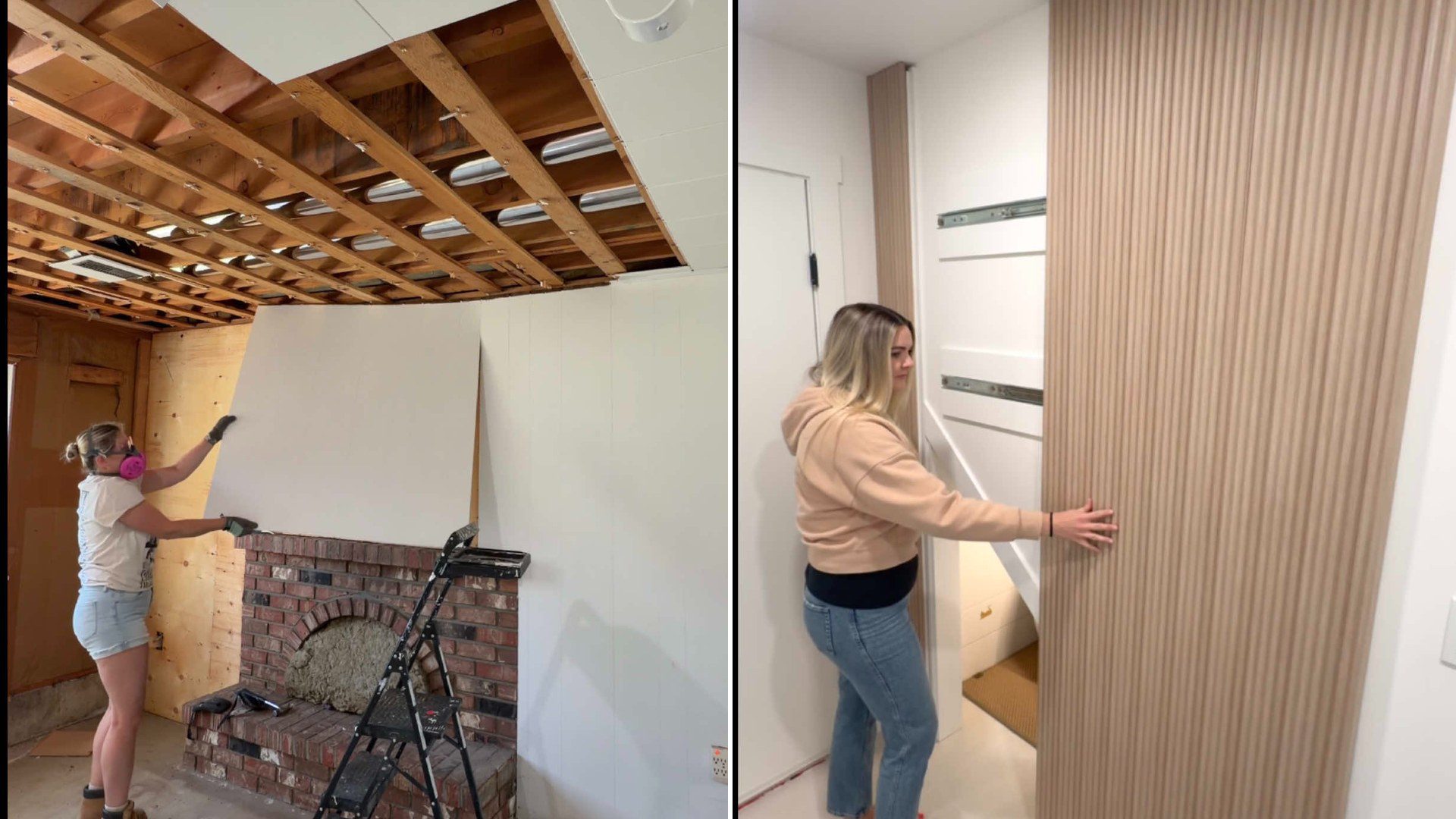
A homeowner kicked off a new renovation series on TikTok by tearing the carpet and wall paneling out of a 1970s house, and told viewers only one original feature in the room was staying put. The demo day clip from the account behind The Vanderstar Home has pulled 264,400 views, more than 31 times the account’s median, for a video that’s really about what decades of finishes were hiding underneath.
@thevanderstarhome Nothing is safe… except maybe the fireplace 😏 This 1970s home needs an extreme makeover! Step 1: Rip everything out (and hopefully clear out the smell 😮💨) Step 2: Build it back prettier and more functional than before ✨ Stay tuned for Day 2 🤎 #renovationinspiration #demoday #diyprojects #diyhomeimprovement #diyinspiration
Who’s Behind the Account
The Vanderstar Home is run by Theresa, a self-taught DIYer who says on her YouTube channel that her content is aimed at helping “beginners transform their homes with confidence, tools, and style,” alongside custom cabinetry tutorials and a dedicated cabinetry course. The demo day clip functions as a season premiere of sorts, opening a room-by-room series on a house that appears not to have been touched since the decade it was built.
What Carpet and Paneling Were Hiding
Ripping out 1970s carpet and wall paneling tends to expose a fairly predictable set of problems. According to Mountainwood Homes, houses from that decade were commonly built with dark manufactured wood paneling, aluminum windows and popcorn ceilings that were “sprayed on as a cost-effective way to hide imperfections,” a texture that can contain asbestos in homes built before 1980 and typically requires professional testing before it’s disturbed. The same source notes that despite the dated cosmetic layer, 1970s houses tend to have structurally sound foundations, wiring and plumbing underneath, which is exactly the kind of good-bones setup that makes a demo day like this one worth filming instead of walking away from. That popcorn-ceiling asbestos risk is also why most contractors recommend testing before scraping, not after, since disturbing the texture without knowing what’s in it can spread fibers through the rest of a house that’s otherwise perfectly fine to renovate.
One Feature Survives the Gutting
She doesn’t itemize every casualty on camera, but she flags one specific piece of the room as the exception to the teardown. That kind of judgment call lines up with how renovation guides approach these houses generally. ArchitectureCourses.org advises homeowners to “keep it when it is still doing useful work,” pointing to a solid fireplace wall or a home’s original brick and cedar as the kind of era-specific feature worth designing around rather than demolishing, even while the worn carpet, paneling and dated ceiling texture around it get replaced. Whatever the one surviving feature in this room turns out to be, it’s the same logic at play: gut the parts that were only ever a cheap cosmetic layer, and keep the parts that were built to last.
It’s worth noting that a 1970s build actually lowers the odds of a hardwood surprise under that carpet compared to older houses. Research from MidMod Midwest on mid-century homes explains that builder-grade hardwood was standard “until synthetic wall-to-wall carpet became widely available around 1954,” after which most builders stopped installing it under carpet by default. A house built two decades later is more likely hiding plywood subfloor than a finished hardwood surface, which makes it more plausible that whatever she chose to save is something structural or decorative, like a fireplace or original woodwork, rather than a flooring jackpot.
Why Demo Day Content Performs This Well
Renovation research backs up why a raw demo clip like this one resonates before a single finished room even shows up. Data compiled by WorldMetrics found that 51% of homeowners spend three months or more researching a project before starting it, and that 58% of DIY renovations take two months or longer to complete. A demo day video gives that research-heavy audience exactly what a finished-room photo can’t: an honest look at what’s actually underneath a dated house before anyone commits to buying or gutting one themselves. It also sets up a natural reason to keep watching, since a series built around one house only pays off if viewers stick around for the rooms that come after the sledgehammer footage. For an audience that’s already spending months researching its own projects, watching someone else hit the demo stage first is practically homework.
A single demo day doesn’t finish a house, it just proves the bones are worth keeping, and that’s usually the moment a renovation series either earns an audience or loses one before the real work even starts.