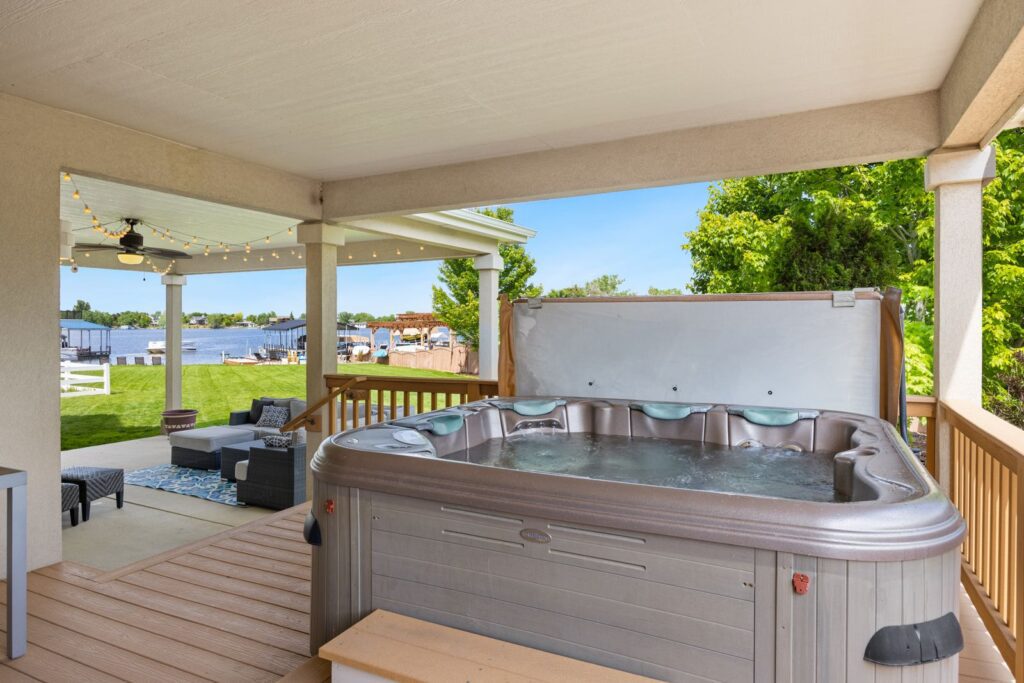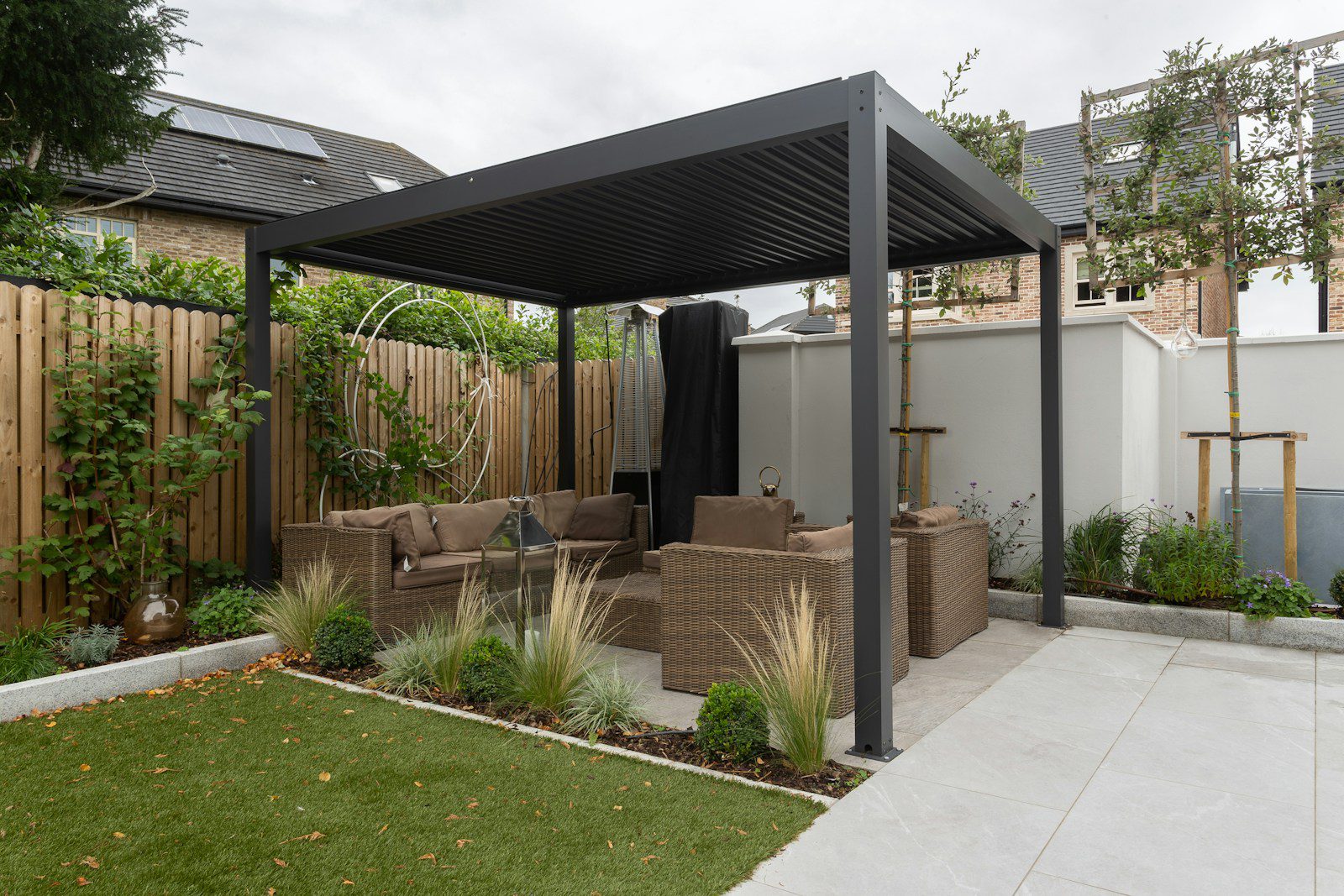
The pergola in a homeowner’s Pinterest board and the pergola quoted by an actual contractor rarely turn out to be the same structure. A basic prefabricated kit for a 12-by-12-foot pergola runs $700 to $4,000, according to HomeGuide, well within the range most people picture when they start browsing shade structures online. The motorized, louvered version with adjustable slats and a remote control, the one that actually looks like the photos driving most of that browsing, averages $13,700 installed and can climb well past $50,000 on the high end, per Angi. That’s not a slight upgrade fee. It’s a different category of purchase entirely.
Where the price actually comes from
The gap between a basic kit and a motorized structure isn’t padding, it’s mechanical complexity. A standard, non-retractable pergola runs $10 to $60 per square foot installed, according to Angi, largely reflecting lumber, footings, and straightforward assembly. A manual louvered pergola, with slats a homeowner adjusts by hand for shade control, jumps to $50 to $110 per square foot. Add a motor, weatherproof wiring, and a control system, and the range moves to $60 to $130 per square foot, with premium smart-integrated versions reaching $180. For a 12-by-12-foot footprint, that spread means a motorized structure can land anywhere from roughly $8,640 to $25,920 installed, compared to a few thousand dollars for the kit version doing the same basic job of casting shade.

What homeowners are actually paying for
The motor and slat system isn’t just a convenience upgrade, it changes what the structure can do across a full season. A fixed pergola provides partial, permanent shade regardless of weather or time of day, while a louvered system lets homeowners open the slats for full sun, close them for full shade, or seal the roof entirely during a rainstorm, all from a wall switch or phone app. That flexibility is genuinely useful for households that use their backyard year-round rather than just on the sunniest afternoons. It’s also, according to installers, the single biggest reason quotes come back so much higher than the DIY kit prices homeowners researched first. The electrical work alone, running weatherproof wiring to an outdoor structure and tying it into a switch or smart-home system, adds a layer of licensed-electrician labor that a basic kit installation never requires.
What comes back at resale
Here’s where the math gets less satisfying. HomeGuide notes that a well-maintained pergola “adds the most value to a home in a warm climate on a deck or stone patio” and can help a home sell faster by boosting curb appeal, but stops short of quantifying that into a specific dollar figure or resale percentage. That’s a meaningfully different claim than saying the structure recoups its cost. Outdoor living upgrades in general tend to return a portion of what’s spent on them at resale, similar to other exterior projects, rather than the dollar-for-dollar or above-cost returns homeowners sometimes expect from a kitchen remodel. A $25,000 motorized pergola is unlikely to add $25,000 to an appraisal. It’s more likely to help the backyard show better in listing photos and nudge a buyer’s overall impression of the property, the same soft benefit a manicured lawn or a new fence provides.
Deciding which version actually makes sense
The honest way to approach the decision is to separate the shade structure from the smart feature. Homeowners who mainly want defined outdoor living space and some relief from direct sun are well served by the $700 to $4,000 kit or a $10 to $60 per square foot custom build, both of which accomplish the core job at a fraction of the motorized price. Homeowners who specifically want weather-adaptive, remote-controlled shade as a daily-use feature, not primarily as a resale play, are the ones for whom the motorized premium tends to make sense. Treating it as a value-add investment rather than a lifestyle purchase is where the sticker shock and the letdown both start.
There’s also a maintenance cost most homeowners don’t factor into either version at the point of purchase. A wooden kit pergola needs periodic sealing or staining to hold up against weather, typically every two to three years, or the lumber starts graying and splitting well before the structure’s expected lifespan is up. A motorized louvered system, meanwhile, carries the ongoing maintenance profile of any outdoor mechanical device: motors, seals, and electronic controls exposed to sun and moisture year-round eventually need service calls that a static wood kit never generates. Neither cost is enormous on its own, but both push the true multi-year cost of ownership higher than either the sticker price at the store or the initial contractor quote suggests.
The kit at the hardware store and the louvered structure in the photo were never the same project. Knowing which one is being priced is most of the battle.