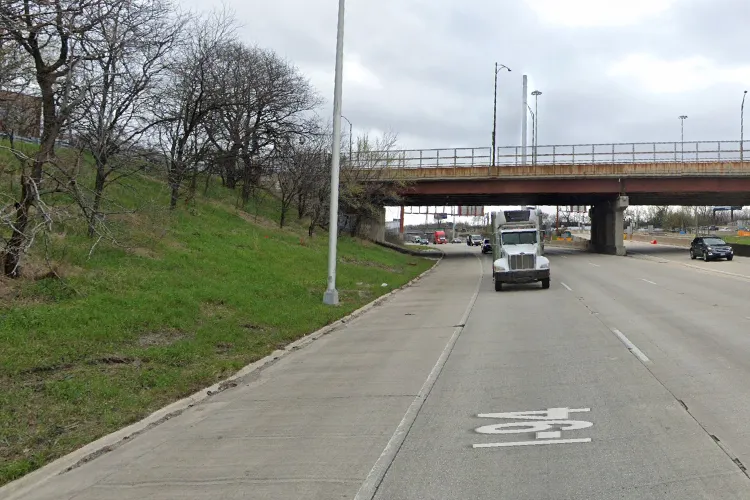
For nearly fourteen years, a set of bones found under a busy Chicago overpass sat in a file labeled only with a case number. Now, thanks to a DNA breakthrough and a relative who stepped forward, investigators finally know the man’s name and his family finally knows what happened to him. The identification closes one chapter of a stubborn mystery and shows how fast‑moving forensic tools are quietly rewriting the endings of long cold cases.
The story starts under the Kennedy Expressway, but it does not end there. Similar breakthroughs are unfolding under bridges in Oregon and along the shore of Lake Okeechobee, all powered by the same basic idea: use modern DNA and genealogy to give Human remains a voice again, even decades after they were found.
The mystery under the I‑94 overpass
The case that has Chicago talking again began when a maintenance worker discovered Human remains beneath an I‑94 overpass on the city’s Northwest Side. For years, investigators knew only that the bones belonged to an older man, and that he had likely been dead for some time before he was found. The Illinois State Police, known as ISP, kept the file open, but without a name or a clear cause of death, the investigation stalled in the shadow of the Kennedy Expressway.
The break came when ISP received a DNA sample from a relative who believed a missing family member might match the unknown man. Testing by the Cook County medical examiner’s office confirmed that the remains were those of Ron, who was 64 when he died, finally tying a real life to the anonymous case number that had lingered since 2012. Investigators said there were no signs of foul play and that trauma from a prior crash may have been a contributing factor, so criminal charges are not suspected in Ron’s death, according to ISP findings.
How DNA and genealogy cracked the case
What changed between 2012 and now was not the bones under the bridge, but the tools available to study them. Traditional DNA testing can confirm a match when investigators already have a likely relative, but it struggles when there is no obvious family member to compare. In this case, ISP leaned on forensic genetic genealogy, a technique that builds out family trees from DNA profiles and then works backward to find potential relatives who might never have known the victim was in Chicago at all.
Authorities submitted the unidentified man’s DNA to a lab and then to genealogical databases, which helped narrow the search to a specific family line. Once a relative agreed to provide a fresh sample, analysts could confirm the connection and give Ron his name back. ISP later described how this approach, combined with the original discovery under the I‑94 overpass in Chicago, finally unlocked the man’s identity after nearly fourteen years, a process detailed in an update on Chicago efforts.
A Chicago pattern of cold cases finally getting names
Ron’s identification is not an isolated win. Around Chicago, investigators have been quietly stacking up similar breakthroughs as DNA technology improves and more families agree to share genetic information. In another case, Human remains found along a Chicago interstate in 2012 were recently identified after ISP again turned to forensic genealogy, a shift that has become central enough to be summarized in a public update known simply as The Brief.
Digital producers and reporters in Chicago, including Emmy winner Elyssa Kaufman, have highlighted how these identifications are reshaping the city’s cold case landscape, with each new name turning a faceless file into a story with relatives, neighborhoods, and history. One recent report noted that Human remains found in Chicago nearly fourteen years ago were finally matched to a missing man, underscoring how long families can wait for answers and how quickly those answers can arrive once DNA and genealogy line up, as described in a detailed Chicago summary.
From Oregon bridges to Lake Okeechobee, the same tools at work
The same science that helped ISP under the Kennedy overpass is now reaching into much older mysteries far from Illinois. In Oregon, Workers clearing brush near a bridge in the early 1990s found Remains that sat unidentified for decades, despite traditional attempts to match them to missing persons. Only when investigators revisited the case with modern DNA profiling and genealogical research did they finally connect the bones to a specific individual, closing a mystery that had lingered since 1992, according to a detailed account of the Oregon case.
Farther southeast, along the shore of Lake Okeechobee, investigators faced a similar puzzle when a body was found in 2021 with no identification and few leads. Advanced DNA analysis eventually helped the Palm Beach County Sheriff and the Office identify the man as Wolfgang McKinnis, a veteran originally from Boston, after his profile was compared against genealogical databases and then confirmed with relatives. Officials later credited DNA testing and the persistence of the Palm Beach County team for finally naming the man whose remains were discovered near Lake Okeechobee, a process laid out in a report on the DNA tests.
Advanced DNA, reopened files, and a new era for cold cases
Behind these individual stories is a broader shift in how investigators think about old evidence. What used to be a dead end is now a starting point, especially when Advanced DNA techniques and forensic genetic genealogy are on the table. In Florida, one recent case near Lake Okeechobee was solved after analysts used Advanced DNA genealogy to trace a profile back to a veteran from Boston, a success that local reporter Skyler Shepard highlighted in a piece published on a Fri morning that walked through how the lab work unfolded, as described in coverage of the Advanced DNA work.
Elsewhere in the Midwest, investigators revisiting the disappearance of Cole, who vanished in 1965, used new forensic technology to finally identify His remains that had been found the following year in Illinois. Analysts were able to extract a viable DNA profile from decades‑old evidence and then lean on genealogical tools to build out a family tree, a process that would have been impossible when Cole first went missing, according to a breakdown of the Illinois case.
More from Decluttering Mom: