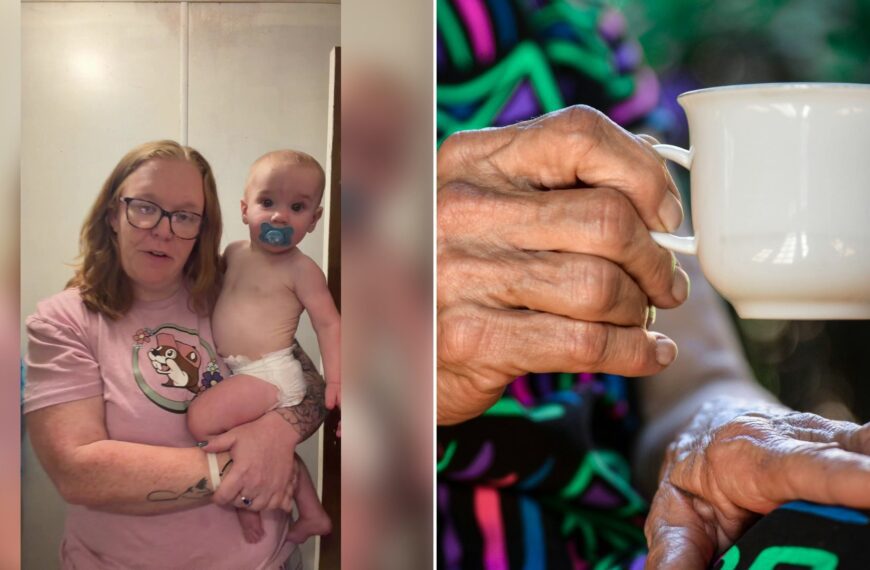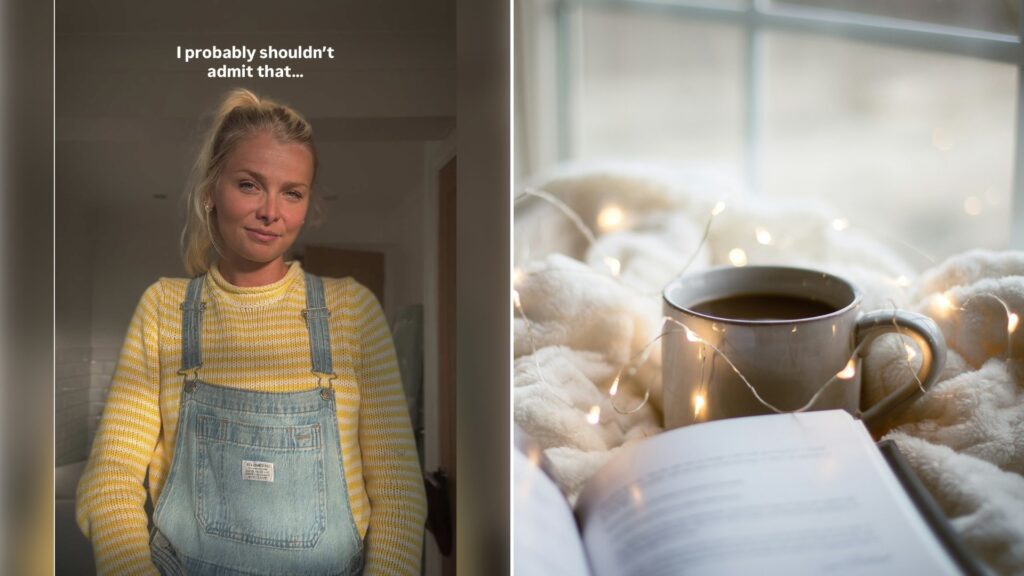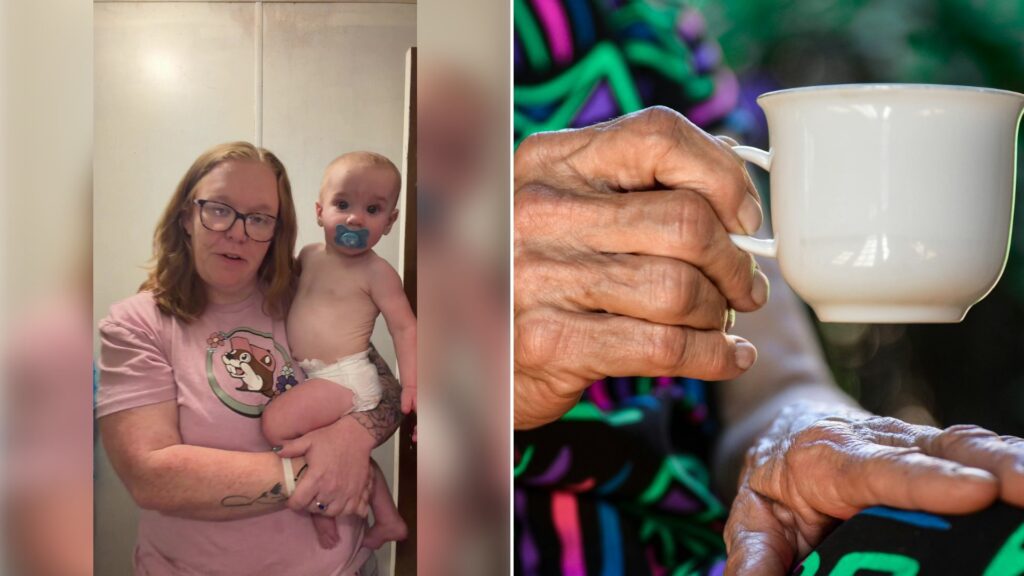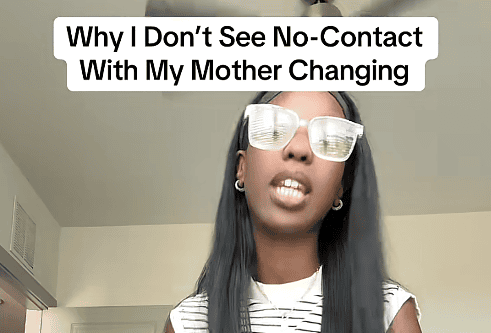
“The inevitable happened,” @comedy_barbie1 says at the start of her video. “My mom reached out to me again.” For anyone new to her page, she explains the backstory plainly: she’s been about four years no-contact with her mother, and every so often she finds the courage to share pieces of what that’s actually been like.
This time, the text from her mom said she wanted to talk, that she hoped they could “turn a new leaf.” On the surface, she admits, it reads warm. But after a lifetime with her mother, she recognizes exactly where messages like that tend to lead: emotional manipulation, and eventually, being let down again.
She traces the pattern back through her childhood. “I can name a million times growing up when I was like, I am going to trust my mother… with something that I’m struggling with,” she says — a piece of news, a fear, something exciting — only to have it “consistently used against me, consistently used to mock me, consistently used to manipulate me.” It got bad enough, she says, that as a ten- and eleven-year-old, she was already having thoughts like, “one day I will be able to cut off this woman.” That’s the kind of daily distress, she explains, that shaped her entire relationship with her mother from childhood on.
When she’d confront her mother’s behavior, she says it would turn into blame-shifting or tears — “I’m such a bad mom, and you guys hate me” — followed by more blame aimed back at her. She shares one moment that clearly still means something to her: her dad once told her that her mother had described her, privately, as one of the strongest people she knew, someone who “always figures it out.” Her mother never said that to her directly. Instead, she says, she was made to feel weak and dependent — while simultaneously being given no real guidance, and blamed whenever she got hurt navigating the world on her own.
Her fiancé still maintains some relationship with her parents and recently asked her if she sees any path to reconciliation. Her answer was clear: “There’s no reconciliation without accountability.” One thing her mother used to threaten, she says, was the opposite of what’s happening now — “you’ll never have a mom… if you keep doing X, Y, and Z” — and now, she points out, she’s the one who gets to make that choice instead.
She’s direct about the outcome since going no-contact: “my confidence has grown… I’ve grown my life in a meaningful way. I love myself.” She acknowledges the judgment that comes with saying you’re no-contact with your own mother — the assumption that she should give her “one more chance” — but points out there have already been so many chances. “I often compare it to being in an abusive relationship,” she says. “You wouldn’t tell that person to keep going back.”
Why ‘I Still Love Them’ and ‘I Still Won’t Talk to Them’ Can Both Be True
What @comedy_barbie1 describes lines up closely with how therapists talk about estrangement rooted in emotional manipulation rather than a single dramatic falling-out. It’s rarely one incident — it’s a long pattern of vulnerability being met with mockery, blame, or guilt, repeated often enough that a child learns, early, not to trust the person who’s supposed to be their safest confidant. The fact that she had thoughts about eventually cutting contact as young as ten is a meaningful detail: distress that specific, that early, tends to reflect something chronic, not a one-off bad year.
Her insistence on accountability before reconciliation is also consistent with what most family therapists recommend to anyone considering reopening a relationship like this. A message that says “let’s turn a new leaf” without acknowledging any specific harm isn’t actually an apology — it’s a request to move forward as if nothing happened, which tends to reset the same cycle rather than break it.
The title she gives her own decision — “I didn’t stop loving my mom, I stopped letting the relationship hurt me” — captures something a lot of people in similar situations struggle to articulate: no-contact isn’t always about the absence of love. Sometimes it’s the direct result of it — loving yourself enough to stop being available for a dynamic that consistently costs you more than it gives back.
You can watch the full video and follow @comedy_barbie1 on TikTok for more.