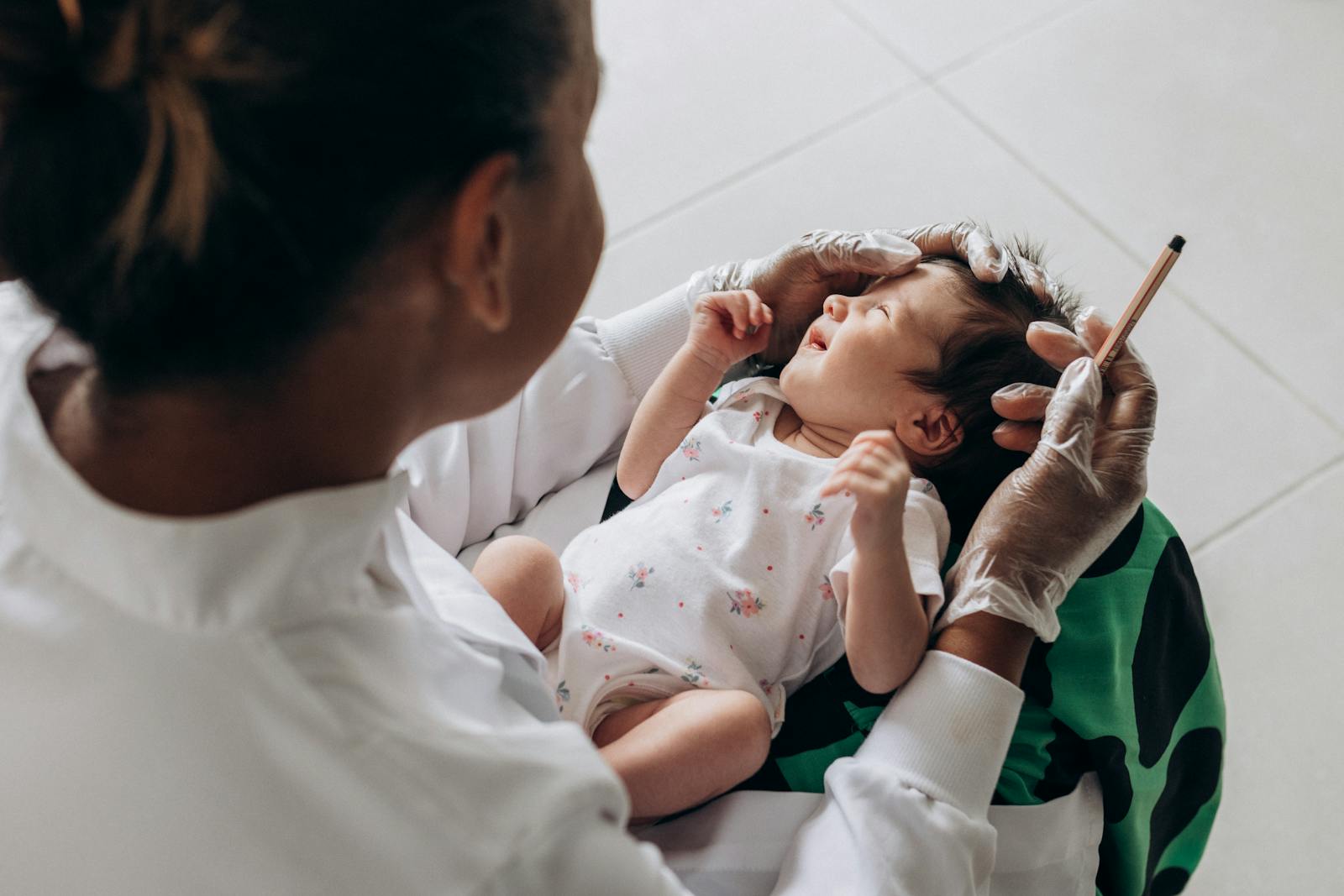
You panic when your 11-week-old bumps their head on a cupboard because anything involving a baby feels urgent. If the baby is alert, feeding, crying normally, and has no vomiting or odd sleepiness, you usually do not need emergency care—but watch closely and call your pediatrician if you see any worrying signs.
This piece walks through what to do in the first minutes after the bump, which symptoms require immediate medical attention, and simple steps to prevent similar accidents. It gives clear, calm guidance so you can act confidently rather than reacting in fear.

Immediate Steps to Take After Your Baby Bumps Their Head
Act quickly but calmly. Check the baby for obvious injuries, watch breathing and color, and comfort them while deciding if medical care is needed.
How to Assess Your Baby for Injury
Place the baby on a flat surface and remove any obstructing clothing so you can see the head and face clearly. Look for cuts, lumps, bruises, or broken skin and feel gently for soft spots that feel unusually sunken or bulging.
Note how the baby responds: steady breathing, normal skin color, and typical movement are reassuring signs. If the baby is unusually floppy, limp, or cannot move an arm or leg, treat this as a serious sign. Check the eyes for unequal pupil size and watch for clear fluid or blood coming from the nose or ears.
If the baby vomits more than once or has a seizure, consider that an emergency. Keep a record of the time of the fall and any immediate symptoms to tell a clinician.
When to Seek Medical Attention
Seek urgent care or call emergency services if the baby loses consciousness, even briefly. Immediate evaluation is also needed for seizures, repeated vomiting, significant bleeding, or any change in breathing.
Get medical attention if there is a deep cut needing stitches, a depressed skull (an obvious dent), or fluid leaking from the nose or ears. Also seek care for abnormal drowsiness, persistent high-pitched crying, or if the baby cannot be awakened easily.
If the fall involved significant height (more than a few feet), a hard object, or if the baby has a bleeding disorder or is on blood-thinning medication, contact a health professional even if they seem fine. When in doubt, call the pediatrician or a nurse advice line for specific guidance.
What Symptoms to Watch For
Watch the baby closely for the first 24–48 hours for these symptoms: repeated vomiting, increasing sleepiness, poor feeding, difficulty breathing, or changes in alertness. Note any new irritability that won’t calm with usual soothing methods.
Look for unusual eye movements, unequal pupils, or a persistent head tilt. Monitor for fever, bulging soft spot (fontanelle), or fluid from the nose/ears. Track how often symptoms occur and their start time.
Keep a simple log of feeding times, sleep periods, and any symptoms to report to a clinician. If symptoms worsen or new ones appear, seek medical help promptly.
How to Comfort Your Baby Safely
Hold the baby gently and speak in a calm, steady voice to reduce stress. Apply a cool, not icy, compress to a bump for 10–15 minutes to reduce swelling; wrap ice in a cloth first.
Avoid giving aspirin. For fever or pain, use acetaminophen or ibuprofen only if the pediatrician approves and you follow the correct dose for age and weight. Keep the baby upright for feeding if they tolerate it; if they refuse feeds or vomit repeatedly, contact a clinician.
Do not shake or jostle the baby. Ensure a safe sleep environment after the incident: place them on their back on a firm surface and check on them periodically. If the parent is unsure about watching symptoms at home, advise a short clinic visit for reassurance and clear instructions.
Understanding Baby Head Injuries and Prevention
Babies’ skulls are softer, their neck muscles are weak, and falls are common during routine care. This section explains how infants’ heads differ, practical steps to avoid bumps, what long-term risks are realistic, and when to contact a pediatrician.
How Babies’ Heads Are Different
Infant skulls have soft spots (fontanelles) and sutures that allow brain growth. The bones are pliable, which reduces the chance of a skull fracture from low-impact bumps but does not eliminate internal injury risk.
Babies have proportionally larger heads and weaker neck muscles, so even short falls can cause more head acceleration than in older children. Their brains contain more water and less myelin, which affects how force transmits inside the skull.
Minor impacts often cause brief crying, a small bump, or a bruise. Loss of consciousness, repeated vomiting, abnormal sleepiness, seizures, or unequal pupil size are signs that require immediate medical evaluation.
Ways to Prevent Future Head Bumps
Create a safer environment: place non-slip rugs, secure rugs with tape, and keep floors clear of small toys and cords. Lower changing table routines: keep one hand on the baby and store supplies within arm’s reach.
Use appropriate carriers and car seats that fit correctly and meet current safety standards. When lifting or carrying, bend at the knees and hold the baby close to the chest to reduce risk of dropping or bumping against cabinets and doors.
Pad sharp corners with corner guards; install soft-close hinges on cabinets within baby reach; and keep heavier objects on lower shelves. Supervise at eye level during transitions—picking up from the floor, from the couch, or from a changing surface—to anticipate sudden movements.
Long-Term Effects and Myths
Most minor bumps that don’t cause loss of consciousness or alarming symptoms do not cause long-term brain damage. Simple scalp hematomas or “goose eggs” usually resolve over days to weeks without lasting effects.
Avoid myths: a small bruise does not mean the child will have learning disabilities or behavioral problems later. Repeated, significant head trauma can cause problems, but single minor impacts typically do not.
Parents should document any head injury event and symptoms, especially if the baby hit their head on a hard surface or shows concerning signs. Keep photos of swelling and note time-course of symptoms to share with a clinician if needed.
When to Talk to Your Pediatrician
Contact the pediatrician if the baby vomits repeatedly, is unusually sleepy or difficult to wake, has a seizure, shows unequal pupil sizes, or has persistent vomiting more than once. Also call if the baby won’t nurse or feed normally for several hours after the injury.
Seek immediate care for any loss of consciousness, a deep scalp wound that won’t stop bleeding, or if the baby’s behavior or movement is clearly different from baseline. For mild bumps without red flags, a same-day or next-day phone check-in with the pediatrician is reasonable.
Bring details to the visit: how the injury happened, the height and object involved, visible signs (bleeding, swelling), timing of symptoms, and any changes in feeding, sleep, or responsiveness.
More from Cultivated Comfort: