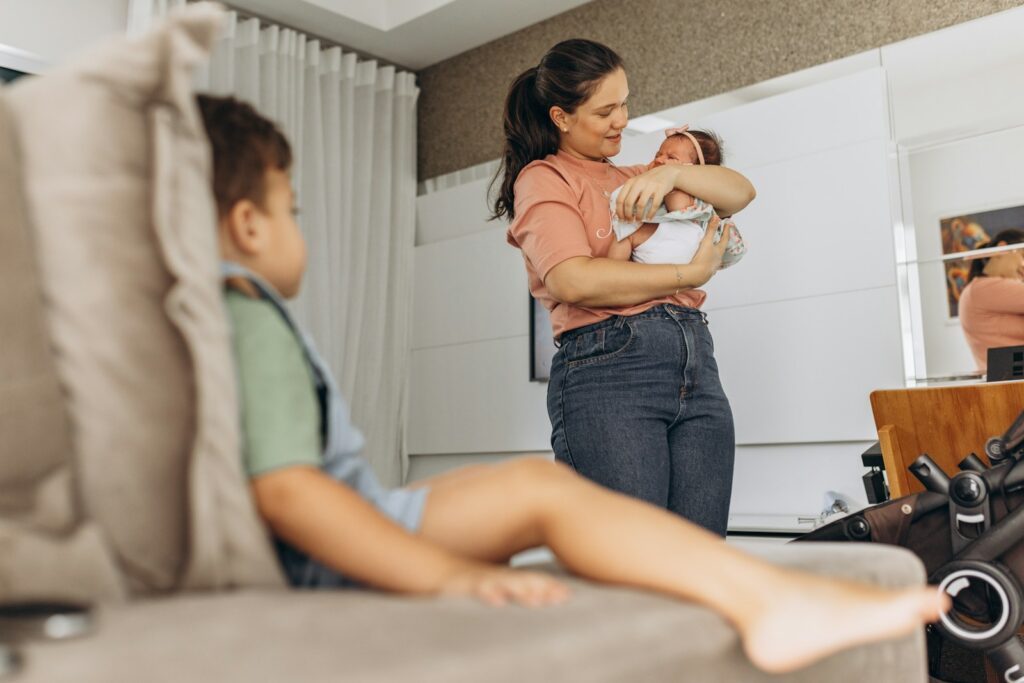
The first weeks after a baby arrives are not a social season, they are survival mode. When a new mother says she needs two weeks without visitors, she is not being dramatic, she is trying to protect her body, her baby, and her mental health. So when a mother-in-law shows up anyway, it is not just an awkward family moment, it is a collision between medical reality and generational expectations.
Behind that closed front door, there is usually a woman who has just gone through a major medical event, a newborn still learning how to exist outside the womb, and a partner scrambling to keep everyone afloat. The stakes are far higher than hurt feelings over a boundary, and the research on postpartum recovery and support makes that painfully clear.
Why “no visitors” is a medical boundary, not a snub

For many new parents, those first days are about uninterrupted contact, feeding, and rest, not entertaining relatives. In some families that involves a surrogate, where intended parents may have negotiated to be in the delivery room so they can have immediate skin to skin contact when the baby is born, a condition that can be a non‑negotiable part of their agreement with the surrogate and agency, as described in guidance on your surrogate. That same instinct to prioritize early bonding is what drives parents to limit visitors at home, especially when they are still bleeding, learning to feed, and processing the birth.
Lactation experts often recommend what some call a “nursing vacation,” a period when Her only job is to lie in bed, skin to skin with Her newborn, rest and feed. In that model, She can pump if the baby does not latch and focus on getting as much milk as possible out of Her breasts while the baby is suckling, rather than worrying about whether the living room is presentable for guests, as described in advice on a postpartum nursing vacation. When a mother-in-law ignores a two‑week pause and walks through the door anyway, she is not just stepping into a family milestone, she is stepping into a carefully protected medical and emotional cocoon.
How ignored boundaries derail recovery and feeding
Postpartum recovery is not a 24‑hour turnaround, especially after surgery. Obstetric specialists remind patients that Getting enough rest is easier said than done, because taking care of a new baby is exhausting, and they explicitly recommend resting whenever the baby sleeps and avoiding additional strain after a C‑section, advice that appears in clinical guidance on healing After surgery. When a mother-in-law insists on visiting early, even “just to hold the baby,” she can unintentionally pressure the new parent to stay upright, host, and talk, instead of lying down and letting their abdomen, pelvic floor, and hormones stabilize.
Feeding plans can also be derailed by well‑meaning relatives who do not understand how fragile those first days are. Breastfeeding educators urge parents to room in with the baby so they can feed frequently and so their wishes are not ignored by hospital staff, advice captured in the reminder to LET parents SPEND THE NIGHT TOGETHER and Room in with their newborn to avoid having to keep defending the baby from eager residents, as explained in detailed breastfeeding preparation tips. That same principle applies at home: every time a visitor asks to “just pop in,” the parent is pulled away from that on‑demand rhythm, which can increase stress and make feeding challenges harder to solve.
When family will not listen, outside support matters
Many parents discover that the hardest part of enforcing a visitor blackout is not the rule itself, but the backlash. In one online parenting group, an Anonymous participant described making a clear post that there would be no visitors until the family was ready, with no exceptions, and shared that they waited until their daughter had two months of vaccines before opening the door, urging others not to feel bad for enforcing boundaries, a stance detailed in a widely shared group comment. That kind of peer validation can be a lifeline when a mother-in-law accuses a new parent of being “ungrateful” or “overprotective” for asking for two quiet weeks.
Professional organizations also stress that no one should have to navigate this alone. One major obstetric group notes that One website to bookmark for virtual mental health support is Postpartum Support International, explaining that They offer online support group meetings and even phone sessions where parents can dial in to ask questions and feel less isolated, as outlined in their overview of a postpartum support network. Therapists who specialize in perinatal mental health echo that Additionally, Postpartum Support International has a host of support groups for a variety of perinatal challenges and can connect parents with local therapists who understand the emotional fallout when family members dismiss postpartum needs, a point emphasized in a compassionate open letter.
More from Decluttering Mom: