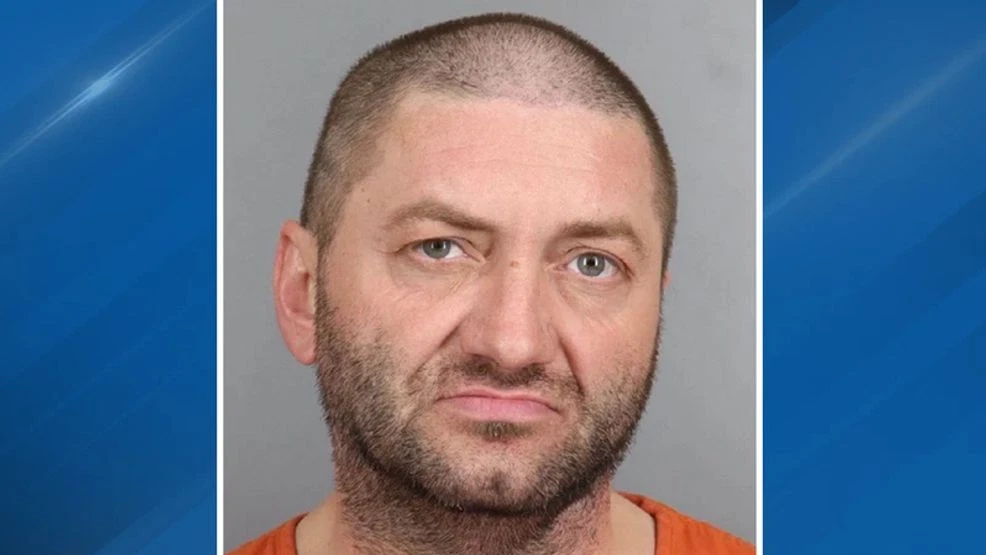
The attack started with a kiss. Two women were standing near their truck in suburban Colorado when a stranger in a car spotted them, decided they were lesbians, and, by his own account, chose to try to kill them. What followed was a terrifying few minutes of screaming, screeching tires, and a pickup truck being rammed in what prosecutors later called a hate-fueled attempt at murder.
Now that driver, identified by authorities as Vitalie Oprea, has been sentenced to 20 years in prison. The case has become a stark example of how quickly casual visibility in public can turn dangerous for queer people, and how the justice system is starting to treat that kind of violence as something more than just “road rage.”

The sidewalk confrontation that turned into a chase
According to investigators, the chain of events began when Vitalie Oprea drove through an intersection in Aurora and noticed two women near their truck. He later told authorities that he “saw them kissing,” and that simple moment of affection was enough, in his mind, to justify violence. Witnesses said Oprea began yelling at the women and making obscene gestures from his vehicle, escalating the encounter from ugly harassment to something far more dangerous.
Instead of driving away, Oprea made a U-turn and came back toward them. Authorities say he was driving his parent’s vehicle without permission near East Arapahoe Road when the confrontation unfolded. By that point, the women understood that this was not just some guy shouting from a car window. They moved away from the road, into a grassy area, trying to put space between themselves and the stranger who had fixated on them.
“I wanted to kill them”: a car used as a weapon
That attempt to get to safety did not stop him. The women fled into the grass, but Oprea drove over a curb, onto the sidewalk, and into that same grassy area to chase them. Witnesses reported that he steered directly toward the pair, turning his car into a weapon aimed at people who were on foot and clearly trying to get away.
When the women managed to scramble back to their truck and climb inside, the danger still did not end. According to a detailed account, Witnesses said Oprea rammed their truck with his vehicle, then got out and went straight for the passenger side. Oprea kicked the truck, opened the door, and tried to pull one of the women out of the passenger seat, according to prosecutors who later described the attack in court.
Inside the hate motive, in his own words
Plenty of violent incidents on the road get written off as impulsive rage, but this one came with a chilling level of clarity from the driver himself. In a recorded account cited by authorities, the Driver said he targeted the women because he believed they were lesbians and admitted that he “wanted to kill them.” Another report notes that when officers arrested him, he told them, in essence, “I drove at them” because of what he had seen, a statement highlighted in coverage of the case in Arapjo County.
That kind of explicit motive is why prosecutors framed the case as a hate crime from the start. They argued that Oprea did not just lose his temper, he acted on a bias against people he believed were lesbians and tried to turn that prejudice into lethal action. The charging documents and later sentencing referenced how Oprea escalated from shouting and obscene gestures to driving over a curb and across a grassy area, then ramming a truck and physically attacking the passenger door, all while focused on the women he believed were queer.
The charges, the courtroom, and a 20-year sentence
Once the dust settled and the women survived the attack, the legal system moved quickly. Prosecutors in the 18th Judicial District charged Oprea with attempted first degree murder and a slate of related counts, including bias-motivated crimes and criminal mischief. A summary of the case notes that the office, which was highlighted in a piece introduced with “Getting your Trinity Audio player ready,” emphasized that this was not treated as a simple assault case. Instead, they leaned into the hate-crime enhancement and the attempted murder counts to reflect how close the women came to being killed.
In court, Oprea ultimately pleaded guilty to attempted first degree murder and one count of criminal mischief, according to a detailed breakdown of the plea in Jan. A judge then sentenced him to 20 years in prison, a term that local coverage framed as a clear message that using a car to hunt down people because of their perceived sexual orientation will be met with “accountability and significant consequences,” language echoed in a report that began, “Man to spend 20 years in prison.”
Why this case hits a nerve for LGBTQ safety
For queer readers, none of this feels abstract. The idea that a stranger can clock two women sharing a moment, decide they are lesbians, and then chase them with a car taps into a familiar, low-level fear that comes with holding hands in public or leaning in for a kiss at a stoplight. Coverage in LGBTQ Nation framed the attack squarely inside that reality, slotting it into a broader pattern of Crime and Justice stories where bias is not a side note, it is the engine.
At the same time, local officials have been careful to say that the women did everything right in the moment: they tried to get away, moved off the road, and then got into their truck to create a barrier. The fact that they survived is due in part to those split-second decisions and in part to sheer luck, given how Thanks to quick reporting, police were able to track down the car and arrest Oprea. A national write-up noted that When the case reached sentencing, the 20-year term was held up as a sign that courts are starting to treat anti-LGBTQ violence with the seriousness it deserves.
More from Decluttering Mom: