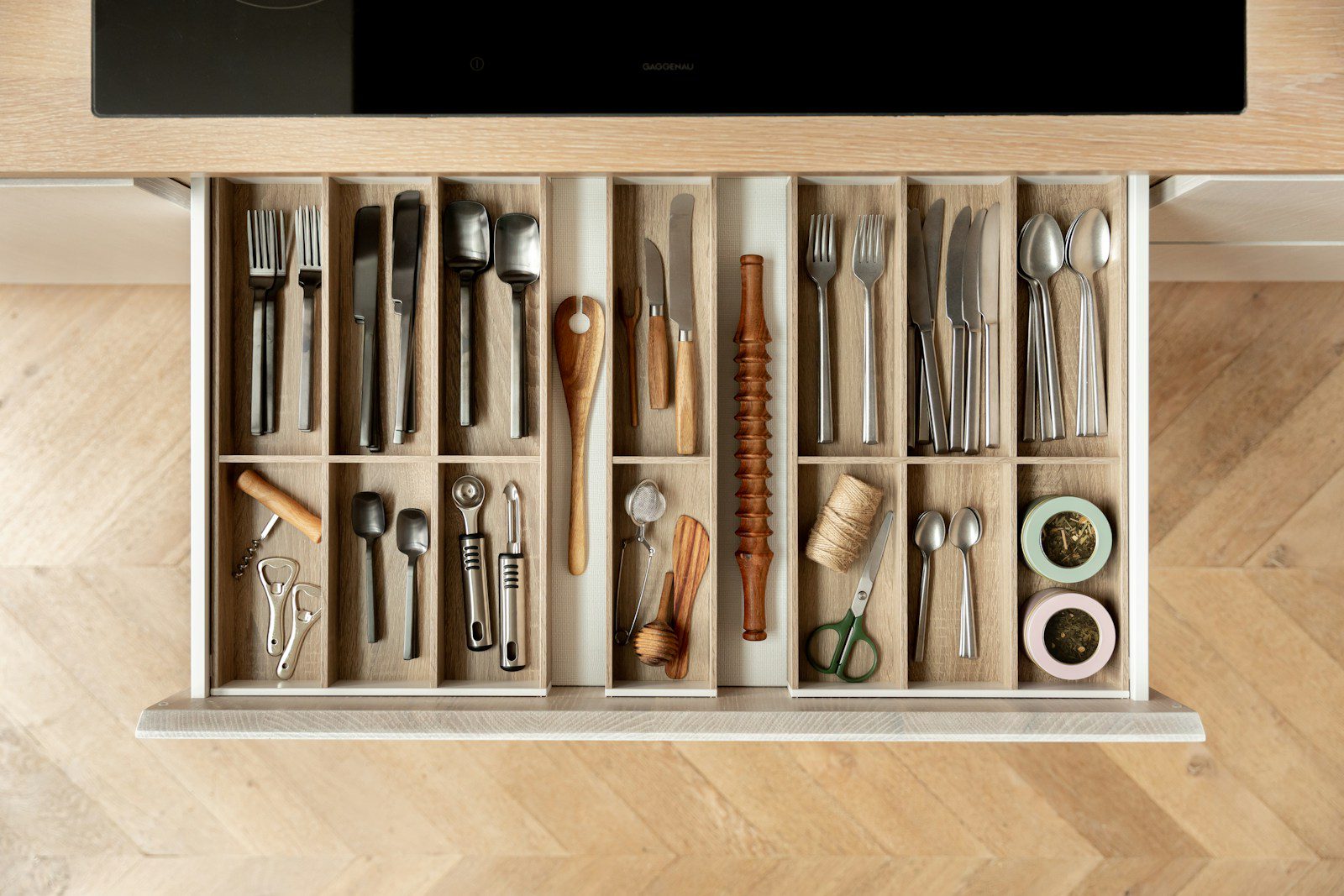
Kitchen drawers have a way of turning into junk zones, even for people who swear they are organized. The right insert can flip that chaos into a system that actually survives busy weeknights, and it does not have to cost more than a takeout lunch. After testing three highly rated organizers under 11 dollars, one budget-friendly design ended up reshaping how every utensil, gadget, and stray packet lives in the kitchen.
What stood out was not just how tidy the drawers looked, but how much faster everyday cooking felt once the clutter had a real structure. The best organizer of the bunch managed to squeeze more storage into the same footprint, kept tools visible instead of buried, and held up to constant use without warping or sliding around.
The $11-and-Under Contenders
The first organizer in the lineup was a classic expandable bamboo tray sized for standard kitchen drawers. Its appeal is obvious: bamboo looks polished, the dividers feel sturdy, and the expandable sides promise a custom fit for everything from salad tongs to steak knives. In testing, that design did deliver a clean grid for flatware and longer tools, and the rigid frame kept utensils from drifting into a tangled pile. Similar bamboo trays are often marketed as sustainable and durable, and product listings highlight how the material resists everyday nicks and stains while still feeling lighter than solid hardwood, which tracks with how this tray behaved under regular loading and hand washing.
The second pick leaned in the opposite direction, using flexible plastic with modular compartments that can be snapped together or separated. Instead of one big tray, it functioned like a set of puzzle pieces that could be rearranged to match the drawer. That made it ideal for oddly shaped tools like a digital thermometer, a garlic press, or the detachable beaters from a handheld mixer. Retail descriptions for comparable modular systems emphasize that mix-and-match layout and point to stackable pieces that can be used in bathroom or office drawers as well, a claim that lined up with how easily these bins moved from kitchen to desk without wasting space.
The Organizer That Quietly Rewired the Kitchen
The third organizer looked the least flashy at first glance, but it is the one that fundamentally changed how the kitchen worked. It was a compact, tiered utensil tray that stores cutlery in overlapping channels instead of flat rows, so forks, spoons, and knives nest in labeled slots that run front to back. That vertical layout freed up nearly half the drawer for other tools, turning a single flatware drawer into a two-in-one station for both silverware and everyday gadgets. Product pages for similar tiered trays call out that space saving design and show how the angled channels can hold a full set of cutlery in a footprint that is significantly smaller than a traditional tray, which matched the real-world gain in usable room.
What really shifted daily habits was how the labels and staggered tiers cut down on hunting. Instead of shuffling through a pile of spoons to find a single teaspoon, each type of utensil had a clearly marked lane, and the stacked layout kept everything visible at a glance. Comparable organizers are often advertised with close-up photos of those etched or printed labels and note that the design is meant to help kids or guests find the right utensil without asking, a small detail that proved surprisingly accurate when visitors could suddenly navigate the drawer on their own.
What Actually Matters When You Pick a Drawer Organizer
Testing all three side by side made it clear that the best organizer is not automatically the prettiest or the one with the most compartments. The bamboo tray looked the most upscale and felt solid, but it demanded a wide drawer to really shine and left awkward gaps in narrower cabinets. The modular plastic bins were flexible and easy to clean, yet they needed more fiddling to keep from sliding unless the drawer was lined. The tiered cutlery tray, on the other hand, fit into a standard drawer, stayed put with its textured base, and created enough leftover space to park a whisk, peeler, and measuring spoons without crowding. Listings for similar products consistently stress non slip bottoms, compact footprints, and dishwasher safe materials, and those details ended up mattering more than any aesthetic flourish.
Price also played a bigger role than expected. All three organizers came in under 11 dollars, but the tiered tray typically sits at the lower end of that range while still offering the most dramatic improvement in usable space. Retail pages for comparable budget organizers often highlight that they can replace bulkier trays and reduce the need for multiple inserts, which effectively stretches a small purchase across several storage problems. In practice, that meant one inexpensive tray not only cleaned up the flatware situation but also freed another drawer that no longer had to carry the overflow.
More from Decluttering Mom: