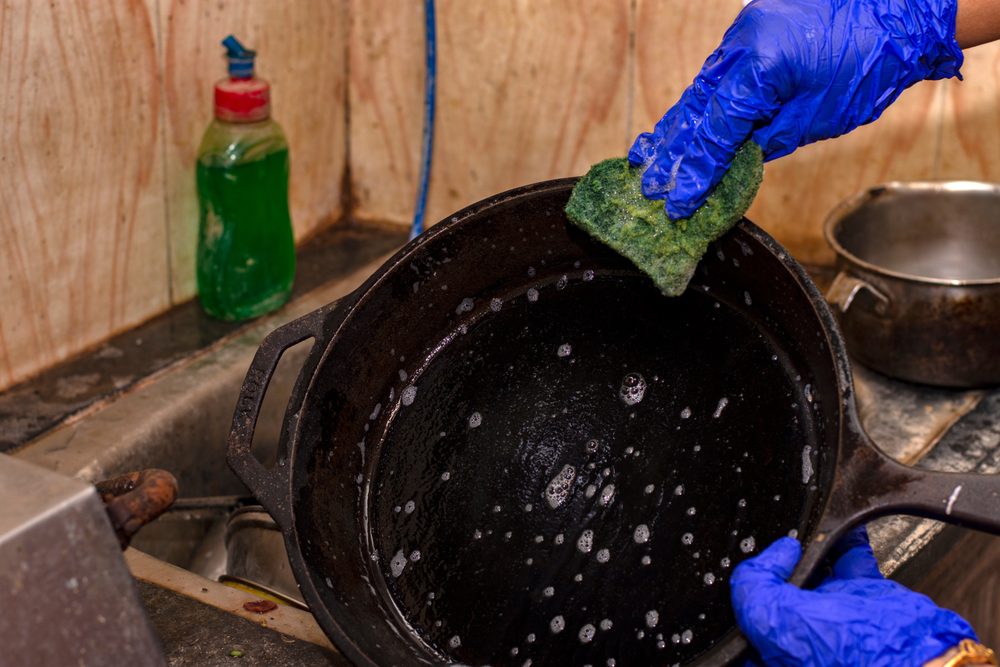
I used to be terrified of my cast iron skillet. Everyone online made it sound like a fragile, moody piece of cookware that would rust, flake, or fall apart if I so much as looked at it wrong. So for years, I avoided using it—until I finally learned the right way to clean it.
Turns out, it’s not nearly as complicated as people make it seem. In fact, most of what we’ve been told about cast iron care is completely wrong.
The Big Myth: You Can’t Use Soap
Let’s start here, because this one tripped me up for ages. I’d always heard that you should never use soap on cast iron because it strips away the seasoning. But according to experts (and the folks at Lodge, who literally make the skillets), a tiny bit of mild dish soap is totally fine.
The key is not to soak it. Just wash, rinse, and dry right away. The seasoning—the hard, black finish you’ve built up over time—is polymerized oil that’s bonded to the metal. Soap isn’t strong enough to remove that, unless you scrub like your life depends on it.
The Right Way To Clean It (Step-by-Step)
Here’s the expert-approved method that changed how I care for my cast iron:
-
Rinse while it’s still warm. Don’t wait until it’s completely cooled down; warm water helps loosen food bits.
-
Scrub gently. Use a brush, sponge, or even a little kosher salt as a natural abrasive if something’s stuck.
-
Use a tiny bit of soap if needed. Just enough to lift grease—nothing crazy.
-
Dry completely. Moisture is the enemy of cast iron. I usually pop mine on a warm burner for a minute to evaporate any leftover water.
-
Oil it lightly. Rub in a few drops of cooking oil with a paper towel while it’s still warm. This keeps the surface protected and nonstick.
That’s it. No soaking, no steel wool, no overnight dread.
What You Should Never Do
Experts agree: don’t leave your skillet sitting in water, and definitely don’t put it in the dishwasher. Both will cause rust. And if it ever does rust a little? Don’t panic. Just scrub it off with steel wool, rinse, dry, and re-season—it’s not ruined, just needs a little TLC.
Also, avoid cooking super acidic foods (like tomato sauce) for long periods until your pan is really well seasoned. It can eat away at the finish if you’re still building that protective layer.
Why I’ll Never Baby My Cast Iron Again
Now that I know how forgiving cast iron actually is, I use mine constantly—for searing, baking, even frying eggs. The more I use it, the better it gets. And the cleanup? Honestly, easier than my stainless pans.
It turns out, taking care of cast iron isn’t about avoiding mistakes—it’s about building good habits. Wash it, dry it, oil it, and it’ll probably outlive you.
So if your cast iron has been sitting in the cupboard because you’re scared to mess it up, pull it out and give it a little love. It’s tougher than it looks—and once you know the right way to clean it, you’ll wonder why you ever hesitated to use it.