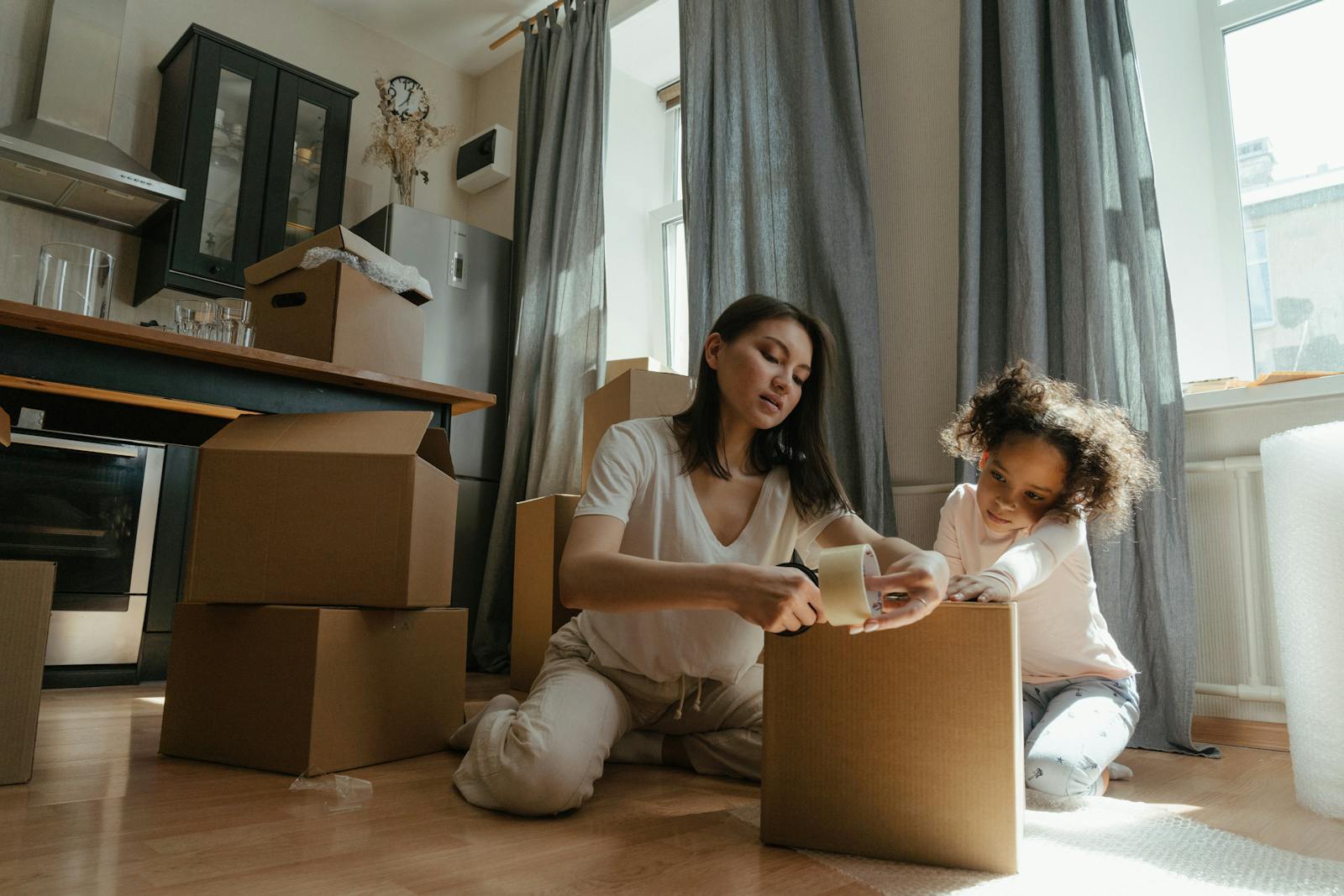
Every year, roughly 27 million Americans change residences, according to U.S. Census Bureau data. Millions of those movers are families with school-age children, and for the kids involved, the hardest part often is not the packing or the new bedroom. It is standing at the edge of a playground where every other child already has a best friend, a lunch table, and an inside joke. That image haunts relocating parents more than any moving bill ever could.
The good news, backed by decades of developmental research, is that most children do adapt. A 2013 study published in Pediatrics found that while frequent moves in childhood correlate with higher rates of emotional and behavioral difficulties, the majority of children who move once or twice show resilience over time, particularly when family stability and parental warmth remain consistent. The pain is real, but it is not usually permanent.

The hidden weight of a family relocation
On paper, a move can look like pure upside: a better salary, a safer neighborhood, maybe an international posting with long-term career growth. Parents accept these offers believing the change will eventually benefit the whole family, even if the first months feel destabilizing.
What catches many off guard is the guilt that follows. The parent who watches a daughter stand alone at recess is not just seeing one rough afternoon. They are replaying the entire decision to uproot the family. Was the promotion worth it if the child looks lost at school? Online parenting communities are full of these confessions. In one widely discussed Reddit thread from a working mother, commenters reminded the poster that moving is a massive transition but still holds the potential to pay off, a sentiment that captures how fear and opportunity tend to arrive on the same truck.
Families who anticipate this guilt can blunt it with early action: visiting the new school before the first day, scheduling regular video calls with old friends, and signing up for a local activity within the first two weeks so the new city is not defined solely by what was left behind.
Why children unravel after a move
Children rarely express relocation stress the way adults expect. Instead of saying “I’m sad,” a preschooler who once handled drop-off calmly may suddenly cling, scream, or refuse to walk through the classroom door. The American Psychological Association notes that younger children in particular may regress to earlier behaviors, including bedwetting, thumb-sucking, or separation anxiety, because they lack the vocabulary to articulate what they are feeling.
For school-age children, the social toll can cut deeper. Classrooms and playgrounds run on unwritten codes: which games are popular, who pairs up for group projects, what jokes land and which ones don’t. A new student arrives without that script. The child standing alone at recess may not lack social skills at all. They may simply lack information about how this particular group operates.
That distinction matters. It shifts the response from worrying that something is wrong with the child to helping them decode a new social environment, a far more solvable problem.
What the lonely recess moment really shows
A single image of a child alone by the fence can send a parent spiraling, but context matters. Children cycle in and out of groups quickly. A solitary two minutes might be followed by ten minutes of shared play that no adult witnesses. Researchers at the Child Trends research organization have noted that brief periods of solitary play are developmentally normal, even for children who are not new to a school.
When the pattern repeats day after day, though, it signals something different: the child is struggling to translate their personality into this unfamiliar setting. For some families, that recurring scene becomes the clearest evidence that the emotional weight of the move has landed squarely on the youngest member of the household.
The moment also exposes a gap in how adults and children experience the same relocation. A parent spends the workday in onboarding meetings, learning systems, meeting colleagues. Built-in structure and social contact come with the job. The child, meanwhile, faces unstructured recess periods where social hierarchies were cemented months ago. When the parent later hears that their kid spent another break alone, the contrast between their own busy day and the child’s isolation can feel like a punch to the chest.
Practical ways to help a child connect
No parent can force classmates to welcome a newcomer, but they can stack the odds. Research on children’s friendship formation, including work cited by the National Association of School Psychologists, consistently shows that structured activities are far more effective than open-ended “go make friends” advice.
At school: Ask the teacher about pairing the new student with a classroom buddy for the first few weeks, or about small-group projects that mix children who do not usually play together. Many elementary schools now run formal “welcome buddy” programs for exactly this reason. If the school does not have one, a brief conversation with the teacher can accomplish the same thing informally.
Outside school: A robotics club, a soccer league, a community art class. Any setting where the child has a shared task with peers removes the pressure of cold-approach socializing. Aim to start one such activity within the first two weeks of the move, before isolation has time to harden into habit.
At home: Children who have just moved often feel that everything changed at once, from the route to school to the sounds outside the window at night. Keeping bedtime rituals, familiar meals, and weekend routines intact sends a clear message: not every part of your life is in flux. Parents who admit they also miss the old neighborhood, while still expressing confidence in the new one, model something powerful. They show a child that grief and forward motion can coexist.
Balancing parental guilt with long-term perspective
Guilt can push parents toward overcorrection: reversing the move entirely, or shielding a child from every moment of discomfort. Neither helps. Social growth almost always involves short stretches of awkwardness, and developmental psychologists have long noted that manageable stress, what researchers call “positive stress,” can build coping skills when a child has a supportive adult nearby.
The same relocation that initially leaves a child alone at recess may later give them fluency in a second language, exposure to a different culture, or access to opportunities that would have been out of reach in the old zip code. A 2022 study in the Journal of Marriage and Family found that children who moved for a parent’s job advancement often showed improved academic outcomes within two years, particularly when the move reduced household financial stress.
Long-term perspective should not erase present pain, though. The American Academy of Child and Adolescent Psychiatry advises parents to watch for warning signs that a normal adjustment has tipped into something more serious: persistent school refusal, sleep disruption lasting more than a few weeks, withdrawal from activities the child previously enjoyed, or new aggression. If those signs appear, a conversation with a school counselor or a child therapist who understands relocation stress is not an overreaction. It is the next right step.
When parents treat that lonely recess scene as a prompt for thoughtful action rather than a verdict on their choices, they give their child the best chance to turn a painful start into a story of eventual belonging. Most of the time, that is exactly what happens.
More from Decluttering Mom: