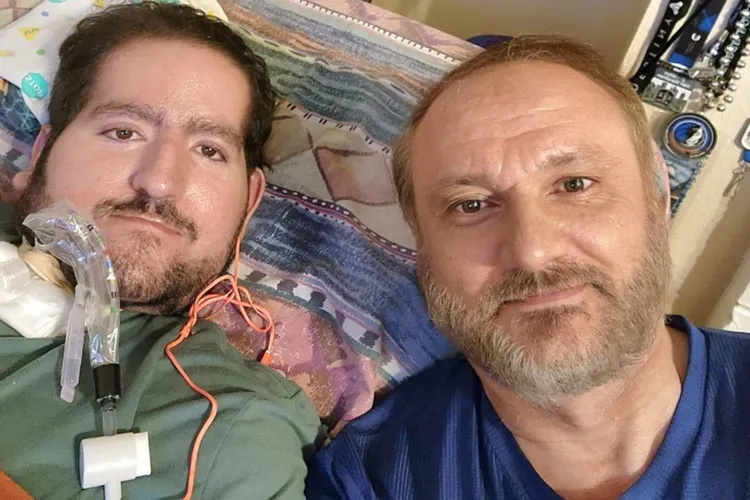
The story of Maher Tarabishi is the kind that stops people mid scroll. A Texas father, locked in immigration detention, was reportedly told he could not leave to bury his disabled son, Wael, even for a few hours under guard. What should have been a quiet, painful goodbye has instead turned into a national flashpoint over how far immigration enforcement is willing to go.
At the center of it all is a simple, searing image: a grieving parent, held in a cell, learning that the child he once fed, bathed, and carried will be laid to rest without him. The details are specific, the stakes are intimate, and the fallout is bigger than one family.
The father, the son, and a life built around care

Before immigration enforcement ever entered the picture, Maher Tarabishi’s life in Texas revolved around his son, Wael Tarabishi. Wael lived with a rare disorder and significant disabilities, and multiple reports describe Maher as his sole caregiver. Family members say Maher handled the daily grind of medications, hospital visits, and basic tasks that most parents of teenagers never have to think about. The bond was so tight that, after Wael’s death, relatives recalled Maher crying that his son simply “wouldn’t die without me,” insisting there was “no way he died without waiting for me,” a grief captured in detailed accounts of Tarabishi’s reaction.
Those who knew the family say Wael’s world shrank dramatically after Maher was taken into custody. Advocates have shared that after Maher’s detention, Wael’s health declined, with relatives struggling to fill the gaps left by the person who knew his routines best. One summary notes that Maher was the primary caretaker in Texas, and that after he was taken away, Wael’s condition worsened until he died, leaving the family to plan a funeral that, they assumed, would include the father who had been at his bedside for years.
From routine check-in to locked cell
The turning point came not in a dramatic raid but during a scheduled appointment. Maher Tarabishi was detained on Oct. 28, 2025, during a routine check-in at an Immigration and Customs Enforcement facility in Dallas, according to a detailed NEED TO KNOW breakdown. He had been checking in with ICE for years, his attorney says, and arrived that day expecting another quick appointment. Instead, he was taken into custody and transferred into detention, leaving Wael at home without the person who had managed his complex care.
Immigration and Customs Enforcement has said publicly that decisions about custody and release are made on a case by case basis, a line echoed in a statement cited by local reporting on Marabishi’s case. But for Maher’s family, the timing felt brutal. Advocates note that ICE’s decision to keep him locked up came roughly three months before Wael’s death, and that the agency’s refusal to budge afterward capped what one account described as a devastating stretch “of these past few months,” a phrase that appears in coverage of how Since his detention the family has been in crisis.
The funeral request that hit a wall
Once Wael died, the family’s focus shifted to a single, narrow ask: let Maher out, briefly, to say goodbye. His attorney, Ali Elhorr, who represents the Arlington resident, says he filed a request for humanitarian release so Maher could attend his son’s burial, a plea described in detail in coverage of Ali Elhorr’s advocacy. According to the lawyer, an officer initially indicated that the request might be approved, only to later report that a supervisor had stepped in to block it. One account quotes Maher’s wife, Fatim, recalling that “the officer informed me that his director stepped in and told him that Maher would not be allowed to attend Wael’s burial,” a moment captured in a detailed narrative about Maher and Wael.
Maher had sought what is known as humanitarian parole, a temporary release that Immigration and Customs Enforcement can grant in extraordinary circumstances. His legal team says he offered to be transported in shackles and remain under guard at all times, a detail included in a breakdown of how Maher Tarabishi tried to work within ICE’s rules. Yet the answer, according to his attorney, was still no. Advocates say that refusal is especially striking because ICE itself has acknowledged that it can weigh medical and family factors in custody decisions, a point that appears in reporting on how There was discretion that simply was not used.
“All Humanity Is Lost”: the backlash builds
Once word got out that Maher would not be at Wael’s funeral, the reaction was swift and sharp. Advocates and commentators described the decision as “unimaginable cruelty” and pointed to it as proof that the system has lost its moral compass. One widely shared piece framed the episode under the stark phrase All Humanity Is, quoting critics who argued that U.S. Immigration and Customs Enf officials had choices and still opted for the harshest possible outcome. Another account described ICE as being Slammed For Not’s Funeral, capturing the sense that this was not just a bureaucratic call but a moral failure.
National figures and grassroots organizers alike seized on the story as a symbol of what they see as a dehumanizing enforcement regime. One advocacy-focused outlet highlighted how critics, including prominent voices like Robert Reich, were rallying around Maher Tarabishi and Wael as a case study in cruelty. Another report described how the family in North Texas felt that ICE “killed him when they” took Maher away, a raw accusation that appeared in coverage of the Wednesday funeral they had hoped he would attend. For many watching from the outside, the details were so specific, and the harm so avoidable, that the case quickly became shorthand for everything they believe is broken about immigration detention.
ICE’s defense, the family’s grief, and what comes next
Immigration and Customs Enforcement has not publicly walked through every internal step that led to the denial, but the agency has leaned on familiar language. Officials have stressed that they review custody and parole requests individually and that public safety and flight risk are part of the equation, a stance reflected in statements about how ICE weighed Maher’s case. Supporters of stricter enforcement argue that once someone is in custody, carving out exceptions can be complicated and that the system cannot run on emotion alone. But that line has landed poorly with those who see a father in shackles as no threat to anyone at a graveside service.
For Maher’s family, the policy talk is background noise to a much more personal loss. Relatives say Wael Tarabishi’s funeral will go forward in Texas without the man who bathed him, fed him, and sat through long nights in hospital rooms, a reality described in coverage that notes Wael’s death and burial “without him” by reporter Nicquel Terry Ellis. One local story captured the family’s plea in the days before the service, explaining how ICE was urged to reconsider even as the clock ticked down. Another described Maher simply as a Caregiver Texas dad held by ICE, a reminder that behind the legal jargon is a parent who will now grieve from behind a locked door.
The fallout is unlikely to fade quickly. Advocates are already pointing to Maher’s case as a rallying cry for reforms that would make humanitarian parole less arbitrary and more transparent, especially in cases involving death, disability, and primary caregivers. Detailed accounts of how ICE Denied Father’s Request to attend his son’s funeral, how The officer informed the family of the final decision, and how critics have said All Humanity Is in decisions like this are already circulating widely. In that sense, the agency’s choice did more than keep one father from one funeral. It handed critics a vivid, painful example of what happens when a system built on discretion chooses not to use it.
More from Decluttering Mom: