The story sounds almost unreal at first glance: an infertile couple, after years of failed treatments, finally holding their newborn thanks to an AI system that helped do the delicate work of in vitro fertilization. Yet this is exactly what is now happening in fertility clinics that are starting to lean on algorithms and robots instead of only human hands. Around the world, a new generation of AI-guided IVF tools is quietly turning heartbreak into birth announcements, one lab at a time.
The couple at the center of this shift is part of a small but growing group whose pregnancies are tied directly to automated systems that can spot sperm, guide needles, and even run entire fertilization steps with minimal human touch. Their baby is not just a personal victory, it is a proof of concept that software and robotics can change what is possible for people who have been told for years that biology is not on their side.
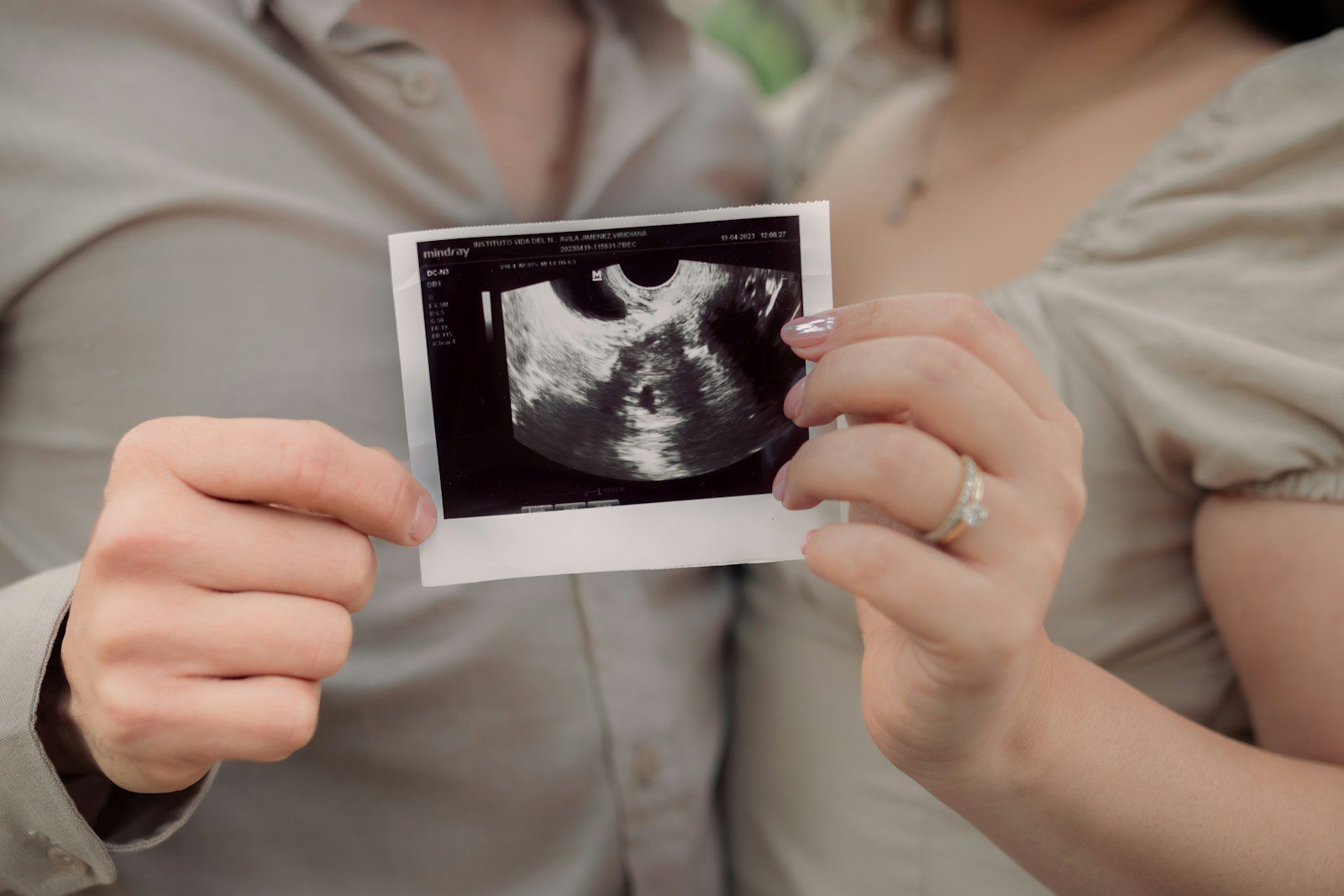
The couple who waited 18 years
For the pair who had been trying to conceive for 18 years, the usual fertility playbook had already been exhausted. Standard IVF cycles, hormone regimens, and repeated lab visits had not delivered a viable pregnancy, largely because doctors could not reliably find usable sperm in samples affected by azoospermia, a condition where sperm are either absent or extremely scarce. When they were finally offered an AI-based approach, it was less a trendy add-on and more a last shot at a family.
The turning point came when a team led by Zev Williams, director of the Columbia University Fertility, used a system called STAR to scan semen samples frame by frame and flag even barely moving sperm cells that human embryologists would likely miss. That same journey is described in another account that notes how, struggling to get, the couple finally conceived with the help of artificial intelligence that could detect sperm invisible to the naked eye. For them, AI was not an abstract buzzword, it was the difference between another failed cycle and the embryo that became their child.
How AI actually steps into the IVF lab
Behind the scenes, the technology that helped this family is part of a broader wave of tools reshaping how labs run IVF. Instead of relying only on a technician’s judgment to pick sperm or embryos, AI models are trained on thousands of images and videos to spot subtle patterns that correlate with better outcomes. Systems like STAR, developed over five years by Zev Williams and colleagues at the Columbia University Fertility, are designed to comb through semen samples from people with azoospermia and flag rare, viable sperm cells that can be used for intracytoplasmic sperm injection.
Other teams are focused on Selecting healthier sperm in milliseconds, using computer vision to judge shape and movement in ways that go beyond what a human eye can process in real time. At the same time, clinics are starting to adopt AI systems that monitor embryo development in incubators and score which embryos are most likely to implant, part of a broader shift described in overviews of how, From AI to advanced imaging, IVF is being transformed by data driven tools.
From lab bench to delivery room: a fully automated first
For the couple whose baby headlines this new era, the most striking detail is how much of the fertilization process was handled by machines. In April 2025, reports described how In April a baby was conceived through almost entirely automated in vitro fertilization, using a robotic system that carried out key steps of the ICSI method under remote supervision. That same milestone is echoed in social media posts that open with the line, “In a groundbreaking medical milestone, the world’s first baby has been born using a fully automated, AI-assisted IVF system,” underscoring how unusual it is to have software and robotics running so much of the process.
Technical write ups describe how this fully automated approach relied on a platform that combined AI with robotics to perform intracytoplasmic sperm injection without a human hand on the joystick. One report on the First Infant Conceived notes that the system, called Conceivable, integrated imaging, decision making algorithms, and micromanipulation hardware to inject sperm into eggs. Another viral description from a clinic account in Goa framed it more bluntly, saying the child was “conceived entirely through AI-powered robotic IVF in 23 steps, with a robot guiding the needle with precision beyond human steadiness and turning five treated eggs into a healthy baby boy.
Inside the robot’s job: ICSI without the shaky hands
To understand why this matters, it helps to look at ICSI itself. Intracytoplasmic sperm injection is the technique where a single sperm is injected directly into an egg using a glass needle, a process that demands extreme steadiness and judgment from embryologists. As one analysis of ICSI points out, the method has drawbacks because it relies on high levels of precision and human decision making, and “They become tired and that can affect the quality of their work,” especially over long shifts.
Robotic systems are designed to take over that repetitive, high stakes work. In one trial, Scientists reported the first baby born via a robotic sperm injection system that automated the ICSI step, using AI powered enhancements in reproductive technology to guide the needle and inject sperm. The automation of the ICSI procedure, according to that report, resulted in the birth of a healthy baby boy, showing that a robot can match or even exceed human steadiness when it comes to the most delicate part of IVF.
Mexico’s 40-year-old trailblazer
The couple whose story anchors this piece is not alone in turning to AI when traditional IVF fails. In Mexico, a 40-year-old woman has been highlighted as giving birth to the world’s first baby conceived through an AI-assisted in vitro fertilization procedure. That report notes that the pregnancy took place in Mexico, and that the AI system helped guide embryo selection and timing in a way that improved her odds despite age related fertility challenges.
The parents of another AI linked baby have spoken about their experience at a private clinic in Mexico City, describing themselves as “the parents of the world’s first baby born thanks to AI” and sharing how their treatment at a private clinic used an AI powered IVF system to monitor and optimize each step. That same account, which briefly references a Network Error in a video clip, still manages to capture the emotional side of being early adopters of a technology that could soon become routine for older patients.
Robots and AI move from trial to clinic
What makes the couple’s story feel less like a one off miracle and more like a glimpse of the future is how quickly similar systems are spreading. Reports on Robots and AI helping couples have children through IVF note that at least 20 children have already been born through clinical trial programs where robotic platforms handled parts of the fertilization process. Those trials, which explicitly reference the clinical trial methods used, suggest that the technology is already beyond the lab prototype stage.
At the same time, mainstream explainers are starting to treat AI guided IVF as part of everyday life, not science fiction. One widely shared video notes that artificial intelligence is now becoming a big part of daily routines, from phones to cars, and adds that for the first time ever a woman gave birth to a baby boy through IVF guided by an AI powered system, calling it strange that it is the first time IVF has leaned so heavily on algorithms. Another social post framed the same development as “In a groundbreaking medical milestone, the world’s first baby has been born using a fully automated, AI-assisted IVF system,” underlining how quickly the narrative has shifted from niche research to viral talking point.
Columbia’s STAR method and the sperm hunt
For couples dealing with male factor infertility, the most dramatic change is happening at the microscopic level. The STAR system, whose name stands for sperm selection with AI, was built by Zev Williams and his team at the Columbia University Fertility to analyze semen samples from people who had azoospermia. Instead of a technician scanning slides manually, the AI reviews video frames and flags cells that show even minimal movement, turning what used to be hours of searching into a faster, more reliable process.
That work is part of a broader push at Columbia to use AI to improve reproductive outcomes. Researchers at the Columbia University Fertility Center have reported the first successful pregnancy using an AI guided sperm recovery method they developed, describing how the algorithm helps identify viable sperm in extremely challenging samples. Another overview notes that a team at the same center is expecting to soon see the first baby in the United States born after AI assisted sperm selection, with the system Selecting healthier sperm in milliseconds.
Beyond one baby: a wave of AI-guided pregnancies
The infertile couple who finally conceived with AI help are part of a pattern that stretches across continents. In one widely shared clip, a presenter explains that for the first time ever a woman gave birth to a baby boy through IVF guided by an AI powered system, emphasizing how unusual it is that IVF is now being guided by software. Another report describes how a baby has been born following an AI powered IVF system that monitored embryo development and reduced human error during treatment, noting that the breakthrough in fertility tech shows potential to cut mistakes in IVF treatments and help patients who struggle to produce eggs due to ovulatory issues.
At the same time, social media accounts have amplified the story of parents who say, “We are the parents of the first ever baby born to AI,” sharing details of their care at a private clinic in. Another viral post from a tech focused account describes the child as the world’s first fully AI conceived baby and asks, “Are you paying attention yet?” while detailing how groundbreaking medical milestone AI did more than assist, it effectively ran the fertilization steps.
More from Decluttering Mom: