Vice President JD Vance is betting big on a simple, provocative idea: the path to a meaningful life runs less through promotions and performance reviews and more through diapers, school pickups, and late‑night feedings. He has started saying it bluntly in public, arguing that Americans are chasing purpose in the wrong places and that parenthood, not professional status, is where the deepest sense of “why” actually lives.
That message lands at a moment when work has crept into every corner of American life and birthrates are sliding. Vance is not just talking about family values in the abstract, he is tying his own growing household to a broader political project that treats babies as both personal joy and national strategy.
The speech that put cubicles in the crosshairs
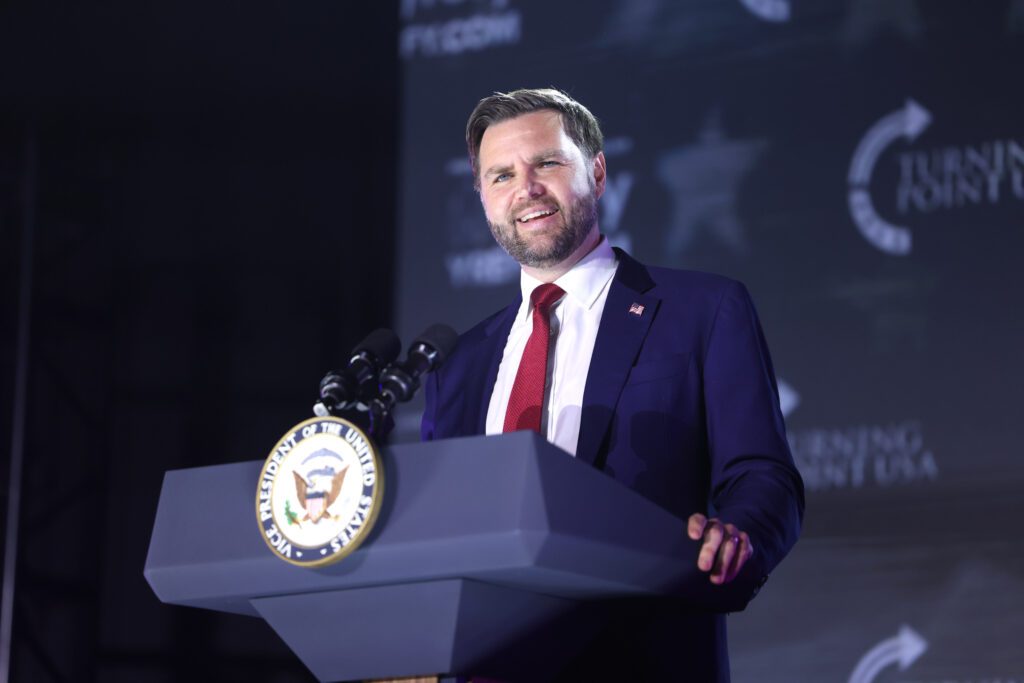
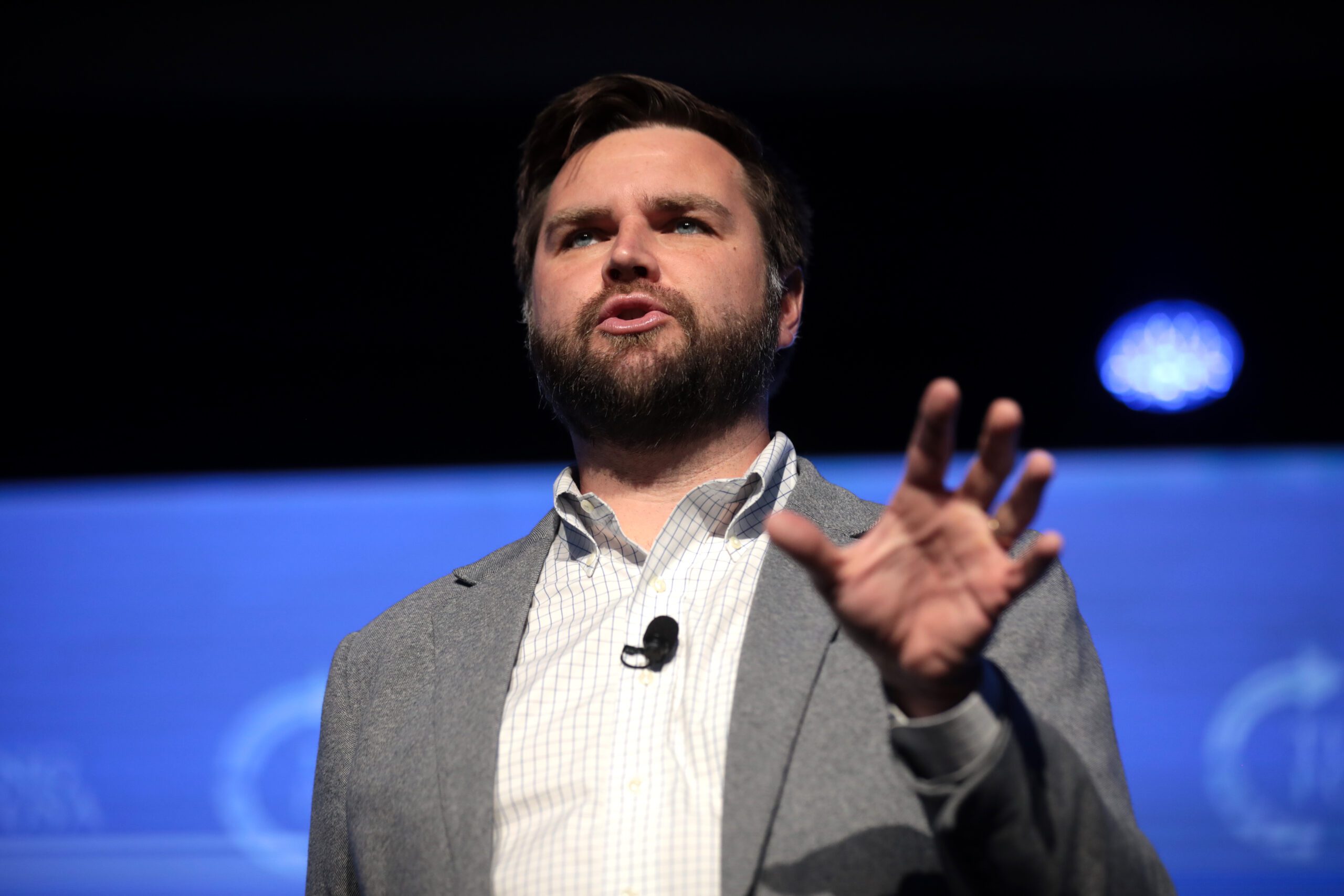
Vance’s latest push came in Washington, where he used a high‑profile address to draw a sharp line between office life and family life. He told Americans that the glow of a computer screen and the routine of a cubicle are not where they will uncover lasting fulfillment, casting modern white‑collar work as a kind of spiritual dead end. In his telling, the real payoff comes when people pour their energy into raising children and building households that last.
Speaking as Vice President JD in the nation’s capital, he framed this not as a niche religious view but as a broad cultural correction for Americans who feel burned out and unmoored. A companion account of the same remarks underscored how directly he addressed his audience, telling Americans that “You” will not find great meaning in a cubicle but will if you dedicate yourself to the creation and sustenance of human life.
“You’re never gonna find great meaning in a cubicle”
Vance has boiled his argument down to a line that is tailor‑made to ricochet around social media: “You’re never gonna find great meaning in a cubicle.” It is a jab at the culture of endless email and Slack messages, but also a broader critique of a society that, in his view, has convinced young adults that career milestones should come first and children, if at all, much later. He contrasts that with the messy, demanding, but, in his words, richer work of raising kids.
At a recent rally, Vance put it even more starkly, saying that life’s “great meaning” is found not in cubicles or screens but in creating and sustaining human life. A separate account of his remarks captured him repeating that “You’re never gonna find great meaning in a cubicle” as he urged listeners to “ditch the cubicle” and look for purpose in a baby, a line that circulated widely after being shared with a photo of Usha Vance and their growing family.
Turning his own family into Exhibit A
Vance is not shy about using his personal life as proof that he believes what he is selling. He and his wife, Usha, have already built a household that looks very different from the one‑ or two‑child norm in many professional circles. The couple share sons Ewan and Vivek and daughter Mirabel, and they have made a point of talking publicly about the joys and chaos that come with that many small kids under one roof.
Earlier this year, Vance and Usha,, who already share sons Ewan, 8, and Vivek, 5, and daughter Mirabel, 4, announced Usha’s pregnancy in an Instag post that doubled as a call for Americans to have more children. Another account of the same news noted that JD and his wife, Usha Vance, 40, announced in Jan that they are expecting their fourth child, a baby boy, and that they plan to welcome their new son in late July.
“Practices what he preaches” on parenthood
For Vance, the pregnancy announcement was not just a family milestone, it was a political talking point. He has leaned into the idea that his own household is a kind of rebuttal to critics who say pro‑family rhetoric is cheap if it is not backed up by personal choices. When he talks about the value of big families, he now points to his own as evidence that he is not asking Americans to do anything he is unwilling to do himself.
In one interview, he framed Usha’s pregnancy as proof that he “practices what he preaches,” tying the news directly to his broader argument that people find their purpose in life by becoming parents. That same conversation highlighted how his administration is seeking a “historic expansion” of the Mexico City Policy, which restricts foreign groups that receive U.S. funding from providing or promoting abortion, underscoring how tightly he links his family story to concrete policy.
From personal story to national policy
Vance’s pitch is not just cultural, it is explicitly political. He has argued that if the country wants more babies, it cannot simply lecture young adults about responsibility and then leave them to figure out the bills. In his view, the state has a role in making it financially realistic for people to choose parenthood earlier and more often, especially for those who do not have the cushion of inherited wealth or high salaries.
At a major anti‑abortion gathering, Vance stated that the government’s role is to make it easier for young mothers and fathers to afford and raise children, a line that fits neatly with his broader economic populism. Another report on his comments about Usha’s pregnancy noted that his administration was seeking a “historic expansion of t” restrictions on foreign groups that receive U.S. funding, a reference to the same policy, which he presents as part of a larger pro‑life and pro‑family agenda.
Trump, abortion policy, and the global stage
Vance’s message on cubicles and babies sits inside a much bigger project being driven from the White House. President Trump has made opposition to abortion and support for traditional family structures a defining feature of his administration, and Vance has become one of the most visible messengers for that cause. Together, they are trying to turn a set of moral claims into a governing blueprint that stretches far beyond U.S. borders.
One recent account of Vance’s comments on his wife’s pregnancy noted that the Trump administration is looking to make a “historic expansion” of the Mexico City Policy, which prevents foreign groups from receiving U.S. funds if they provide or promote abortion. A separate report on the administration’s broader stance quoted Vance describing how “a culture of radical individualism took root, one where the responsibilities and joys of family life were seen as obstacles,” as he reaffirmed that “America is a pro‑family country” and that the government should support people “eager to raise” children, a line captured in coverage of his remarks about America and its commitment to life.
Onstage at the March for Life
The most vivid stage for Vance’s argument has been the March for Life in Washington, where he has blended personal news with sweeping claims about the country’s future. Standing before a crowd of anti‑abortion activists, he has described life itself as a gift and framed the decision to have children as both a private joy and a public good. The setting, with families pushing strollers and teenagers holding signs, gives his anti‑cubicle rhetoric a ready‑made backdrop.
One video from the event shows Speaking at the March for Life in Washington on Friday, Jan, Vice President JD Vance announcing that his family is expecting a fourth child and declaring parenthood and family central to America’s future. Another report described how Rim Rock Marathon Vice President JD spoke at a rally ahead of the March for Life in Washington on Friday, Jan, where Memb of the crowd heard him tout the Trump administration’s record against abortion and link that record to a broader push for more families and more children.
Work, screens, and a culture of “radical individualism”
Underneath the sound bites, Vance is making a diagnosis about American culture that goes beyond family size. He argues that the country has drifted into a mindset where personal freedom is defined almost entirely by individual choice and career mobility, with family obligations treated as constraints. In that world, the cubicle and the smartphone become symbols of a life spent chasing self‑expression and consumer comfort rather than investing in the next generation.
In one speech, he described how “a culture of radical individualism took root, one where the responsibilities and joys of family life were seen as obstacles to ov” other goals, a line captured in coverage of his remarks about radical individualism. At the same time, he has told crowds that “We march to witness: life brings great meaning,” insisting that meaning “is found not in cubicles or screens, but in creating and sustain” human life, as one detailed account of his remarks put it.
The political gamble behind a pro‑baby message
Vance is betting that a bluntly pro‑baby message can cut through partisan noise and speak to something more basic: the sense that a life built only around work and consumption feels thin. By tying that intuition to specific policies, from expanded support for parents at home to stricter rules on abortion funding abroad, he is trying to turn a cultural critique into a governing agenda. The risk is that some Americans will hear his message as judgment on those who are child‑free by choice or circumstance, or who find real satisfaction in their careers.
Still, he keeps returning to the same core claim, telling crowds in Washington and beyond that Americans will not find their deepest purpose in a cubicle but in the hard, ordinary work of raising children. Whether he is announcing that Vance and Usha are expecting again, outlining how the Trump administration wants to expand the Mexico City Policy, or reminding marchers that “life is a gift,” he is stitching together a single story: that the country’s future, and individual meaning, both start at home with a baby in someone’s arms.
More from Decluttering Mom: