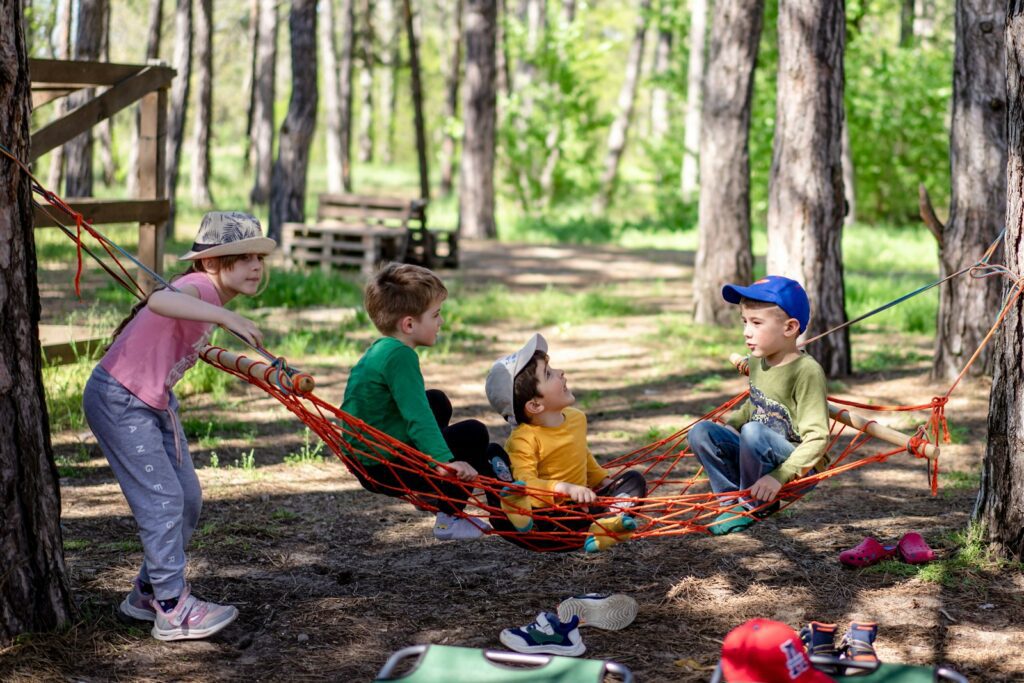
Fewer than 3 in 10 American preschoolers get the outdoor playtime pediatricians consider a baseline for healthy development, according to federal survey data, and the numbers don’t improve much as kids get older. The CDC’s own National Survey of Children’s Health found that only 28.8% of children ages 3 to 5 spend at least three hours a day playing outside on weekdays, the benchmark researchers use to define adequate outdoor activity for that age group. Once kids reach school age, the yardstick changes to the CDC’s broader Physical Activity Guidelines, which call for 60 minutes of activity daily for ages 6 to 17 — and national tracking shows barely a fifth to a quarter of kids in that range actually hit it.
What the National Numbers Actually Show
The Physical Activity Alliance’s 2024 U.S. Report Card on Physical Activity for Children and Youth, a research consortium that grades the country annually on child activity levels the way a school report card grades a student, put overall physical activity for kids at a D-minus, estimating that only 20 to 28% of children and adolescents ages 6 to 17 meet the CDC’s 60-minutes-a-day guideline. That’s a national grade the Alliance has handed out repeatedly in recent years, not a one-time dip. Combined with the CDC’s own preschool data, the pattern holds across the entire span of childhood: from age 3 through age 17, the clear majority of American kids are falling short of the outdoor and physical activity benchmarks pediatric guidance actually calls for.
Why “a Third” Undersells How Wide the Gap Is
Framing it as roughly a third of the recommended amount is, if anything, generous. The Physical Activity Alliance’s grading rubric treats a D-minus as closer to failing than passing, and its 20-to-28% range means that in the best-case reading, fewer than 3 in 10 school-age kids are meeting the minimum bar on a given day, let alone consistently across a full week. For preschoolers, the CDC’s 28.8% figure specifically measures weekday outdoor time, when school schedules, structured care, and shorter daylight hours already work against unstructured play — the exact conditions most families are navigating on an ordinary Tuesday, not just weekends or summer break.
What’s Actually Displacing Outdoor Time
Researchers tracking these trends point to a familiar set of pressures rather than any single cause: denser after-school scheduling, more time in structured indoor activities, screen time competing directly for the same after-school hours outdoor play used to fill, and, in many communities, fewer walkable or safe outdoor spaces within easy reach of home. None of these individually explains the full gap, but together they’ve steadily eaten into the unscheduled outdoor time that used to be the default after the school day ended.
Why Pediatric Groups Keep the Bar Where It Is
The 60-minutes-a-day standard isn’t an arbitrary round number — it’s the CDC’s own baseline for supporting healthy bone and muscle development, cardiovascular fitness, and mental health in children, and it’s echoed in guidance from the American Academy of Pediatrics on the value of unstructured outdoor play specifically, separate from organized sports or gym class. That distinction matters because a child can rack up structured activity minutes in a scheduled class and still miss out on the kind of free, self-directed outdoor play researchers say supports independence, risk assessment, and creativity in ways structured time doesn’t fully replace.
What the Data Means for Families
None of this requires overhauling a family’s schedule overnight. The gap between 60 minutes and what most kids are actually getting is measured in a national data set, not a judgment on any individual household, and it reflects structural pressures — daylight, scheduling, screen competition — as much as personal choices. But the size of the gap is worth knowing plainly: national survey and report-card data both point to the same conclusion, that most American kids, across nearly every age band tracked, are getting a fraction of the outdoor activity pediatric guidance says they need, and the shortfall starts as early as preschool.