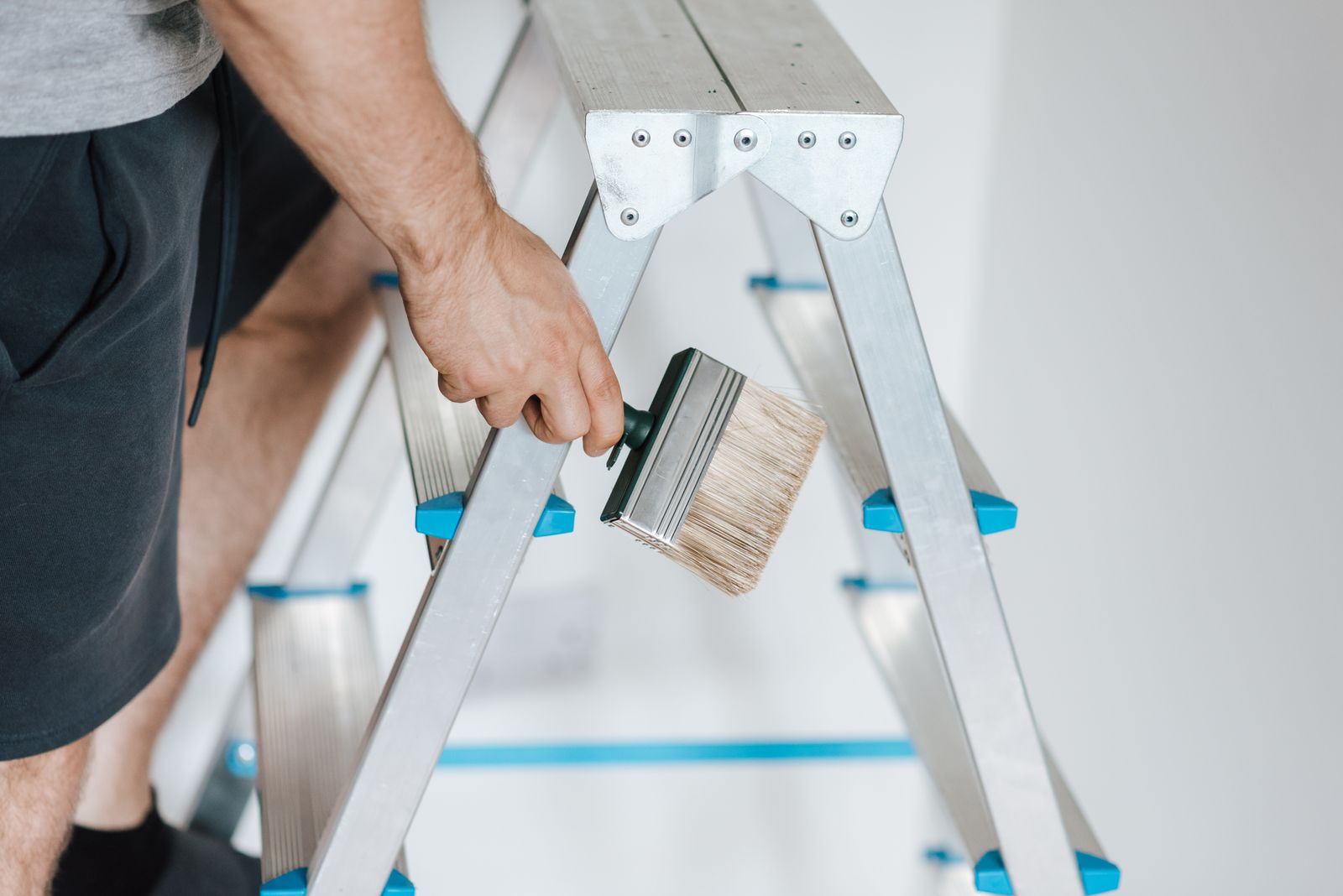
More than 500,000 people are treated for ladder-related injuries in the United States every year, and more than 300 of them die, according to Consumer Product Safety Commission and CDC figures compiled by the American Ladder Institute for its national safety campaign. That death toll is worth sitting with for a second, because a ladder is such an ordinary object, the thing leaning against your garage wall behind the bikes and the hose reel. Peer-reviewed research digging into sixteen years of emergency department records found that 97.3 percent of ladder injuries happen outside of work entirely, overwhelmingly at home, and that people hurt in ladder falls get admitted to the hospital at nearly double the rate of the average emergency room visit for any consumer product. Ladders don’t just add to home injury statistics, they add a share of severe, hospital-admission-level injuries that is wildly out of proportion to how often most of us actually climb one. And this happens to be exactly the season it plays out. As the leaves come down and gutters fill up, ladders come out of garages across the country, which makes right now the moment to get honest about how you use yours.
The Injury Numbers Are Small. The Consequences Are Not.
Here is what makes ladder falls different from, say, tripping over a rug. A study published in the American Journal of Preventive Medicine that reviewed sixteen years of national emergency department data found an average of roughly 136,000 ladder-related injuries treated in U.S. EDs every year, with the annual count climbing about 50 percent over the study period. Fractures were the single most common outcome, showing up in nearly a third of all cases. But the number that really tells the story is the hospital admission rate: 9.9 percent of ladder-injury patients were admitted, compared with roughly half that rate for consumer product injuries generally. When the CDC took a close look at what actually kills people in ladder falls, head injuries were involved in 49 percent of the fatalities it studied. Falling from a ladder tends to mean falling from a real height with your hands full, and there often isn’t time to get your feet back under you before your head meets the ground, the driveway, or a fireplace hearth below.

The Season When Ladders Come Out
Fall is ladder season whether you plan it that way or not. Gutters need clearing before the first hard freeze, storm windows need hanging, holiday lights are only a few weeks off, and every one of those chores sends people up a ladder they may not have touched since spring. None of that is a reason to skip the work. It’s a reason to treat the ten minutes you spend climbing with as much respect as the job itself, because the habits below are the difference between a productive Saturday and an afternoon in the emergency room.
Keep Three Points of Contact, No Exceptions
This is the rule that OSHA and every ladder manufacturer’s warning label agree on, and it’s the one people break first: keep two hands and one foot, or two feet and one hand, on the ladder at all times while you’re climbing. That means the paint can, the bundle of shingles, the box of lights goes up separately, hoisted by rope or carried in a tool belt or a bucket clipped to your side, never gripped in one hand while the other reaches for the next rung. Face the ladder, keep your body centered between the rails, and resist the very human urge to lean out to the side for one more branch or one more section of gutter. If you can’t reach it without leaning, come down and move the ladder instead.
Get the Angle Right Before You Climb
Extension and straight ladders are built around a specific geometry: for every four feet of height to the point where the ladder rests against the wall, the base needs to sit one foot out from the wall. Too upright and the ladder can tip backward the moment you shift your weight. Too shallow an angle and the feet can slide out from under you. Set the base on firm, level ground, never on a box, chair, or stack of bricks to gain a few extra inches, and if you’re working on soft or uneven soil, use a ladder leveler or have someone hold and stabilize the base while you’re on it.
Respect the Weight Limit
Every ladder is stamped with a duty rating, a maximum weight it’s engineered to carry, and that number has to cover your body weight plus any tools or materials you’re carrying. Add your own weight to a loaded tool belt, a full paint can, or an armful of shingles, and it’s easier than you’d think to sail past what the ladder was ever built to hold. Check the rating before you buy or borrow a ladder for a job, and when the math is close, size up rather than down.
Never Climb Onto the Top
Extension and straight ladders aren’t meant to be climbed on their top three rungs, and stepladders aren’t meant to be stood on at the top step or the cap where the paint tray sits, according to OSHA’s guidance for portable ladders. Those top sections exist to give you something to hold onto and a stable frame, not a platform to stand on. Standing there puts your center of gravity above the ladder’s point of support, which is exactly the setup for a backward or sideways fall. If a job requires reaching that high, the honest answer is that you need a taller ladder, not a riskier position on the one you already own.
Extend It Three Feet Past the Roofline
If you’re using an extension ladder to get onto a roof or any elevated surface, it needs to extend at least three feet above the point where you’ll be stepping off. That extra length gives you something solid to hold onto during the trickiest moment of the whole job, the transition between ladder and roof, when you have the least secure footing and the most reason to want a handhold. Skimping on that extension to avoid hauling a bigger ladder up the driveway is one of the more common ways people end up falling from real height rather than off a low rung.
When to Just Call Someone
Some jobs are worth paying for, and knowing which ones is its own kind of home maintenance skill. Second-story gutter work, anything on a steep or wet roof, anything near power lines, and any task where you’d be working alone with nobody around to notice if something went wrong are all good candidates for hiring a professional instead. So is any ladder job if you’re managing a balance issue, a recent surgery, or you simply don’t climb often enough to feel steady doing it. There’s no trophy for doing it yourself if doing it yourself means an ambulance ride, and a gutter cleaning service costs a fraction of what a broken wrist or a night in the ER does.
None of this is complicated, which is sort of the point. A ladder is one of the plainest tools in your garage, and the falls that send hundreds of thousands of people to the emergency room every year rarely come from some freak accident or a defective rung. They come from the small shortcuts: the one hand holding a paint can, the base set an inch too close to the wall, the last two steps taken without really thinking about it because you’ve climbed this same ladder a hundred times before. Treat the climb itself as part of the job, not the boring part before the real work starts, and the numbers stop being about someone else’s Saturday and start being about how you get through yours in one piece.