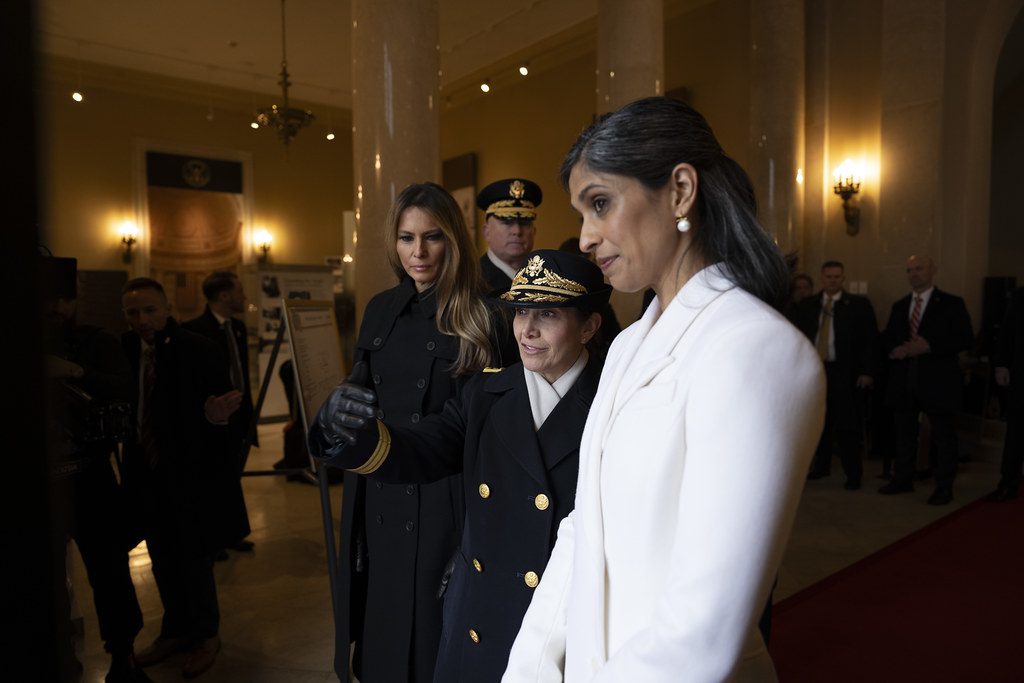
The “MAGA baby boom” that conservatives have been talking up is no longer just a slogan on social media. It now has a very literal footprint inside the Trump White House, where at least three high profile figures are expecting new arrivals and turning the West Wing into something closer to a parenting co‑op than a traditional political workplace. From the vice president’s residence to the press office, pregnancy announcements are colliding with policy debates about how to lift America’s sagging birth rate.
At the center of it all is second lady Usha Vance, whose fourth pregnancy has become a cultural touchstone for Maga activists who want bigger families to be both normalized and celebrated in public life. Around her, aides like White House press secretary Karoline Leavitt are making their own history, and together they are testing what it looks like when a pro‑natalist message is not just campaign rhetoric but a lived reality inside the country’s most powerful address.
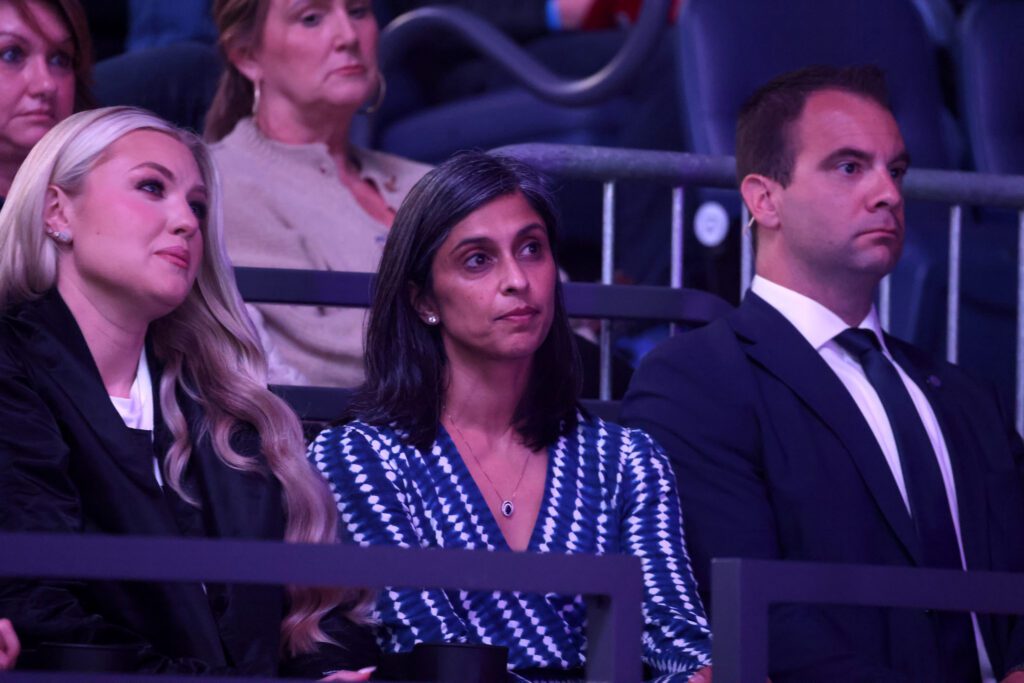
The baby boom lands at 1600 Pennsylvania Avenue
Inside the Trump administration, the phrase “MAGA baby boom” is not just a meme, it is a headcount. At least three prominent figures in the current White House orbit are now pregnant, a cluster that has turned routine staff meetings into impromptu parenting check‑ins and nursery planning sessions. Officials describe a workplace where strollers and diaper talk are as common as budget briefings, and where the politics of family size are playing out in real time in the corridors of power.
Second lady Usha Vance is expecting her fourth child, White House press secretary Karoline Leavitt is pregnant with her second, and at least one senior aide in the West Wing has also announced a pregnancy as part of what colleagues casually call the “boom.” One adviser told reporters that nearly all of their West Wing colleagues now have babies or young children, and that the culture has shifted toward openly trading tips on sleep schedules and daycare along with talking points.
Usha Vance’s fourth pregnancy and a historic vice presidency
For Maga activists who have spent years arguing that conservatives should lead by example on family size, Usha Vance has become a kind of proof of concept. When Usha Vance, the second lady of the United States, announced she was pregnant with her fourth child, it was immediately framed on the right as a lifestyle statement as much as a personal milestone. Her husband, Vice President JD Vance, has built his political brand around family and cultural decline, so the couple’s growing household fits neatly into the story their movement wants to tell.
Reporting on JD and Usha confirms that this will be the couple’s fourth child, and that the pregnancy is unfolding while he serves as vice president. That timing matters, because Vance will be the first VP to have a child while in office since the 1870s, a historical footnote that Maga supporters now cite as evidence that their leaders are not just preaching about family but living it. Editorial writers have noted that Vice President JD Vance and second lady Usha Vance are turning 1 Observatory Circle into a test case for what a high powered political couple with a large family looks like in the modern era, a shift that one analysis said makes the announcement all the more interesting.
How Maga women turned one pregnancy into a movement moment
Conservative women had already been talking about bigger families, but Usha Vance’s news gave that conversation a high profile face. Maga influencers quickly seized on the image of a young, professional second lady expecting her fourth child as a rebuttal to the idea that ambitious women must choose between career and kids. In their telling, the second lady of the United States is not just having another baby, she is modeling a different set of priorities for a generation that has been told to delay or downsize family plans.
Coverage of the Maga women who “lead the charge” describes how, when Usha Vance, the second lady of the United States, announced she was pregnant with her fourth child, conservative activists treated it as a rallying point for efforts to tackle America’s ailing birth rate and push it back toward replacement level 2.1. One account by Iona Cleave notes that Maga women are explicitly trying to inspire a baby boom, casting large families as both a personal joy and a patriotic duty. A Yahoo summary framed the reaction under the simple heading “Babies,” explaining that when Usha Vance, the second lady of the United States, shared her news, Conservatives saw it as a chance to argue that more children are part of the answer to long term demographic and economic worries.
Inside Usha Vance’s public image: lawyer, mother, second lady
Part of what makes Usha Vance such a potent symbol for Maga supporters is that she does not fit the stereotype of a purely domestic political spouse. Profiles describe her as a Yale educated lawyer who has balanced legal work with raising three children and now a fourth on the way, while also stepping into the ceremonial and political demands that come with being second lady. That mix of roles lets conservatives point to her as evidence that a woman can be both professionally accomplished and unapologetically pro family.
One feature invites readers to “See the” second lady in all of those dimensions, noting that Usha Vance is at once a lawyer, a mother and a public figure who has become central to Vice President JD Vance’s political story. Another report on second lady Usha Vance is explicit that Maga women lead the charge to inspire a baby boom, and that when Usha Vance, the second lady of the United States, announced her pregnancy, it energized a network of activists who see her as a relatable face of their cause, from suburban moms to younger women who follow Maga content online.
Karoline Leavitt’s history making pregnancy in the press office
If Usha Vance is the movement’s polished second lady, Karoline Leavitt is its megaphone. The White House press secretary has already made history as one of the youngest people to hold the job, and now she is poised to set another precedent by becoming the first sitting press secretary to give birth while still at the podium. Her pregnancy has turned the daily briefing room into a visual reminder of the administration’s family first message.
According to one announcement, White House press secretary Karoline Leavitt is expecting her second child, a baby girl, in May, a detail confirmed in coverage that notes Leavitt will continue in her role. Another report describes how Karoline Leavitt and her husband Nicholas Riccio, 60, shared the news in front of a Christmas tree, with a caption calling the baby “the greatest gift,” and noting that no previous White House press secretary has done so while in office. Social media posts amplified by lifestyle pages underline that this will be the first time in history, Ever, that a White House press secretary is having a baby while actively doing the job, a milestone highlighted in a public post.
How Leavitt is framing motherhood as part of the job
Karoline Leavitt is not treating her pregnancy as a private footnote to her public role, she is folding it into the story she tells about the administration’s values. In interviews, she has described motherhood as the “closest thing to Heaven on Earth,” language that resonates strongly with religious conservatives who see parenting as a vocation. That framing lets her present her growing family as aligned with the president’s agenda rather than a distraction from it.
In an EXCLUSIVE interview, White House Press Secretary Karoline Leavitt told Fox News Digital that she is “extremely grateful” to be able to serve while expanding her family, and that Leavitt and her husband see the baby as a blessing. Another report notes that the post announcing her pregnancy included a carousel of photos, including one of Leavitt wearing a white sweater dress while standing in front of a Christ mas tree, and that she and Nick tied the knot days before President Donald Trump’s second inauguration, details that underscore how tightly her personal life is woven into the Trump political project.
A West Wing that looks more like a parents’ group
Step back from the individual stories and the pattern inside the building becomes clearer. Senior staffers describe a workplace where pregnancy announcements are met with cheers, not side eye, and where colleagues swap pediatrician recommendations between policy calls. The vibe is closer to a parents’ group that happens to run the federal government than to the buttoned up, child free image that often comes to mind with high level politics.
One aide told reporters that “nearly all” of their colleagues in the West Wing now have babies or young children, and that they “really support one another” as they juggle raising kids with long hours at the White House. Another account of the White House baby boom in full bloom as Usha Vance and top Trump aides announce pregnancies notes that the culture shift is visible in everything from stroller lined hallways to the way staffers talk about scheduling, with one statement shared on social media celebrating the growing crop of “MAGA babies” as a sign of national renewal.
Policy meets personal: Trump’s pro‑baby agenda
The baby boom inside the building is not happening in a vacuum. President Trump has spent the last year pushing a suite of policies aimed at nudging Americans toward having more children, and the pregnancies among his inner circle give those proposals a human face. The administration has framed the country’s low fertility rate as both an economic and cultural problem, and it is leaning on a mix of financial incentives and rhetorical pressure to change course.
Earlier in his term, President Trump floated the idea of giving every newborn a MAGA savings account, a proposal that would create a nest egg for children under a pilot program, as described in footage where President Trump talks about the plan. That idea evolved into a “Trump Account” policy, under which newborns get a $1000 account funded in the president’s budget bill, an initiative that one report said was welcome news to parents and that another described as part of a broader effort to encourage births through Trump Account style benefits. Separate coverage shows that plans are in the works at the White House to incentivize more women to have babies, with correspondent Alexandria Hoff explaining that officials are mulling tax credits and other perks as part of a pro‑natalist push.
From “Trump Accounts” to demographic strategy
Behind the scenes, the administration’s economic team has been trying to turn that pro baby rhetoric into a long term demographic strategy. Supporters argue that if the United States wants to avoid the aging crises facing countries like Japan and Italy, it needs more children now, and that conservative families are stepping up where others are not. The fact that the vice president and press secretary are both expecting has become a talking point in that argument.
Trump’s Treasury Secretary, Scott Bessent, has been one of the most vocal defenders of the “Trump Accounts” created under the One Big Beautiful Bill Act, telling a crowd at a Breitbart event that the Trump Accounts are intended to give every child a financial stake in the country’s future. Critics have suggested the program could be a backdoor for privatizing social security, but supporters counter that it is a concrete way to show that President Donald Trump is serious about rewarding families. Video clips of the president talking about giving every newborn a MAGA savings account, and of commentators explaining that newborns will get $1000 under the new law, have circulated widely among MAGA faithful who see the policy as a material expression of the movement’s baby first ethos.
More from Decluttering Mom: