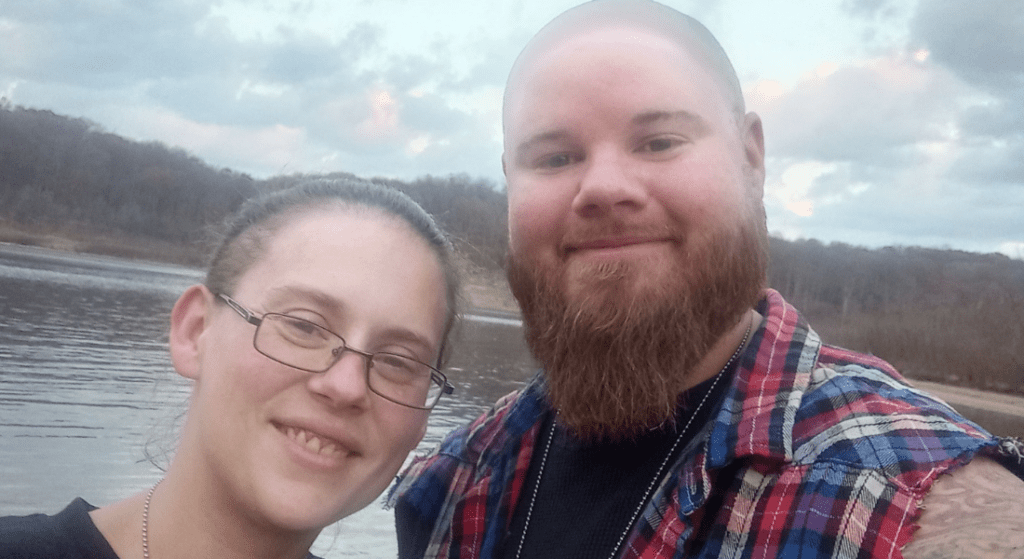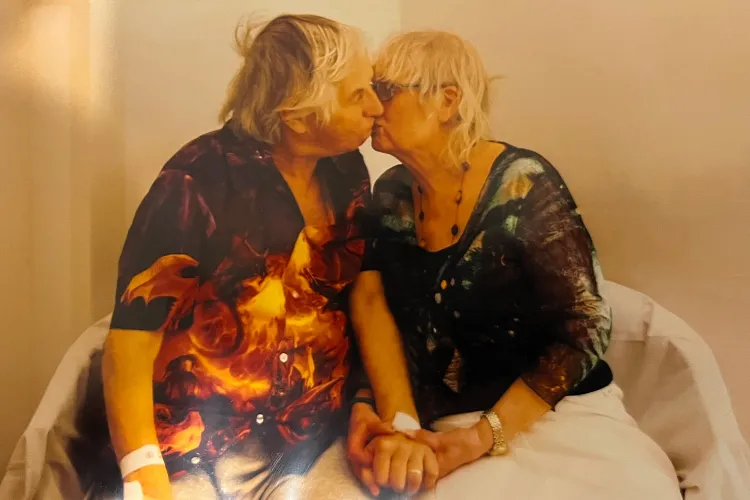
When doctors told Bendigo Davies he had terminal cancer and only weeks to live, he did not start writing a bucket list or planning a good‑bye tour. He planned a wedding. The ceremony that followed, held on a hospital ward and pulled together at speed, did more than grant a final wish. In his words, becoming a husband gave him a reason to keep fighting, and he now credits that promise with helping him live far beyond what anyone expected.
His story is not a neat miracle tale, and it is not a how‑to guide for beating cancer. It is something quieter and more stubborn: a case study in how love, ritual and a fiercely specific goal can change the way a person moves through the worst news of their life.
The diagnosis that reset everything
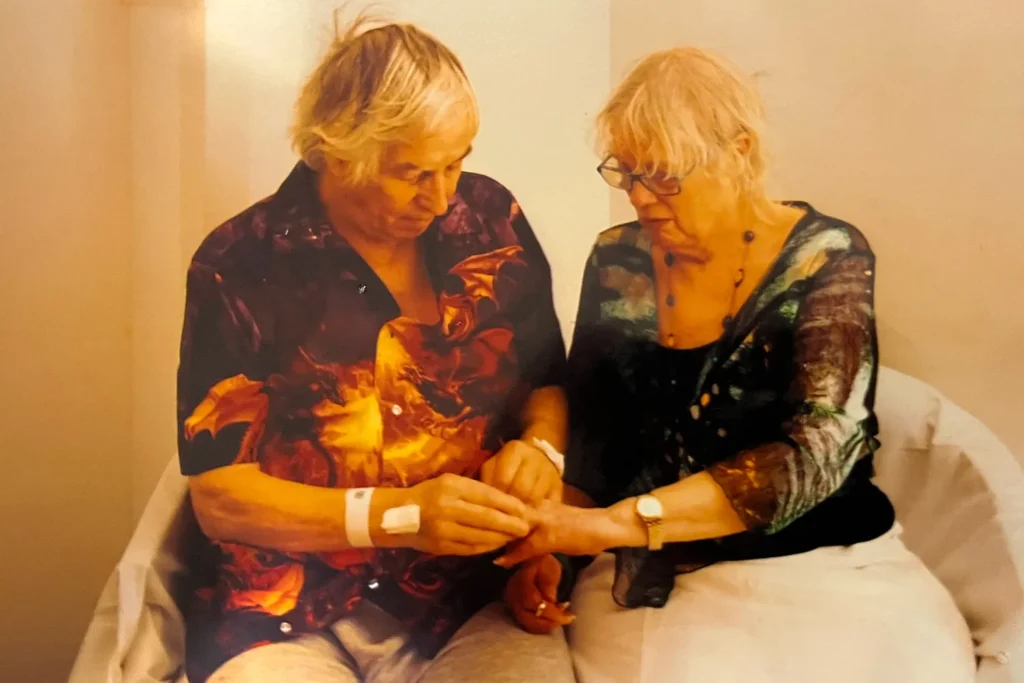
Bendigo Davies was not handed a gentle warning about his health. He was diagnosed with terminal cancer in January 2024 and told he had just weeks to live, a blunt forecast that left little room for long‑term plans. According to reporting on his case, the disease was acute myeloid leukemia, or AML, a fast‑moving blood cancer that can overwhelm the body in a frighteningly short window if it does not respond to treatment. In that moment, the future he and his partner had casually imagined together shrank to a handful of days and a series of urgent decisions.
Instead of retreating into shock, Bendigo focused on one thing he could still control: how he and his partner would define their relationship before time ran out. Accounts of his story describe how his final wish was to marry the woman who had been by his side, a choice that turned a sterile prognosis into a concrete mission. Coverage of his illness and the early conversations around his care appears in detailed pieces on his cancer diagnosis, while further reporting notes that he was initially told he might have only days left to live.
A hospital ward turned into a wedding aisle
Once Bendigo and his partner decided they were going to get married, the question became how to pull off a wedding for a man who was critically ill and tethered to hospital care. Staff at Worcestershire Acute Hospitals NHS Trust stepped in, transforming the Laurel 3 ward into a makeshift venue so the couple could exchange vows without leaving the safety of his medical team. Nurses, doctors and support staff arranged decorations, organized music and carved out a pocket of celebration in a place usually defined by alarms and clinical routines.
Reports describe how the ceremony on the Laurel 3 ward at the Laurel ward was intimate and improvised, but no less serious for that. Patients and staff lined the hallway, and the ward was effectively turned into a wedding venue, complete with a walk down the corridor to the sound of “Here Comes the Bride,” as described in coverage of a related celebration on the same unit where the ward was again transformed for a family milestone. That earlier account of the ward’s makeover, including the detail that “Here Comes” the traditional bridal march echoed through the corridor, appears in a story about a terminally ill father seeing his daughter graduate, which helps illustrate how this hospital has embraced life events alongside end‑of‑life care.
“That hope kept me alive”
For Bendigo, the wedding was not just a sentimental gesture. He has been explicit that the act of getting married changed his mindset about his illness. In interviews, he has said that the promise of a future with his wife gave him something to hold onto when his body was at its weakest. One report quotes him reflecting on how the commitment they made on that ward gave him a reason to push through treatment and uncertainty, summing it up simply: that hope kept him alive. Another account of his journey, which tracks his story from the early days of his diagnosis through his recovery, notes that he believes becoming a husband “kept me alive,” a phrase that has since become shorthand for the emotional core of his experience.
Those reflections are echoed in coverage that follows him back to his hometown of Tenbury Wells, where he is described as the local man who says that getting married while terminal “kept me alive.” One detailed piece on the second anniversary of his marriage highlights that he was initially told he had just days to live, yet he went on to celebrate two years of married life. Another version of the story, which focuses on the Tenbury Wells angle, repeats that he was the local man who insisted that getting married while terminal had kept him going, even as he dealt with complications such as a blood clot in his lung.
From “weeks to live” to remission
The medical side of Bendigo’s story is as startling as the emotional one. After being told he had only weeks, his acute myeloid leukemia responded to treatment in a way that allowed him not just to leave the hospital but to reach a point where his cancer is now described as in complete remission. Coverage of his case notes that his AML is currently in full remission, although he continues to live with other serious health issues, including heart failure and the lasting impact of that earlier blood clot. The fact that he has been able to mark multiple milestones since that first hospital wedding is not presented as a cure‑all, but it is a clear break from the original expectation that he would not survive long enough to see his first anniversary.
One report that revisits his journey explains that on Monday, Jan. 26, he and his wife celebrated their second wedding anniversary and that, amazingly, his AML was in complete remission at that point. That detail appears in a story that also credits the original reporting on his case, noting that on MondayBendigo Davies was diagnosed with terminal cancer and given just weeks to live in January 2024 and that, after receiving that devastating news, his priority was to marry his partner.
Why this story hits so hard for other families
Part of why Bendigo’s experience has resonated so widely is that it slots into a broader pattern of families using big life rituals to reclaim a sense of control in the middle of terminal illness. The same Worcestershire Acute Hospitals NHS Trust that hosted his wedding has also helped other patients stage major milestones on its wards, including a father who was terminally ill but wanted to see his daughter graduate. In that case, staff again transformed the ward into a venue, lining the hallway and playing “Here Comes the Bride” as the daughter walked in her gown, a moment captured in coverage of the transformed ward. Another story from the same trust describes an elderly groom with Alzheimer’s disease who married his wife for a second time so he could experience their commitment again, with staff once more stepping in to make the day possible, as detailed in reports about the Alzheimer’s groom.
Beyond Worcestershire, similar stories of young couples facing terminal diagnoses have circulated on social media, including one widely shared post about a 19‑year‑old who, after being told his cancer was incurable, chose to marry his partner anyway. That account, which frames their decision as a courageous choice to lean into love despite a brutal prognosis, has been shared in online communities that trade in love and inspiration. In that context, Bendigo’s insistence that marriage helped keep him alive lands as part of a larger conversation about how people facing terminal illness are rewriting the script, choosing to mark beginnings even when they have been told they are nearing the end.
More from Decluttering Mom: