Two sisters, ages 16 and 10, vanished from their home after a man they met through a Roblox chat persuaded them to leave, triggering a frantic cross-country search. Authorities say the girls were ultimately found alive roughly 700 miles from home, a relief that has sharpened questions about how a children’s gaming platform became the gateway to a high-risk journey. Their rescue has turned a family’s nightmare into a case study in how quickly online contact can spill into the real world when safeguards fail or are ignored.
The story of Mary Beabey and Sabine Yohumi, who were missing for about a week before being located at a bus terminal in Mexico City, has resonated far beyond their neighborhood. It has exposed the vulnerabilities of young users on Roblox, highlighted gaps in parental oversight, and intensified scrutiny of how tech companies and law enforcement respond when digital conversations turn into real-world danger.
The sisters’ disappearance and a week of fear
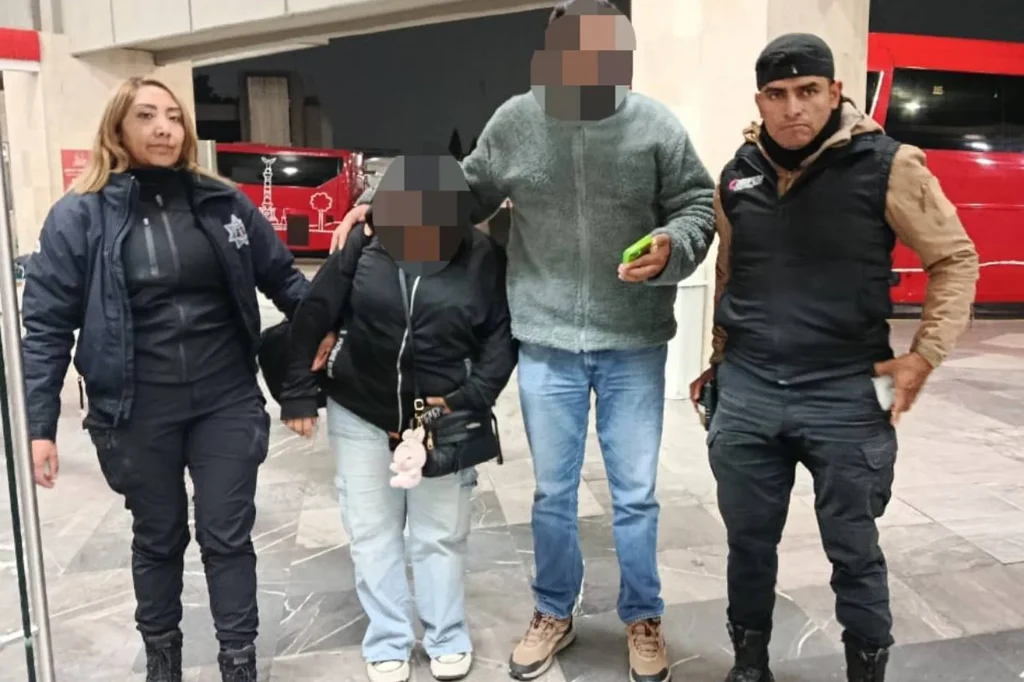
Relatives reported 16-year-old Mary Beabey and 10-year-old Sabine Yohumi missing after they slipped out of their home in Mexico and did not return, leaving behind a family that suddenly had no idea where two children had gone or why. According to investigators, the sisters had been communicating with a man through the Roblox platform and were persuaded to leave their home in Nezahualcóyotl, a densely populated area outside Mexico City, without telling adults. Reports describe them as “Two missing girls” who were drawn into a relationship that began as casual gaming and escalated into secret planning to travel.
Authorities later said that Mary Beabey and Sabine Yohumi were found alive at a bus terminal in Mexico City after roughly a week on their own, a discovery that ended the immediate search but opened a new phase of questions about how the contact began and why it was not detected sooner. Coverage of the case has emphasized that the girls were allegedly lured from their home in Mexico by a man on Roblox, and that they appear to have traveled significant distances before being located. For their family, the relief of the reunion is now intertwined with the reality that the danger began with a chat window on a game designed for children.
How a Roblox chat became a grooming channel
Investigators say the man who contacted the sisters used Roblox’s in-game chat to build trust over time, a pattern that experts recognize as classic grooming behavior. The platform allows players to talk to one another while they build and explore virtual worlds, and in this case, that feature allegedly gave an adult direct access to Mary Beabey and Sabine Yohumi without their parents’ knowledge. Reports summarizing the case stress that Two girls were “allegedly lured” through the Roblox chat feature, suggesting the man used conversation, flattery, and promises to convince them that meeting him in person was safe and exciting.
Roblox itself describes how users can communicate through text chat, voice chat, and private messages, and its own help materials explain “How to Chat on Roblox” in detail, including options for filtering and parental controls. The same tools that let children coordinate a building project or role-play with friends can, in the wrong hands, become a direct line for manipulation. Safety advocates note that the man in Mexico appears to have exploited those communication channels despite Roblox’s stated policies, turning a feature meant for collaboration into a vector for real-world harm, even as the company’s official chat guidance emphasizes filters and restrictions.
A 700-mile journey and a narrow rescue
By the time authorities caught up with the sisters, they were far from home. One account describes the girls as “Missing sisters, 16 & 10, who ran away from home to meet man who ‘lured them on Roblox game’ rescued 700 miles away,” underscoring the sheer distance involved. That figure, “700 miles,” has become a shorthand for the scale of the risk, a reminder that what began as a digital conversation quickly turned into a cross-country trip that could have ended in tragedy.
Reports say the girls were ultimately located at a bus terminal in Mexico City, where officials believe they had traveled from Campeche, a journey that would have required multiple legs and sustained coordination. According to one summary, officials initially went to an address in Campeche linked to the suspect before learning that the girls may have traveled on to the capital. The detail that Mary Beabey and Sabine Yohumi were found at a Mexico City bus station is cited in coverage that identifies them by name and notes that they had been missing for about a week before being located in Mexico City. The distance they covered, and the time they were gone, underline how quickly an online contact can escalate into a high-risk disappearance.
The suspect and the digital trail he left
Authorities in Mexico have not publicly released every detail about the man who allegedly lured the sisters, but reporting indicates that he used the Roblox platform to initiate contact and then moved the conversation toward a real-world meeting. Summaries of the case describe how officials traced the girls’ movements to Campeche and then to Mexico City, suggesting that digital records, travel bookings, or witness accounts helped reconstruct the route. One account notes that officials initially went to an address in Campeche associated with the suspect and that, according to the information gathered, the girls had already moved on by the time authorities arrived.
Descriptions of the suspect’s appearance, including clothing such as a shirt with a stripe down the side and sneakers, have been cited in coverage that draws on law enforcement briefings. Those details, along with the focus on how he used Roblox, appear in reports that frame the case as a warning about adults who exploit children’s games to reach minors. The summaries labeled NEED and KNOW emphasize that Two girls from Mexico were allegedly lured by a man on Roblox, and that investigators pieced together the timeline through a combination of digital and on-the-ground work. While many questions about his background remain, the digital trail he left has become central to understanding how the crime unfolded.
Roblox’s scale, safety promises, and legal pressure
The case has intensified scrutiny on Roblox, a platform that markets itself as a place where users can create and play millions of games built by other players. The company’s own corporate materials describe Roblox as a global community with a large base of young users, and they highlight investments in safety, moderation, and trust systems. On its official site, the company outlines its mission and safety commitments, presenting Roblox as a place where imagination and play are supposed to be protected by robust safeguards. Yet the Mexico case shows how a determined adult can still reach children despite filters and policies.
Legal and regulatory pressure on Roblox has been building. An Update On Gaming Litigation notes that Parents across the United States are pursuing legal action against Roblox, alleging that the platform has failed to adequately protect children and has contributed to issues such as video game addiction. That report, which surveys lawsuits and regulatory scrutiny, frames Roblox as a company that sits at the center of a broader debate about children’s digital safety and corporate responsibility. The Mexico incident, in which Two girls were allegedly lured away from home, adds a stark example to the concerns already raised in Update On Gaming, and it is likely to feature prominently in future arguments about what the company should be required to do.
Parents’ warnings and the growing backlash
For many families, the story of Mary Beabey and Sabine Yohumi confirms fears that have been building for years as children spend more time in online games. Parents in the United States and Mexico have pointed to this case as evidence that even platforms with safety branding can expose kids to predatory contact. Social media posts about the incident describe “Two young sisters, Mary Beabey and Sabine Yohumi,” and stress the importance of monitoring digital interactions, turning the girls’ ordeal into a rallying point for parents who want stronger tools and clearer information about risks.
Legal advocates have echoed those concerns, arguing that companies like Roblox should be held accountable when their systems fail to prevent grooming and exploitation. The Jere Beasley Report’s section on An Update On Gaming Litigation notes that Parents across the United States are already suing Roblox over issues ranging from in-game purchases to addiction, and safety advocates say cases like the Mexico abduction will likely fuel additional claims. In that context, the Facebook post urging readers to “Read More” about Girls lured via Roblox in Mexico has become part of a broader campaign to push both regulators and companies to treat online grooming as a foreseeable and preventable harm, as highlighted in the Girls post that names the sisters directly.
Not an isolated case: Roblox-linked kidnappings elsewhere
The Mexico case is not the first time authorities have linked Roblox chats to alleged kidnappings. In Southern California, a 10-year-old girl was found safe on a Sunday after being taken by a stranger she had been communicating with through the platform. According to reporting on that incident, the child met the man in a game, continued talking with him, and eventually left home to meet him in person, prompting an Amber Alert and a rapid law enforcement response. Officers tracked the suspect’s vehicle and recovered the child, a sequence that underscored how quickly online contact can turn into a physical abduction in Southern California.
That case helped spur broader debate in California about how to regulate online platforms that cater to children. A separate report from the state capital described how lawmakers were asking why a child could be contacted and groomed through a game without more effective safeguards, noting that the story “begins here at California’s state capital” but affects kids across the country. The video segment that raised those questions has been widely shared as a warning, with advocates using it to argue that the Roblox kidnapping in Mexico is part of a pattern, not an anomaly, as highlighted in the California coverage that connects legislative hearings to real-world cases.
Inside Roblox’s safety tools and where they fall short
Roblox promotes a suite of safety tools that include chat filters, parental controls, and content moderation, and its help center explains in detail how parents can manage who their children talk to and what features they can access. The “How to Chat on Roblox” guidance walks users through enabling and disabling chat, setting privacy levels, and understanding how automatic filters block certain words and phrases. In theory, those systems should make it harder for adults to groom children, especially if parents actively configure restrictions and monitor activity through the platform’s settings, as described in the official How to Chat documentation.
Yet the Mexico and Southern California cases show that those tools are not foolproof. Predators can adapt their language to evade filters, move conversations to less monitored channels, or target children whose accounts are not locked down by adults. Legal filings summarized in An Update On Gaming Litigation argue that Roblox has not done enough to anticipate these tactics, and that Parents in the United States are left to shoulder too much of the burden. The Jere Beasley Report notes that lawsuits are pushing courts to consider whether platforms should be treated more like product manufacturers, responsible for foreseeable misuse, a question that looms large when Two girls from Mexico are allegedly lured away from home through a feature that Roblox itself designed and promoted, as discussed in the Update On Gaming section.
More from Decluttering Mom: