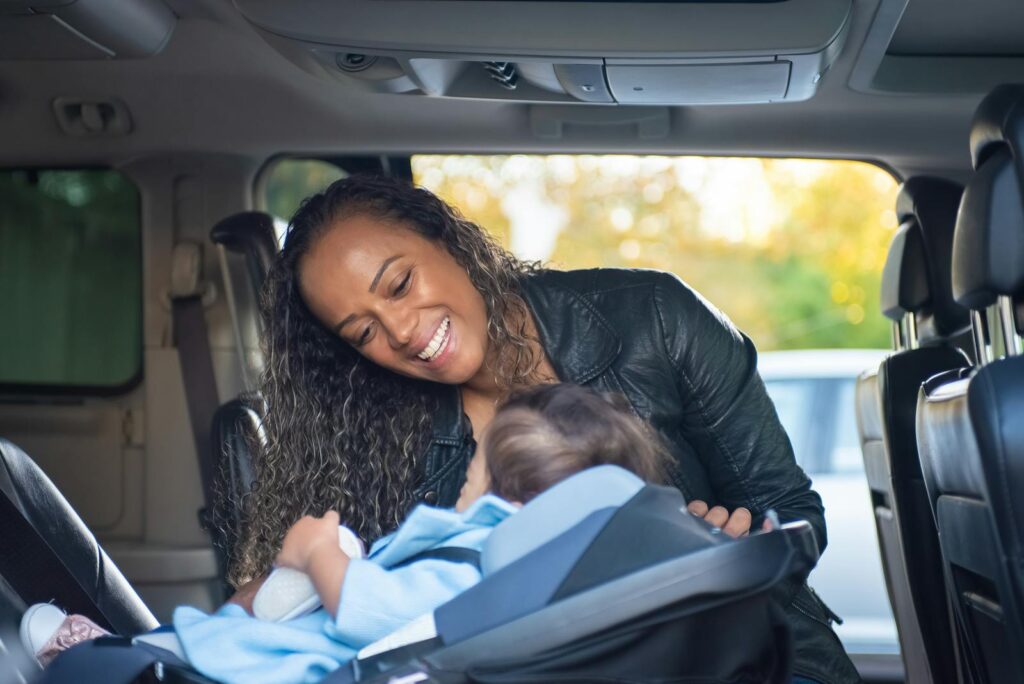
A trip to Disneyland with a 2‑year‑old is supposed to be about churros, character hugs, and nap schedules, not security guards sizing up your toddler like a bouncer at a nightclub. Yet for some parents of tall kids, the happiest place on earth can suddenly feel like an interrogation room when staff decide a child looks “too big” to be free. The stakes get even higher when those suspicions collide with strict ticket rules and a viral video culture that turns tense moments into public spectacle.
Behind the headline about a mom bringing her 2‑year‑old to Disneyland and ending up face to face with security is a bigger story about how age, size, and money intersect at the park gates. From parents swapping tips in Facebook groups to a California mother being handcuffed in front of her crying children, the line between honest mistake and alleged fare evasion is getting policed in very visible, very emotional ways.

When “big for his age” meets the turnstiles
Parents of tall toddlers know the drill long before they hit Anaheim. At home, strangers assume their 2‑year‑old is 4, preschool teachers double check birthdates, and clothing sizes jump ahead by years. That same disconnect shows up at Disneyland’s entrance, where kids under 3 do not need a ticket, but the only proof of age is whatever a frazzled parent can offer at the gate. In one online discussion, a grandmother described spending ten days at the park with her grandson, who was 2 but “also big,” and said they were only asked his age once, a reminder that a lot depends on which cast member is standing in front of you and how old they think your child looks when they ask about a tall toddler.
Other parents in that same conversation tried to calm the nerves of moms and dads worried about being challenged, insisting that staff rarely push the issue and suggesting simple workarounds. One commenter said they “highly doubt” anyone will question a child’s age and recommended snapping a photo of the birth certificate instead of hauling the original document through security, arguing that a quick image on a phone is usually enough if a cast member asks how old the child is at the gates. The underlying message is clear: parents of big 2‑year‑olds are already gaming out how to prove their kids are still free before they even scan a ticket.
From awkward questions to a mom in handcuffs
The anxiety around a child’s size is not just theoretical. It sits in the shadow of a very public scene at Disneyland Resort in Anaheim, where a woman with two young children was arrested after security accused her of trying to sneak them in without paying. Video from the park shows two small kids sobbing as their mother is handcuffed and escorted away at Disneyland Resort in Anaheim, a jarring contrast to the pastel facades and parade music in the background.
Another clip, filmed at Disney California Adventure and shared widely online, captures Anaheim police arresting the mother in front of her children as onlookers react in shock. The footage from Disney California Adventure shows the kids clinging to her while officers lead her away, turning what might have been a quiet dispute over tickets into a full‑blown spectacle. For parents already worried that a tall 2‑year‑old could trigger suspicion, seeing a family encounter end with a mom in cuffs is a worst‑case scenario playing out in real time.
The case of Jessenia Diaz and the “2‑year‑old” claim
As the videos spread, Anaheim officials filled in some of the blanks. Police described the woman as a 26‑year‑old Torrance mother of two children, ages 3 and 4, and said she was trying to avoid paying for their admission. According to Anaheim police Sgt. Matt Sutter, the woman was identified as a fare evader after park staff raised concerns, and Matt Sutter said security called Anaheim police when the situation escalated at the gate.
The mother, named Jessenia Diaz in later coverage, has been accused of trying to pass the kids off as 2‑year‑olds so they could enter the park without tickets. Officials in Diaz’s case say she attempted to use a reservation to enter the park and misrepresented the children’s ages to avoid paying child prices. In another account of the same incident, the two young girls are seen holding onto their mother, crying and shouting “Help me!” in Spanish as officers block her legs and lead her away, a detail that has fueled outrage among viewers who see the response as disproportionate to a ticket dispute.
How parents are quietly preparing for age checks
Stories like Diaz’s are now part of the mental checklist for parents planning a Disneyland trip with a big 2‑year‑old. In that same Facebook thread about tall toddlers, one parent described a friend who was threatened by security and told to buy a ticket because their 24‑month‑old looked older, prompting them to start carrying documentation. Others chimed in with strategies, from keeping a photo of a birth certificate in a medical portal to bringing a passport “just in case,” arguing that it is easier to pull up proof than risk a confrontation over ticket prices at the turnstiles.
On Reddit, some Disneyland regulars admit they have been tempted to do the opposite and underreport ages to save money, especially when kids are tiny for their age. One commenter recalled someone trying to convince them not to buy tickets for 4‑year‑olds because the children were so small, but they refused, saying the stress of being caught and the risk of staff discovering that They had lied was not worth the savings. That quiet calculation, playing out in group chats and comment sections, shows how much emotional weight now sits on a simple question at the gate: “How old is your child?”
Security, scrutiny, and the optics of enforcement
Disneyland is not operating in a vacuum. Theme parks and public spaces across California are under pressure to enforce rules consistently while also avoiding scenes that look like heavy‑handed crackdowns. In the Diaz case, the viral TikTok of a mother being hauled away in cuffs alongside hysterical children has already drawn national attention, with one account describing how the two girls clung to their mother and shouted for help in Spanish as officers intervened. Those images sit uncomfortably next to the park’s carefully curated branding, raising questions about how far security should go when a dispute is essentially about who paid what at the front gate.
Outside the park, concerns about how law enforcement handles public events have already “gained national attention,” including in cases where reporters say they were mistreated while covering ICE rallies in Los Angeles. When that broader skepticism about policing meets a family‑oriented place like Disneyland, every arrest near the entrance is going to be scrutinized frame by frame. Even the setting matters: the park sits in Anaheim, not far from other Southern California attractions like Los Angeles, and any dramatic scene on its grounds is almost guaranteed to travel far beyond the local crowd.
For parents walking up to the turnstiles with a legitimately 2‑year‑old who just happens to be tall, all of this creates a strange kind of pre‑game tension. They are juggling strollers and snack cups while also bracing for the possibility that someone in a name tag will decide their kid looks too old to be free. The rules themselves are straightforward: under 3 is free, 3 to 9 pays the child rate, and adults pay full price. The messy part is the judgment call at the gate, where a stranger’s snap assessment of a child’s size can be the difference between a smooth entry and a confrontation that spirals into something much bigger than a birthday trip gone slightly over budget.
More from Decluttering Mom: