
A routine back‑to‑school shopping trip has turned into a flashpoint over money, boundaries and blended families. A mother who carefully saved to buy her 15‑year‑old son fresh notebooks, binders and pens is now facing pressure from her ex and his new wife to hand those items over so his other children can use them too. Her refusal has ignited a wider debate about what separated parents owe to kids who are not legally or biologically theirs.
At the center is a teenager who watched his mother stretch her budget so he would not have to reuse worn‑out supplies, only to be told that his backpack should become a communal stash at his father’s house. As the adults argue over fairness and finances, the case highlights how quickly “sharing” can slide into one parent subsidizing another household, and how those choices can shape a child’s trust in both parents.
The back‑to‑school fight that lit the fuse
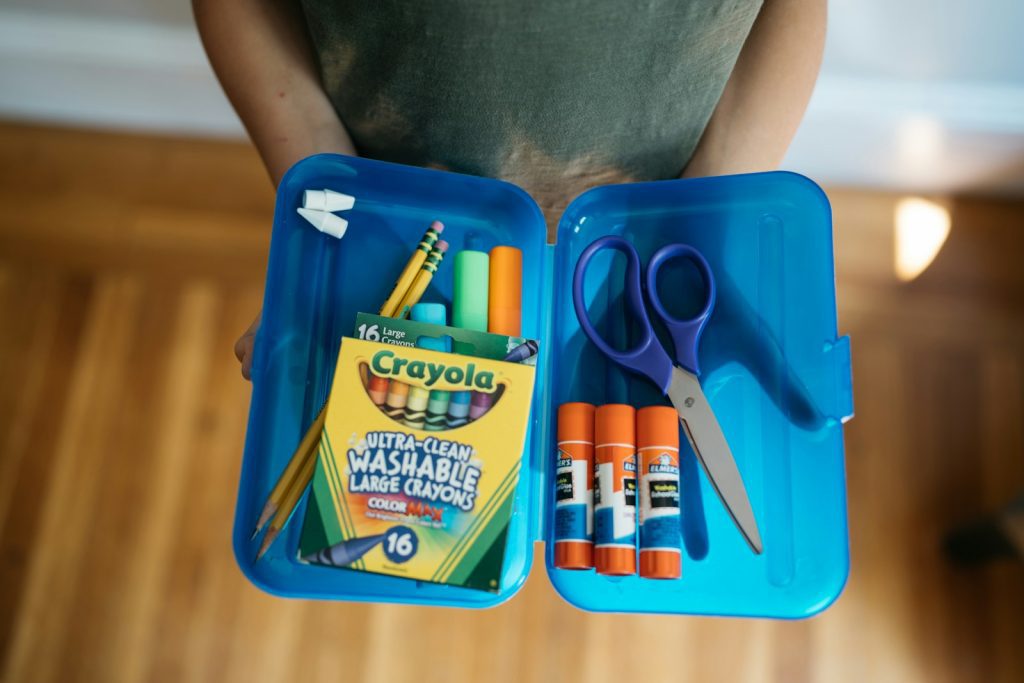
According to the mother, the conflict began after she bought brand‑new school supplies for her 15‑year‑old son ahead of the new term, something she says she had not always been able to do in previous years. She described carefully choosing items so he would not have to show up with frayed folders or dried‑out markers, a point underscored in a summary that notes she purchased new materials after years when he had to reuse old ones, a detail flagged under the label NEED TO KNOW. For the teen, the fresh gear was not just about aesthetics, it was a sign that his mother had prioritized his comfort and confidence at school.
The tension escalated when the boy’s father and stepmother learned about the shopping trip and asked that the supplies be sent to their home so all of the children there could share them. The woman says she was explicitly asked to “donate” the items to her ex’s household so his other kids would feel equal, a request she recounts in detail in a report that notes she was pressured to give up what her son needs so the others would not feel left out, as reflected in the description that “the woman shares that she was asked to donate school supplies to her ex’s household so all the kids could feel equal” in both an AOL‑linked summary and a parallel People write‑up. She refused, arguing that her son should not have to surrender his new belongings to cover for adults who had not budgeted for their own children.
Inside the ex’s demand for “equal” treatment
The father’s position, as described in the reporting, rests on the idea that all the children in his home should have access to the same quality of supplies, regardless of which parent paid for them. In one account, he and his current wife frame the request as a matter of fairness, insisting that the teen’s notebooks and pens should be shared with his step and half siblings so no one feels second‑class. That framing is captured in a feature titled “She Bought Her Son New School Supplies, Now Her Ex Wants Them Shared, His Other Kids,” which notes that the dispute centers on whether the items should be split between households and explicitly references the phrase “Now Her Ex Wants Them Shared, His Other Kids” in a piece by Ashley Vega. From his perspective, the mother’s refusal reads as a slight against his newer children and his current family unit.
The mother counters that “equal” treatment cannot mean her son repeatedly loses out so that his father can avoid buying basics for the rest of his kids. She notes that she already covers her share of expenses and that the boy’s supplies need to travel with him between homes, not be absorbed into a communal bin. A related summary emphasizes that she is being asked to support “children who are not hers,” and that she sees a clear line between sending her son with what he needs and stocking another household, a distinction echoed in coverage that describes how her ex and his wife became “extremely hostile” when she held that boundary and how the argument has affected the teen’s relationship with his father, details highlighted in an MSN‑syndicated account.
How online commenters are drawing the line on responsibility
The dispute has spilled into online forums where readers are weighing in on who should pay for what in complex families. In one widely shared discussion, commenters argue that there are “Ultimately, no expectations to go out of her way to ensure his kids have the same things her kids do,” stressing that a parent is financially responsible for their own children, not for an ex’s new family. That language appears verbatim in a thread where users debate whether the mother is in the wrong, with one contributor writing “Ultimately, no expectations to go out of her way to ensure his kids have the same things her kids do. However, the general consensus is that he and his current wife need to take responsibility,” a sentiment captured in a Facebook group post that includes the words Ultimately and However as part of a longer critique of the father.
Other readers point out that the emotional stakes go beyond receipts. They note that forcing a teenager to hand over his new supplies can feel like a punishment for having a mother who plans ahead, and that it risks breeding resentment toward siblings who are framed as “taking” his things. A separate case, in which a dad labeled his ex “cold” for only buying school supplies for the children they share, drew similar reactions, with observers again insisting that each parent must budget for their own kids rather than expecting an ex to cover shortfalls, a dynamic described in a piece that notes how a father criticized his former partner after learning she had only purchased items for their joint children, a scenario summarized under the line “Dad Calls His Ex‑Wife ‘Cold’ For Only Buying School Supplies,” which credits the image to Kzenon and mentions the production team as Kzenon and Canva Teams.
Patterns across similar blended‑family clashes
This is not the only recent story in which a mother has been asked to stretch her budget to cover an ex’s new children. In another widely circulated account, a Mother refused to give her ex‑boyfriend’s new kids the school supplies she had purchased for her 15‑year‑old son, after he tried to play on her emotions by suggesting she did not care about the other children if she did not share. That scenario, which mirrors the current dispute almost detail for detail, is summarized in a piece that describes how the ex‑boyfriend attempted to guilt her into handing over the items and frames the situation as a clear case of one parent trying to offload financial responsibility, a narrative captured in the headline fragment “Mother refuses to give ex‑boyfriend’s new kids her 15‑year‑old son’s school supplies, ex‑boyfriend then tries to play,” which is highlighted in a CheezCake‑branded summary.
Another analysis explicitly invites readers to “Explore the complexities when an ex wants her to buy his kids school supplies amid family dynamics and struggles,” underscoring that these fights are rarely just about pencils and paper. That piece notes how exes and new partners can become “furious” when a boundary is set, and how accusations of selfishness or lack of compassion are often used to pressure the more financially stable parent into paying for extras, language that appears in a feature urging readers to Explore the emotional and financial stakes. Taken together, these stories suggest a pattern in which one parent’s careful planning becomes a resource others feel entitled to, especially when new partners and additional children enter the picture.
The impact on the teen and what healthy boundaries look like
Lost in the adult conflict is the 15‑year‑old who now has to navigate loyalty tests every time he packs his backpack. In the main case, the mother reports that after she declined to hand over his supplies, “the conversation ended” but her ex and his wife became “extremely hostile” toward her, a shift that her son has noticed. A detailed account notes that this hostility, and the expectation that he should share his belongings with step and half siblings, has shaped his relationship with his father and left him feeling caught between households, a consequence described in a report that quotes her saying “At that point the conversation ended but they are extremely hostile toward me now,” and explains how that tension has affected the boy, as highlighted in a follow‑up summary.
Experts who work with blended families often stress that healthy boundaries are not about refusing to help, but about ensuring that generosity does not come at the expense of a child’s sense of security. In this case, the mother’s decision to keep her son’s supplies for his use aligns with that principle, even if it has angered her ex. The broader coverage, including the feature labeled “She Bought Her Son New School Supplies, Now Her Ex Wants Them Shared, His Other Kids,” which is attributed to Ashley Vega and echoed in a separate note that tags the story with “Aug” as a temporal marker, as well as the AOL coverage that repeats the “She Bought Her Son New School Supplies. Now Her Ex …” framing and includes the key identifiers “NEED,” “KNOW,” and “Her,” all point to the same conclusion: when one parent’s planning becomes a battleground, the child in the middle is the one who pays the highest price, a reality that makes clear, enforceable boundaries less a luxury than a necessity.
More from Decluttering Mom: