A Missouri mom thought she was grabbing a simple snack when she picked up a bag of Walmart’s Great Value cheese puffs for her daughter. Instead, her family’s movie-night treat turned into a viral mystery after another child reached into the bag and pulled out something long, curved, and disturbingly out of place. The strange find has since fueled online debate about what exactly was in that bag and how something so odd could slip through a modern food production line.
The story has resonated far beyond one household, tapping into a broader unease about what consumers cannot see inside sealed packaging. It has also collided with a parallel internet culture that treats bizarre snack surprises as either nightmare fuel or a once-in-a-lifetime prize, depending on whether the object looks more like a baked snake or a giant cheese ball.
The Missouri snack run that turned into a viral mystery
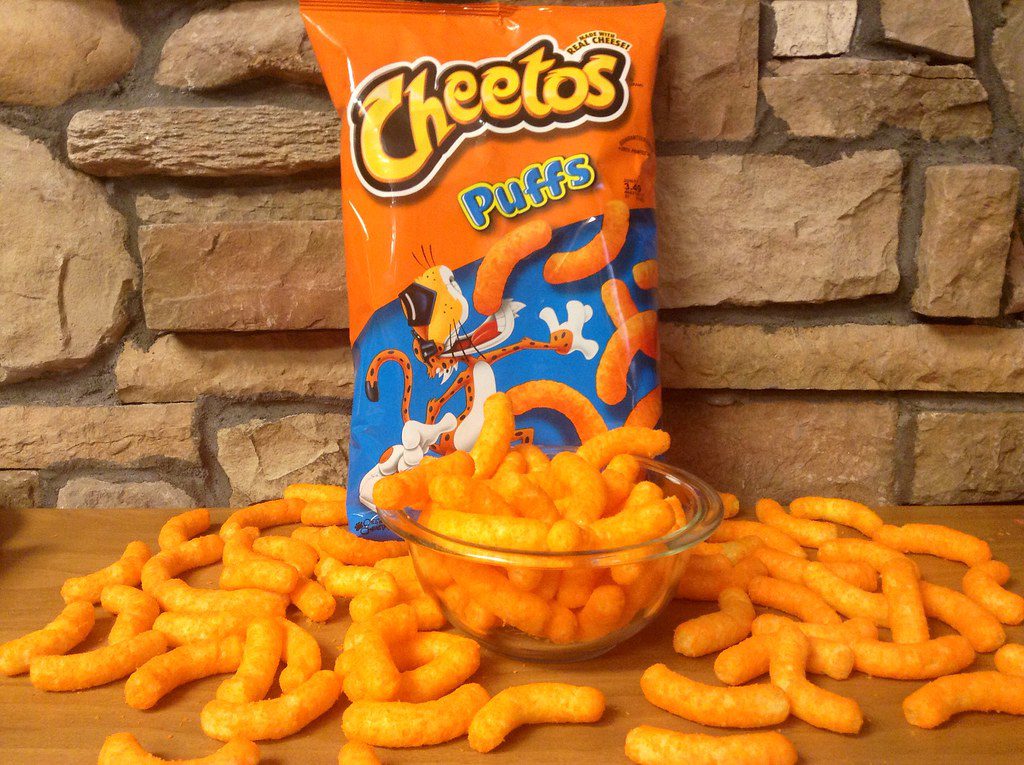
The chain of events started routinely enough, with a Missouri Walmart customer buying a bag of Great Value cheese puffs for her kids. According to the account shared online, the bag was opened at home, where one daughter began eating while another child noticed something that did not look like a puff at all. The object was described as long and curved, prompting the family to stop snacking and start filming as they tried to work out what they were holding in their hands, a moment later framed online as “Missouri Walmart Customer Buys Great Value Cheese Puffs, Then Her Daughter Notices Something Strange In” the bag.
The mother, identified in posts as Jill, filmed the discovery and shared it with friends and followers, turning a private gross-out into a public investigation. Viewers fixated on the shape and color of the mystery piece, which appeared to be coated in the same orange powder as the surrounding snacks but clearly did not match their familiar curls. The clip quickly spread, with commenters seizing on the unsettling idea that a routine grocery run could end with a child pulling an unknown object from a bag of cheese puffs bought at a local Missouri Walmart.
Inside the bag: what Jill’s video actually shows
Jill’s footage lingers on the object that set off the alarm, a single piece that looks more like a twisted stick than a puff. It is long, curved, and relatively smooth, with a uniform coating of orange seasoning that makes it blend in at first glance with the rest of the snack. As the camera zooms in, the piece appears denser and more solid than the airy curls around it, which only deepened speculation that something foreign had been baked into the batch before packaging.
Viewers scrutinizing the video pointed out that the object did not seem to have bones, a head, or a tail, details that became central to the debate over whether it might be an animal part or an extreme manufacturing oddity. The absence of obvious anatomical features led some to argue that the piece could be an overcooked or fused mass of cornmeal rather than a creature, while others insisted the length and curvature still looked too much like a reptile. The clip’s close-ups invited frame-by-frame analysis as people tried to decide whether Jill had uncovered a baked contaminant or a grotesque but technically edible manufacturing glitch.
“I Think It’s A Paycheck”: the internet’s instant reaction
Once Jill’s video escaped her immediate circle, the internet did what it usually does with unsettling food content: it turned fear into jokes. One widely shared reaction captured the mood with the line “I Think It’s A Paycheck,” a quip that framed the bizarre find as a potential ticket to compensation rather than just a ruined snack. Others leaned into the horror angle, describing the object as nightmare fuel and imagining worst-case scenarios about what a child might have bitten into if they had not spotted the strange piece in time.
Alongside the humor, there was genuine concern about food safety and quality control in large-scale snack production. Commenters questioned how something so obviously off-spec could make it through inspection, especially in a product sold under a major retailer’s in-house brand. The phrase “Missouri Walmart Customer Buys Great Value Cheese Puffs, Then Her Daughter Notices Something Strange In” the bag became shorthand in threads where people swapped their own stories of oddities found in packaged foods, reinforcing a sense that Jill’s experience was both shocking and, to some, uncomfortably relatable in a world of industrial snack lines and high-speed packaging gone wrong.
Facebook sleuths and the “baked snake” theory
As the clip circulated, a Facebook group picked up the story and gave it a more specific, and more alarming, label: “baked snake ( or something) in the bag, from hannibal walmart!!” Within that thread, one commenter pressed the central question, asking, “How u know it’s snake?” and challenging others to explain why they were so sure the object was reptilian. In response, another user, identified as Terry Merritt and tagged as “Author,” pointed to what they described as “belly lines” along the underside of the piece, arguing that the pattern looked like the segmented underside of a snake rather than a random puff.
The exchange between Terry Merritt and Carla Janes, who was named in the same comment chain, became a focal point for armchair investigators trying to decide whether the “baked snake” label was accurate or just an overreaction. Some participants agreed with Terry’s interpretation of the markings, while others countered that the lines could just as easily be the result of extrusion or conveyor contact during production. The debate highlighted how quickly a strange shape in a snack bag can be elevated from curiosity to alleged animal contamination once a community latches onto a vivid phrase like “baked snake” and begins dissecting every visible ridge and curve in a shared Facebook thread.
“The video was made at my daughters house”: what the family clarified
Amid the speculation, one key voice stepped in to clarify the basic facts of where and how the video was shot. In the same Facebook discussion, a user wrote, “Tasha Farris the video was made at my daughters house in hannibal,” a detail that anchored the incident to a specific community rather than a vague internet anywhere. That comment also stressed that “your correct in the fact its not hannibal walmarts fault,” drawing a line between the store where the product was purchased and the manufacturing process that actually produced the cheese puffs and the mystery object.
The clarification mattered because some early reactions had implicitly blamed the local store, treating “from hannibal walmart!!” as if the contamination had occurred on the sales floor. By emphasizing that the issue originated with the product itself, not the retailer’s handling, the family member shifted attention toward the upstream supply chain and the brand responsible for making the snack. The same comment suggested that the appropriate remedy would be for the company to replace the bag of chips or refund it, a modest request compared with the more dramatic “paycheck” jokes circulating elsewhere, and a reminder that for the people actually involved, the priority was a straightforward resolution rather than viral notoriety in a heated comment chain.
What the object might be: from reptile fears to factory flukes
Once the initial shock faded, a more measured debate emerged over what the long, curved piece could realistically be. Some viewers remained convinced that the shape and apparent “belly lines” pointed to a small snake or similar creature that had somehow ended up in the production line and been baked along with the cornmeal. Others, looking closely at Jill’s footage, argued that the uniform orange coating and lack of any visible head, tail, or bones made an animal origin less likely, and suggested it might be an extreme example of multiple puffs fusing together during frying or baking.
Food manufacturing experts who weighed in online, though not directly quoted in the available sources, were echoed by commenters who noted that extruded snacks can occasionally clump into unusual shapes when dough feeds overlap or equipment malfunctions. In that reading, the object would still be made of the same ingredients as the rest of the bag, just processed into a disturbing silhouette. The “So What Could This Be” framing around Jill’s video captured that tension between worst-case contamination fears and the more mundane, if still unsettling, possibility of a factory fluke that happened to resemble something alive in a way that cameras and social media could not resist debating.
How Great Value cheese puffs usually look and taste
Part of what made the Hannibal find so jarring is how familiar Great Value cheese puffs are to many shoppers. The snack is sold under Walmart’s in-house label, with product listings showing the standard bright orange curls that consumers expect when they reach for a budget-friendly alternative to national brands. Online listings for the cheese puffs highlight the typical airy texture and cheesy flavor, with images that present a uniform pile of curls and no hint of the kind of long, solid piece that appeared in Jill’s video, reinforcing how far outside the norm her family’s experience seemed compared with the standard product images.
Customer reviews for Great Value cheese puffs on Walmart’s own site tend to focus on taste, price, and freshness, with many buyers describing them as a good value snack and comparing them favorably to more expensive competitors. Scanning those reviews reveals complaints about issues like staleness or broken pieces, but not a pattern of reports about long, snake-like objects hiding in bags. That contrast underscores why the Hannibal incident struck such a nerve: it did not fit the usual range of minor gripes that appear in feedback for a mass-market snack, and instead raised questions about a one-off anomaly in a product that most shoppers experience as reliably ordinary when they check the online reviews.
When weird snacks are a delight, not a scare
Jill’s family saw their strange find as a potential hazard, but elsewhere online, people celebrate oddities in snack bags as lucky breaks. In one Facebook group devoted to small, offbeat pleasures, a user shared a photo of a “Giant Cheese Ball Found in Cheese Puffs,” describing how “Me and my daughter both love your candy” and joking about how they could spend an entire day browsing a Walmart. The comments under that post turned the oversized puff into a minor celebrity, with others chiming in that a giant cheesie would be “too exciting” and swapping stories about their own unusual snack shapes.
That thread shows a very different side of consumer reaction, where an unexpected piece is treated as a novelty rather than a threat. Commenters debated whether the giant puff meant fewer individual pieces in the bag and joked about cutting it open to see if anything was inside, while reassuring each other that there were “nor whiskers in the equation.” One person even called finding a similar piece the “best day of my life,” a far cry from the alarm in Hannibal. The contrast between the giant cheese ball story and the baked snake theory illustrates how context and appearance shape whether a manufacturing oddity becomes a cherished anecdote or a viral warning about what might be lurking in a bag bought during a routine Walmart trip.
What this says about trust in packaged food
The Hannibal cheese puff saga sits at the intersection of consumer trust, social media amplification, and the sheer scale of modern food production. On one hand, the rarity of such reports, compared with the volume of Great Value bags sold, suggests that Jill’s experience was an outlier. On the other, the visceral reaction to a single long, curved object in a child’s snack shows how fragile confidence can be when something visibly violates expectations inside a sealed package. The speed with which the story spread, from a Missouri living room to Facebook groups and wider coverage, reflects a public appetite for stories that expose the hidden side of everyday products.
More from Decluttering Mom: