It’s one of the most common things said to parents of older kids: it must be so much easier now that they’re not babies anymore. This mom’s response to hearing that one more time was to drop flat onto the floor in complete, theatrical exhaustion.
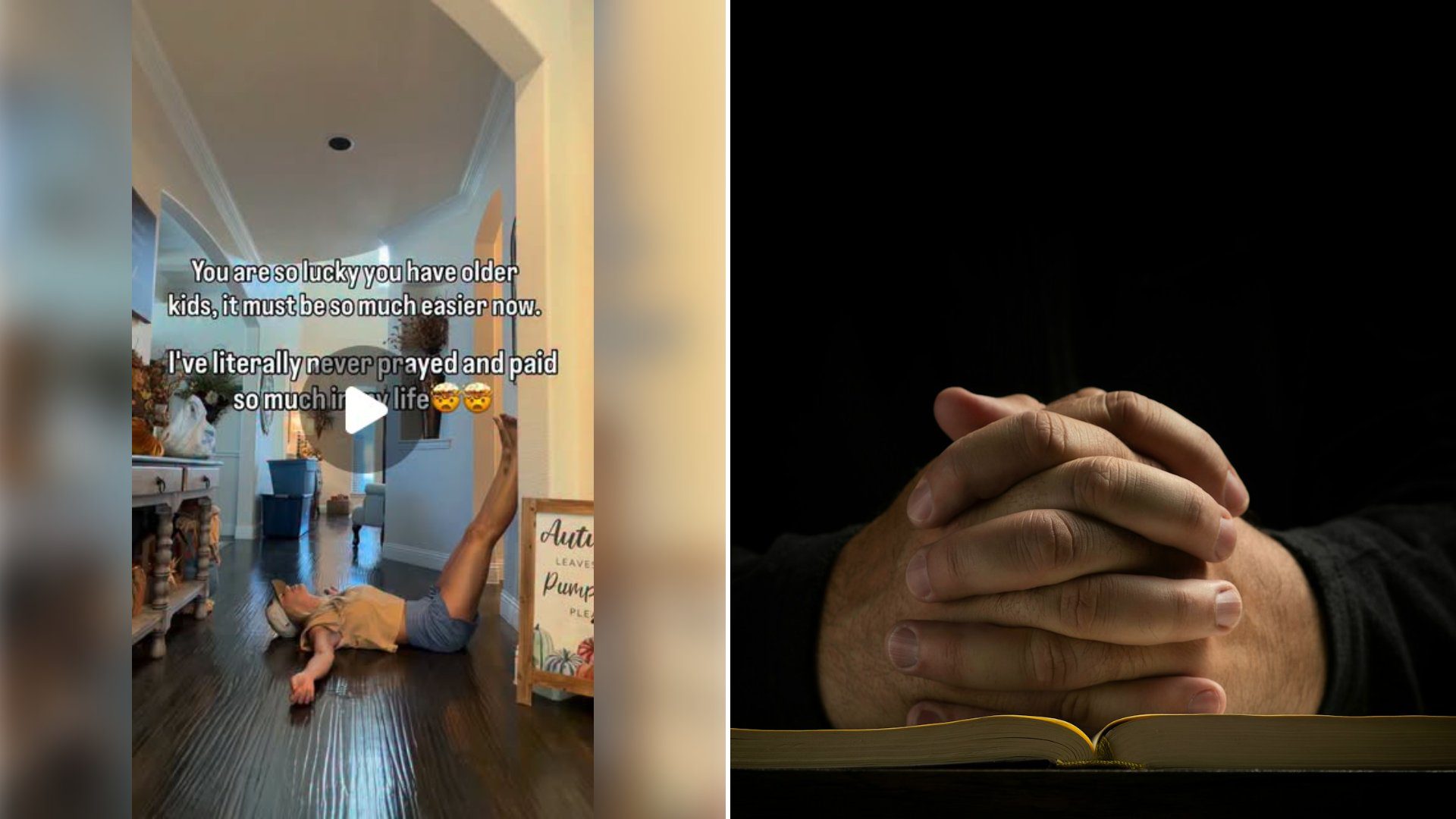
In the video from @staci.rh83, the mother humorously portrays total collapse right after someone makes that well-meaning but off-base comment. Her caption nails exactly why the assumption misses the mark: she says she’s basically running a twenty four seven prayer ministry and an ATM at this point, a line that captures how parenting older kids trades physical labor for a different, often heavier kind of logistical and emotional labor.
The assumption that parenting gets easier once kids age out of diapers and naps is understandable on the surface, since the physically grueling tasks of infant and toddler care genuinely do end. No more middle-of-the-night feedings, no more carrying a forty-pound child through a parking lot, no more constant physical supervision to prevent a toddler from climbing something dangerous. But family therapists and parenting researchers consistently point out that the demands of raising older kids don’t disappear, they transform into forms that are less visible and often more emotionally taxing.
Older kids and teenagers bring complex logistical coordination: school schedules, sports and activity carpools, homework support, social dynamics that require guidance, and increasingly, navigating their independent use of phones and social media. They also bring financial demands that scale up rather than down, from activity fees and equipment to clothing, technology, and eventually driving and higher education costs, which is exactly what the ATM half of this mom’s joke is getting at. Where a toddler’s needs are intense but relatively simple — food, sleep, safety, attention — an older child’s needs are more varied, less predictable, and often require sustained emotional availability rather than just physical presence.
The prayer ministry half of the joke points to something family counselors describe often: parenting older kids involves carrying worry for things largely outside a parent’s direct control. A toddler’s safety can usually be managed through supervision and childproofing. A teenager’s wellbeing involves school pressure, friendships, online life, and decisions that happen when a parent isn’t in the room, all of which generate a kind of background anxiety that doesn’t show up in a simple hour-count of physical caregiving but weighs just as heavily, if not more so, over time.
Researchers who study parental stress across a child’s development have found that reported parental stress doesn’t reliably decline as kids get older, and in several studies actually rises during adolescence, driven by this shift toward emotional labor, financial pressure, and reduced control over a child’s choices and environment. The physical exhaustion of early parenting is replaced by a kind of chronic vigilance and financial strain that is harder for outside observers to see, which is exactly why comments like “it must be so much easier now” land as so out of touch to parents actually living it.
This video resonates because it gives comedic shape to a real mismatch between public perception and lived experience. Parents of older kids aren’t claiming their job is harder than caring for a newborn in every measurable way, but they are pushing back on the idea that it’s simply easier, when in reality it’s a different, equally demanding job that happens to look calmer from the outside.
More from Decluttering Mom
- Mom Reads Her Kids’ Family Group Chat Aloud as Her High School Senior Protests His New Schedule, Gets Told Biology Is the Last Science He Needs and Asks for a Ride Home
- Single Mom Says Her Preteen Son Asked for More Family Traditions on Ordinary Days Instead of Just Holidays, So She Is Looking for Ideas Beyond Donut Fridays
- Mom Says Her 16 Year Old Screamed That She Hated Her Over a Refused Sleepover, and the Calm Answer She Gave Instead of Yelling Is the Night Her Daughter Still Brings Up