Any parent who has gone through a round of nebulizer treatments with a toddler knows the drill: the mask goes on, the medicine starts hissing through the tube, and the kid immediately tries to rip it off and run. That is exactly where mom and creator @kate.inprocess found herself with her three year old son, who was completely finished fighting through yet another breathing treatment, until she tried something different.
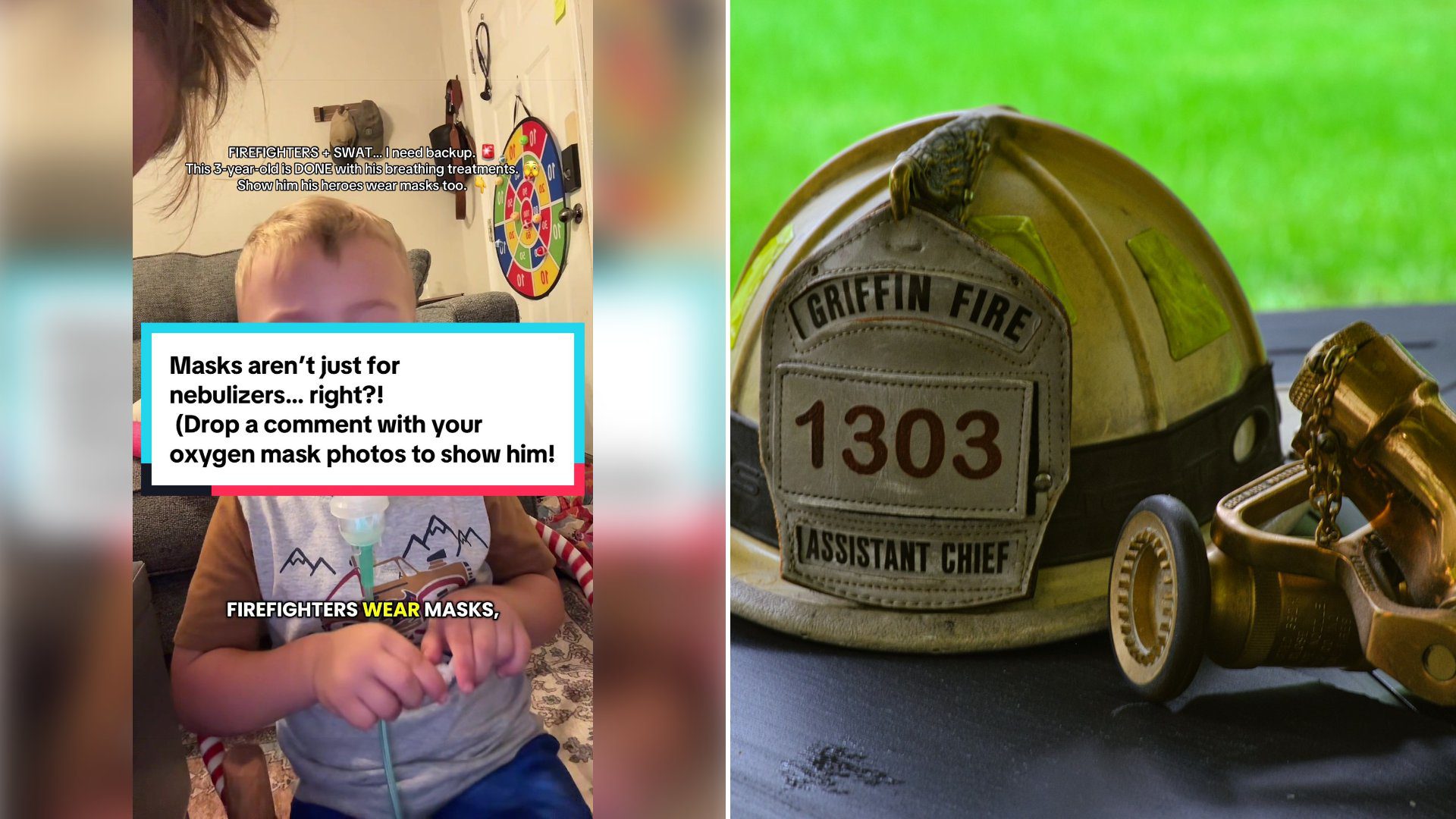
Instead of bribing him or just physically holding the mask in place, she reframed the whole thing. She told her son that the mask he was wearing was just like the ones real firefighters and SWAT team members wear, and that he was basically calling in backup heroes to help him through the treatment. The shift was almost immediate. A boy who moments earlier wanted nothing to do with the mask suddenly sat still, breathing in his medicine like it was part of an important mission rather than a scary medical chore.
@kate.inprocess
Nebulizer treatments are a reality for a huge number of families, since conditions like asthma, bronchiolitis, and recurrent respiratory infections are some of the most common reasons young children end up needing regular breathing treatments at home. Pediatric respiratory specialists widely agree that getting a toddler to tolerate a nebulizer mask is one of the most frequent frustrations parents bring up, precisely because the equipment is loud, the mask covers the face, and the whole setup can feel restrictive and frightening to a child who does not understand why it is necessary.
Child life specialists, who work specifically on helping kids cope with medical procedures, consistently recommend a strategy that looks a lot like what this mom did instinctively: turning an unfamiliar or scary piece of medical equipment into something the child can relate to through imaginative play. The nebulizer mask resembling the kind worn by firefighters or tactical teams is not a coincidence a three year old would necessarily notice on his own, but once his mom pointed it out, it gave him a frame of reference that made the mask feel powerful instead of frightening. Reframing medical gear as something connected to a role the child already finds exciting, whether that is a firefighter, an astronaut, or a superhero, is one of the most consistently effective low-cost tools available to parents managing recurring treatments at home.
Experts in pediatric medical compliance also point to a few other strategies that tend to work alongside this kind of imaginative reframing. Letting a child practice putting the mask on a stuffed animal or doll first, before it goes on their own face, gives them a sense of control over the process rather than feeling like something is simply being done to them. Building a consistent, predictable routine around treatment time, the same chair, the same show playing, the same little ritual beforehand, also reduces anxiety, since young children tend to find unpredictability far more distressing than the treatment itself. Giving a running countdown, rather than leaving the end time open-ended, helps too, since toddlers often struggle more with not knowing how long something uncomfortable will last than with the discomfort itself.
There is also a real medical stake in getting this right, beyond just making treatment time less stressful. Children who fight or resist their nebulizer mask often do not get a full, effective dose of their medication, since gasping, crying, or pulling the mask away reduces how much of the medicated mist actually reaches their lungs. Respiratory therapists frequently note that a calm child breathing normally through a full treatment gets meaningfully more therapeutic benefit than a child who is screaming and squirming through the same number of minutes. In other words, tricks like this firefighter reframe are not just about keeping the peace at home. They can directly affect how well a child’s asthma or respiratory illness is actually being managed.
For parents staring down their own version of this nightly battle, the lesson from this clip is a simple one: a scary piece of equipment can become a source of pride instead of dread with the right story attached to it, and sometimes the fastest fix is not a bribe or a struggle, but a three year old’s own imagination.
More from Decluttering Mom
- Parenting Expert Shows What To Do When a Child Melts Down in a Public Place and Offers the Phrase She Wants Overwhelmed Parents To Try Next Time
- Mom Says Toddler Tantrums Calm Down When Parents Say No Once and Stick to It and Explains Why Giving In Teaches Kids To Scream Louder Next Time
- Single Mom Says Emergencies Are So Hard as She Films Her Toddler Climbing All Over a Hospital Stretcher, Then Turns the Camera on Her Own Masked and Tired Face