A trip to the grocery store turned into an unexpected rant when @emilyawheeler realized her store had swapped in a brand new shopping cart design, and the upgrade came with a catch nobody warned her about. As she pushes her toddler through the aisles, she jokingly complains straight to the camera that the new cart’s cup holder is positioned somewhere that makes it basically useless for a kid’s drink, leaving her to hold her child’s juice cup for the entire shopping trip herself.
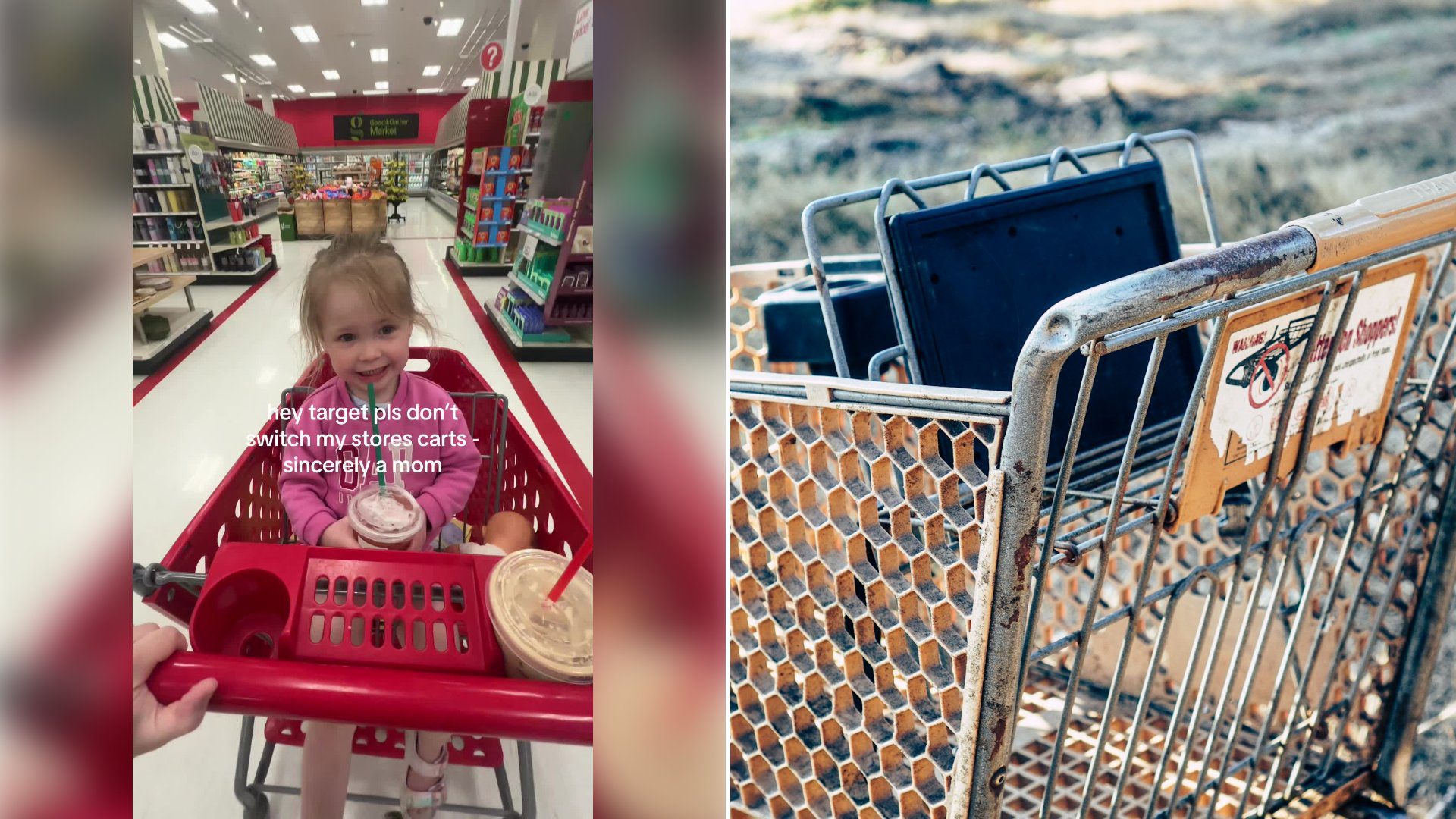
She walks through the store narrating the absurdity of it, half laughing and half genuinely annoyed, as her toddler sits happily in the seat completely unaware of the logistical headache playing out above their head. The video struck a nerve instantly, with parents flooding the comments to share their own cart complaints, from wobbly wheels to seat belts that never quite fit right.
@emilyawheeler
Shopping cart design is a bigger deal than most people realize. The basic shopping cart is widely credited to Oklahoma grocer Sylvan Goldman, who introduced a basket on a wheeled frame back in the 1930s so customers could carry more through the store. Child seating and other add-ons came later, built onto that same basic frame by various cart makers over the following decades, and in recent years major chains have rolled out updated cart lines featuring things like phone holders, extra basket space, and redesigned child seating meant to look sleeker and hold more weight.
The problem, as plenty of parents online have pointed out, is that these redesigns are often tested for durability and storage capacity rather than for the actual daily friction points of shopping with a toddler. A cup holder angled for an adult’s coffee cup does not necessarily work for a sippy cup or a juice box held by a wiggling kid, and small design oversights like that can turn a fifteen minute errand into a one handed balancing act.
It is also a reminder of how much invisible problem solving goes into an average shopping trip with young kids. Beyond holding drinks, parents are tracking a moving child, comparing prices, remembering a list, and often fielding requests for snacks, all while pushing a cart that may or may not cooperate. Retail design researchers have increasingly pushed for more input from actual parent shoppers before new cart models roll out chainwide, since a feature that looks good in a product photo can fall apart the moment a real toddler and a real juice cup are involved.
For now, parents navigating the new carts have their own workarounds, from bringing a spill proof cup with a built in clip to simply doing what @emilyawheeler did and holding the drink themselves while narrating the inconvenience for the internet. Either way, the video is a funny but accurate snapshot of how even small design choices at the store can add an extra task to an already full plate.
More from Decluttering Mom
- Mom Pulls the Oreos Out of Her Son’s Lunchables, Drops Them in a Zipper Bag and Crushes Every Last Cookie With a Rolling Pin So He Knows His Momma Is Petty
- Mom Filming in Her Kitchen Gets the White Socks Pulled Right Off Her Feet and Is Left Barefoot on the Tile Saying This Is Motherhood and She Has to Go to the Grocery
- Mom Doing Her Makeup at 5 in the Morning Realizes She Mixed Up One of Her Five Alarms and Woke Her Daughter Half an Hour Early, Then Apologizes and Sends Her Back to Bed