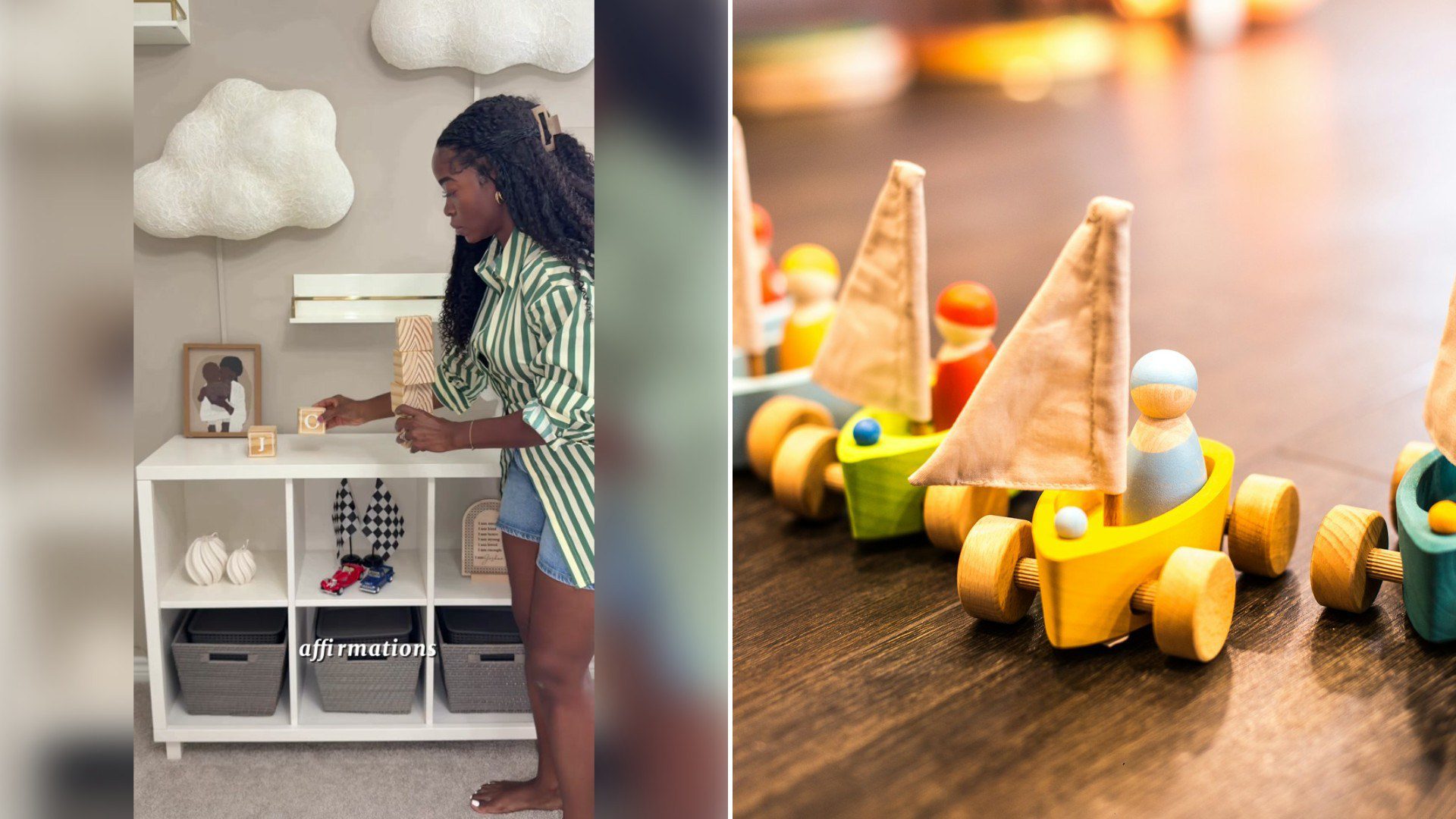
A creator posting under the handle iammarybennett documented converting her toddler son’s nursery into an age-appropriate “big boy” bedroom, complete with new car-themed furniture and decor, showing a real before-and-after of the space while reflecting on how quickly he outgrew being a baby.
@iammarybennett How is it time for a BIG BOY BED already?! 🥺🚗💙 Our baby boy is growing up way too fast😅 I AM NOT OK 😭 From his new love for cars to personalized details that make his room feel SO JOSHUA, I wanted this space to be fun, cozy, and filled with little opportunities for him to learn along the way. 🥰 And after surviving the 2½-year sleep regression… WE SURVIVED!!🙌🏾😂 Now I can’t wait for y’all to see the final reveal + Joshua’s reaction! 👀🏁 #momsoftiktok #toddlersoftiktok #kidsroom #roomdecor #toddlerbed
The transformation itself is a genuine milestone project rather than a generic room makeover — swapping a crib for a toddler or twin bed, softer nursery colors for a car-themed palette, and baby-era decor for something that actually matches who he is now. It marks a real transition rather than just a style refresh.
That bittersweet undercurrent is what gives the video its emotional weight. A nursery redo isn’t just a design project; it’s a visible, physical marker of a phase of parenthood quietly ending, which is exactly the kind of milestone a lot of parents feel more than they expect to until they’re actually packing up the crib.
For parents approaching their own version of this transition, the reflection here is a gentle reminder to actually sit with it rather than rushing straight to the next design phase — the room changes fast; the feeling that comes with it is worth giving a moment before moving on to paint swatches.
There’s a particular kind of finality to taking apart a nursery that doesn’t quite hit until it’s actually happening. Parents often spend months, sometimes years, curating that first room down to the smallest detail — the mobile, the specific shade of paint, the rocking chair positioned just right for middle-of-the-night feeds — and then, almost overnight it seems, the whole carefully built space stops matching the kid who’s supposed to live in it. The crib that once felt impossibly small for a newborn suddenly looks cramped for a toddler who’s figured out how to climb the rail, and the soft, neutral nursery palette starts to feel like it belongs to a different kid entirely.
The car theme itself says something about how quickly a toddler’s own personality starts asserting itself into decisions that used to be entirely up to the parents. A nursery gets designed before a baby is even born, built entirely around a parent’s taste and hopes for the space. A “big boy” room, by contrast, tends to get built around an actual, observed personality — in this case, a specific, documented love of cars that emerged somewhere along the way and became strong enough to shape an entire bedroom redesign. That shift, from parent-driven design to kid-driven design, is its own quiet milestone tucked inside the bigger one.
Surviving a sleep regression around the two-and-a-half-year mark, as mentioned here, adds its own layer of context to why this particular transition feels especially significant. Regressions of that kind tend to be exhausting enough on their own that finishing one and then tackling a full room transformation right afterward says something about a parent’s resilience — or possibly just relief at finally being through the hardest stretch and ready to mark the occasion with something concrete and visible.
There’s also a practical safety dimension to this kind of transition that’s easy to overlook amid the emotional weight of it. Moving a toddler out of a crib and into a bed typically happens once climbing becomes a real fall risk, which means the timing of a redo like this one is rarely purely aesthetic — it’s often driven by a kid who’s already demonstrated, one way or another, that the crib era needs to end sooner rather than later. The design choices get to be fun and personalized, but the underlying trigger is frequently a far more pragmatic one.
What makes moments like this resonate with other parents isn’t really the specific car motifs or paint colors chosen, but the universal experience of watching a baby-era space become obsolete seemingly overnight. Every parent who’s gone through this transition recognizes the particular ache of realizing that the person this room was originally built for — a tiny, entirely dependent newborn — doesn’t really exist anymore, replaced by a walking, talking, opinion-having toddler who wants his room to reflect who he actually is now.
The emotional reflection woven through this kind of content tends to land because it refuses to pretend the milestone is purely a happy one. There’s real joy in watching a kid grow and develop his own interests strong enough to influence a whole bedroom redesign, and there’s also a genuine, if smaller, grief in closing the door on the newborn and infant stages for good. Both feelings coexisting, without one canceling out the other, is probably the most honest way to describe what most parents actually experience during a transition like this.
For parents who haven’t yet reached this particular milestone with their own child, there’s a useful piece of foresight embedded here: the timeline moves faster than it seems like it should while you’re in the thick of newborn and infant days. The crib that feels like it will be in use forever has an expiration date that arrives sooner than expected, and the nursery that took months to plan and decorate might only serve its original purpose for a couple of years before needing a full second act.
By the time the reveal happens and Joshua sees his new room for the first time, the transformation has done more than just update a space — it’s marked, visibly and permanently, the end of one era of parenting and the start of another. That kind of milestone, however it gets decorated, tends to stick with a parent long after the specific car-themed bedspread or wall decals have been swapped out for whatever comes next.