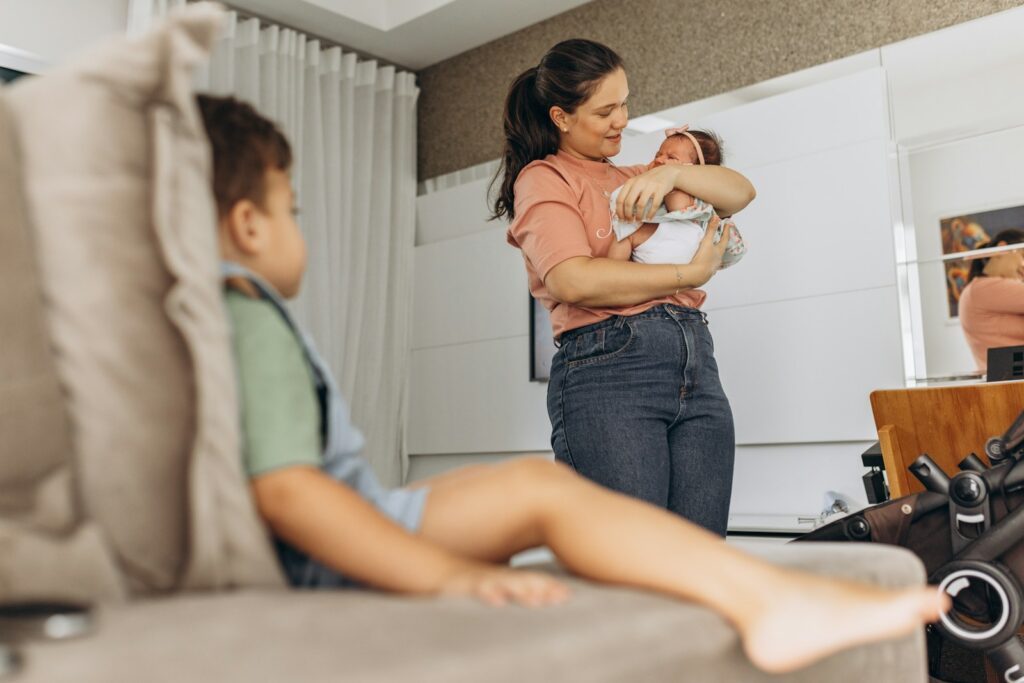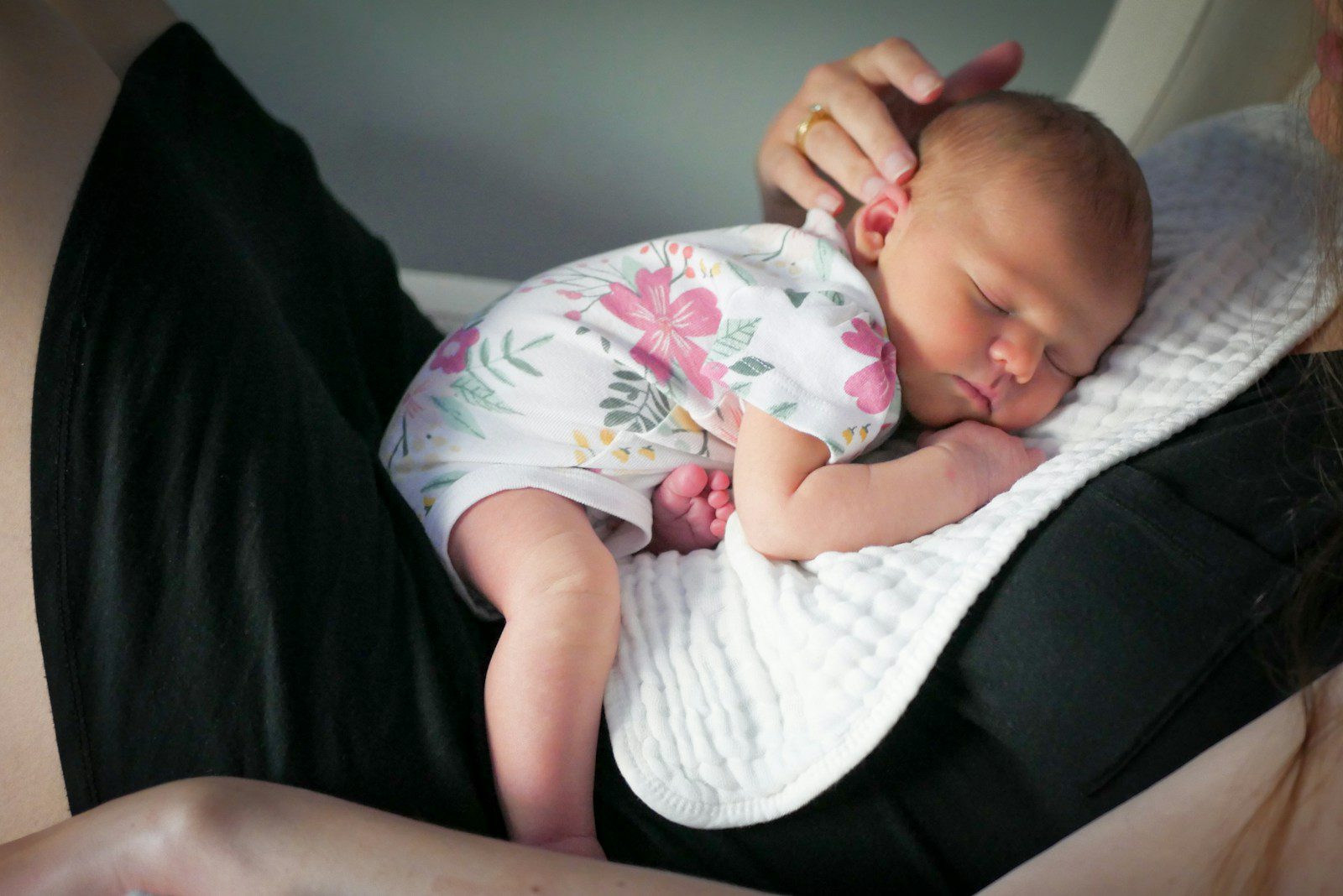
Traffic, timing and biology collided in a way no parent plans for when a mother delivered her baby in the front seat of the family car while her husband and their toddler watched in stunned disbelief. What began as a rushed drive to the hospital turned into a roadside delivery that unfolded in minutes, capturing the raw fear and fierce focus that define emergency births. The scene, chaotic and intimate all at once, underscores how quickly a routine labor can turn into a story the family will tell for the rest of their lives.
Although the moment was terrifying, the outcome was the one every parent in that situation hopes for: a healthy baby, a recovering mother and a shaken but safe family. Their experience mirrors a small but striking pattern of births that happen in transit, where parents are forced to improvise in cramped cabins and on unfamiliar roads, relying on instinct, phone directions and the thin reassurance of distant sirens.
The frantic drive that became a delivery room
For Jan and Adam, the plan was simple: get to the hospital as contractions intensified, hand over care to professionals and welcome their baby in a delivery suite, not on the shoulder of a busy road. Labor, however, moved faster than the traffic. As Adam drove and their toddler sat strapped into the back seat, Jan’s contractions suddenly shifted from manageable to overwhelming, leaving no doubt that the baby was coming before they could reach the maternity ward. In a matter of moments, the family car stopped being a vehicle and became the only available place to give birth.
With no time to reroute or wait for help, Jan delivered their baby, Clark, in the front seat while their toddler watched from behind, wide eyed and confused by the shouts and hurried instructions. Adam had to split his attention between his partner and their child, trying to keep everyone calm while he called for help and followed emergency guidance. When paramedics arrived, they moved Jan and newborn Clark to an ambulance to check their vitals, while Adam stayed in the car to reassure their daughter, a detail that highlights how he tried to protect her from the shock of seeing her sibling arrive in such an intense way, as described in their account.
Children in the back seat, front row to a life changing moment
For the toddler in Jan and Adam’s car, the birth of Clark unfolded just a few feet away, framed by a car seat and the back of the passenger headrest. Young children are rarely prepared to see a parent in pain, let alone to witness a delivery at such close range. Parents in these situations often find themselves narrating the chaos in real time, turning screams into “Mommy is working hard” and blood into “the baby’s special mess,” trying to translate a medical emergency into something a child can process. That emotional juggling act is as demanding as the physical logistics of an unplanned birth in transit.
Their experience echoes another dramatic roadside delivery in Henderson, Nevada, where a mom gave birth in the family’s Infiniti while three kids watched from the back seat and even filmed the moment on a phone. In that case, the children’s running commentary and nervous laughter captured how surreal it can be for siblings to see a baby arrive in a place usually reserved for school runs and grocery trips, a scene documented in the HENDERSON birth. Together, these stories show how quickly a family vehicle can turn into a front row seat to life and how parents must manage not only the medical urgency but also the emotional fallout for the children who witness it.
Why car births keep happening and how families adapt
Unplanned car births like Jan’s are rare compared with hospital deliveries, but they are not flukes. They tend to happen when labors progress faster than expected, when parents live far from maternity units or when traffic and timing collide at the worst possible moment. Many families are told to wait until contractions are a certain number of minutes apart before heading in, a guideline that works in most cases but can leave some parents racing the clock. When that calculation is off by even half an hour, the result can be a baby born between exits, with hazard lights flashing and emergency dispatchers coaching over speakerphone.
In response, parents who have been through these experiences often become informal educators for others, sharing what they wish they had known: keep towels or blankets in the car, store a basic first aid kit within reach, and make sure phones are charged and location services are on so dispatchers can find the vehicle quickly. They also emphasize the importance of mental flexibility, accepting that birth does not always follow the script written in a birth plan or hospital brochure. For Jan and Adam, and for the mom in Henderson, the car became an improvised delivery room, yet both families emerged with healthy babies and powerful stories that underline a simple truth about childbirth. Even in the most controlled societies, the start of a new life still answers to its own timing, leaving parents to adapt in the moment, wherever they happen to be.
More from Decluttering Mom: