A mom on Instagram is going viral for a parenting bit so deadpan that half the comments section thought she was serious. In a reel from creator @holdingmoonbeams, she explains the fake business she runs out of her own glovebox: a “tablet rental program” that only opens for business on car trips. The tablets live in a bag, they get checked out like library books, and the second the car is parked, the rental window closes. No other time of day qualifies. Her kids have apparently bought into the bit completely, treating a routine car ride tablet as a rare, limited-time perk instead of the default background noise it is in a lot of households.
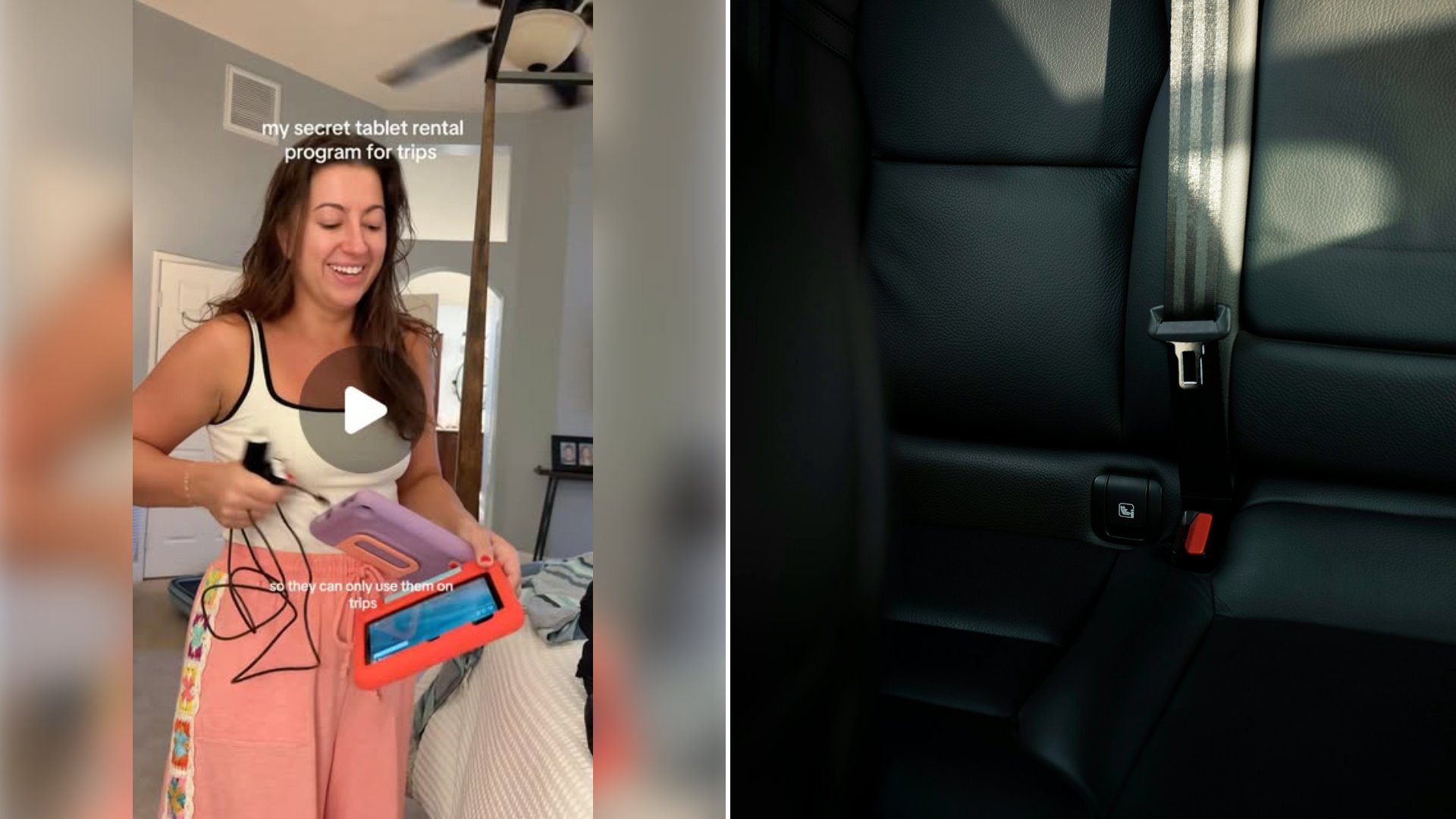
The video plays like a tiny infomercial, complete with the deadpan delivery of someone explaining actual rental terms, which is exactly what makes it funny and also exactly what makes it work on toddlers who take rules literally.
The reason this trick lands has less to do with tablets and more to do with how kids process scarcity and ritual. Child development specialists have long pointed out that children respond to structure and predictability, and that something framed as special or limited tends to hold more value than the same thing offered freely at any hour. A tablet that’s always available becomes wallpaper. A tablet that only comes out for a specific, bounded occasion becomes an event. The “rental” framing adds a second layer on top of that: it gives the screen time a beginning and an end that both the parent and the kid understand ahead of time, which cuts down on the meltdown that usually happens when a screen just gets taken away with no warning.
This kind of boundary-with-a-story approach is something pediatric guidance has circled around for years without ever needing to call it a “rental program.” The American Academy of Pediatrics recommends that parents set consistent limits on recreational screen time for young children and build media use around specific contexts rather than leaving it open-ended, precisely because consistency is what makes a limit feel fair instead of arbitrary. A car trip is a context that already has a natural start and stop built in, which is part of why this particular rule is so easy for a toddler to accept. There’s no ambiguity about when it begins or ends, because the car ride itself marks both.
There’s also something going on here that behavioral researchers call the scarcity principle, originally studied in adult consumer behavior but just as visible in a five-year-old negotiating for five more minutes of a show. People, kids very much included, tend to assign higher value to things they perceive as limited or hard to get, and lower value to things that are constantly available. A parent who hands over a tablet the instant a kid is bored is unintentionally training that kid to see screens as the default solution to boredom. A parent who gates screen access behind a specific, rare occasion is training the opposite: that the tablet is a treat tied to one thing, not an all-purpose fix for restlessness.
None of this requires actually running a fake company, obviously, but the bit helps in a very real way: it gives the parent language that a toddler can hold onto. “We’re not doing tablets right now” is an abstract rule that invites arguing. “The rental program is closed” is a concrete, almost game-like fact that a kid can repeat back, which means less negotiating and fewer tears when the answer is no. Parents dealing with constant screen time battles might not need the exact bit about rentals, but the underlying strategy, tying screens to one specific, limited context and sticking to it without exception, is something child psychologists have been recommending in less entertaining language for a long time.
It’s also a reminder that a lot of the parenting hacks that go viral aren’t really hacks at all. They’re just established child development principles wearing a funnier costume. Scarcity, structure, and a clear beginning and end are not new ideas. What’s new is a mom clever enough to turn them into a glovebox business with its own made-up terms of service, and kids who are happily none the wiser.
More from Decluttering Mom
- Parenting Expert Shows What To Do When a Child Melts Down in a Public Place and Offers the Phrase She Wants Overwhelmed Parents To Try Next Time
- Mom Says Toddler Tantrums Calm Down When Parents Say No Once and Stick to It and Explains Why Giving In Teaches Kids To Scream Louder Next Time
- Parent Says Taking the Television Out of the House Changed Her Toddler’s Whole Day and Describes What Replaced It and How Long the Adjustment Took