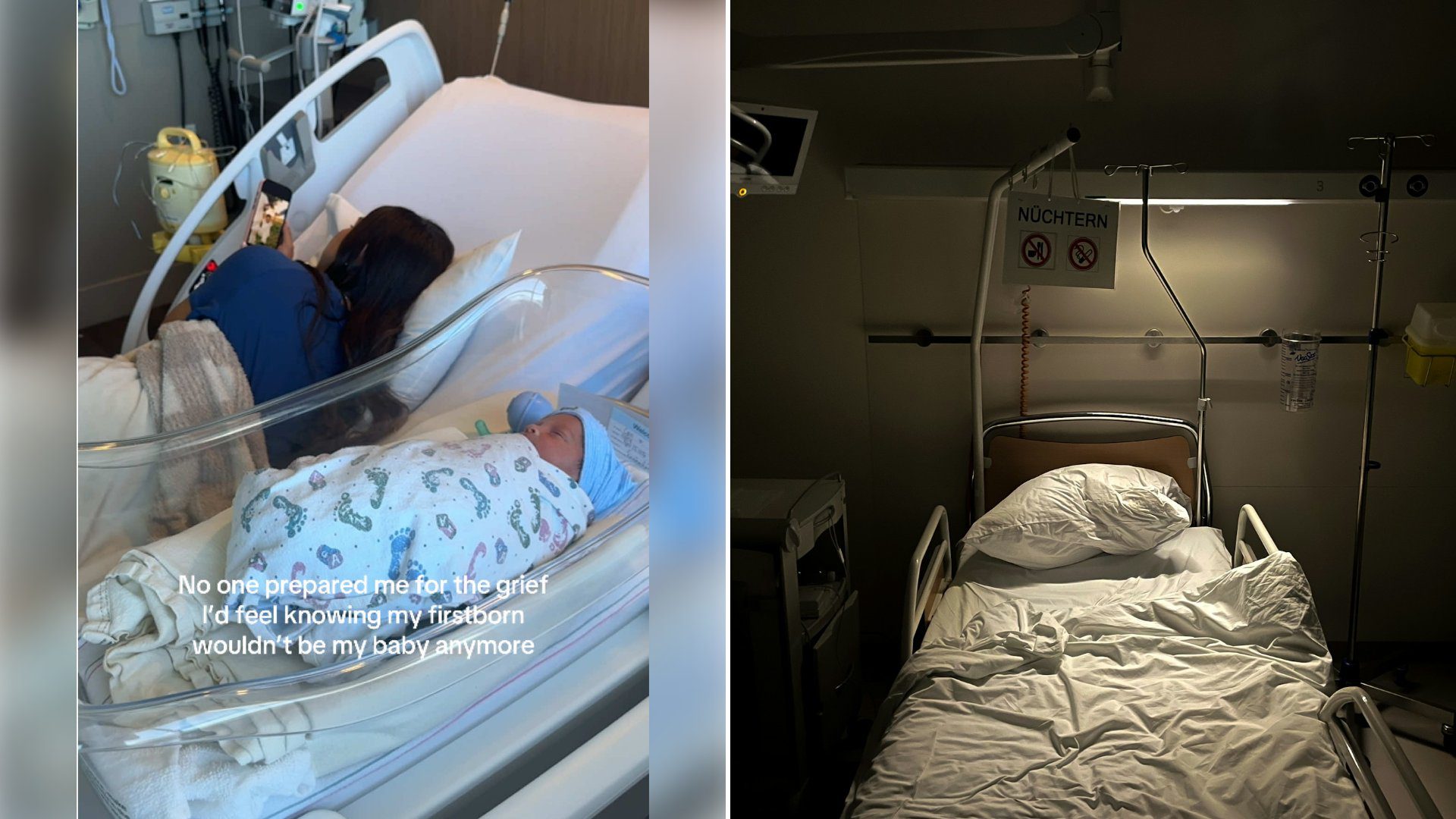
The camera starts on hospital bassinets holding swaddled newborns, then pans across the room to a mom lying on her side in a hospital bed, phone in hand. By the last few seconds of the 10 second clip from Haley Cain, who posts as haleyrcain, the screen fills with what she is actually looking at: a photo of her toddler.
The words over the whole clip explain the pan. “Overwhelmed with joy, but no one prepared me for the grief of knowing my firstborn wouldn’t be my baby anymore.” Her caption fills in the rest: “It’s a happy change, but it’s been just us for 2 years.” She tagged it #momof3, #twinmom, #bigbrother and #firstborn.
Going From One to Three at Once
Her version of this shift is bigger than most. According to the Centers for Disease Control and Prevention’s National Center for Health Statistics, there were 109,195 twin births in the United States in 2024, a rate of 30.1 per 1,000 live births. A family that welcomes twins after a first child goes from one child to three in a single delivery, and the firstborn becomes a big brother to two babies at once.
The American Academy of Pediatrics, in its guide to preparing an older child for a new baby, tells parents of 2 to 4 year olds to “expect your child to regress a little,” and calls that “your older child’s way of making sure they still have your love and attention.”
The AAP’s suggestions for the weeks after the babies come home line up closely with the worry in her caption:
- “Set aside special time for your child,” even a few minutes a day that are only his.
- “Find ways to invite your child to help,” which the AAP says makes older children less jealous.
- Ask visitors who come to see the babies to spend time with the older child too.
- Keep a small gift ready for him, since some visitors bring presents only for the new babies.
When Mixed Feelings Need a Doctor
She calls what she feels grief, and that is her word for it. For any parent feeling something similar after a birth, the National Institute of Mental Health draws a clear line in its guide to perinatal depression. It describes the “baby blues” as mild, short lasting mood changes, including “feelings of worry, unhappiness, and exhaustion,” that many women experience in the first 2 weeks after giving birth. Mood changes and feelings of anxiety or unhappiness “that are severe or last longer than 2 weeks” may signal postpartum depression, NIMH says, and anyone with those symptoms should see a health care provider.
The Postpartum Support International helpline takes calls and texts at 800 944 4773. NIMH advises anyone with thoughts of suicide to call or text 988, and anyone with symptoms of postpartum psychosis to call 911.
More from Decluttering Mom
- Mom Films Herself Crying After Bringing Her Second Baby Home Because She Missed Her Firstborn So Much and the Toddler Sitting Beside Her Answers With a Scowl and a Side Eye
- Two Whole Years Since We Found Out Twins Were Joining Our Crew!
- Twin Mom Who Calls Her Second Born the Wild Child Turns to Open a Cabinet and the Toddler Hangs From the Oven Handle Until the Door Drops Her to the Floor, Then Her Sister Shuts It