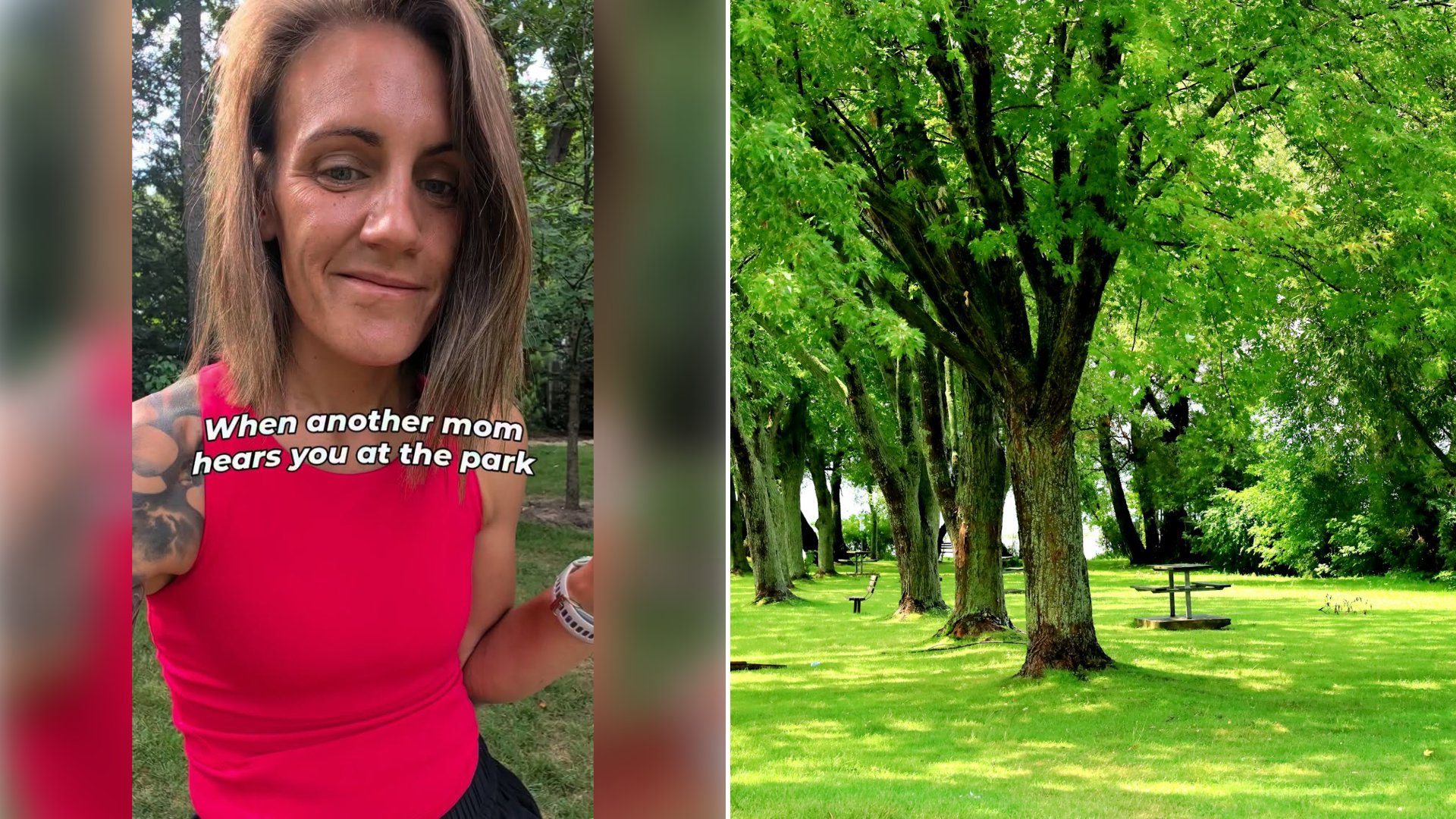
“Um, excuse me, little ears listening,” is how one mom says another parent opened the conversation at the park. “We try to keep the park language clean. You probably shouldn’t say that around them.” Her answer, she says, was that her son had been about to pull down his pants and pee on the slide, and that the curse word she used to stop him was the polite version of what she was thinking.
@ranae_elevated told the story in a 33 second Instagram reel posted September 12, 2026, filmed close to the camera while she sits on a swing with yellow chains. The opening text reads “When another mom hears you at the park,” and her caption sets the tone: gentle parenting is cute, but a well placed curse word gets results. She tagged it #momhumor, #relatablemom and #parentingfail.
According to the captions on her video, another mom at the park “just heard me say” the word “and she had to come talk to me about it.” She replays her own reply: her son was “literally about to” expose himself and pee on the slide, and “the F word that came out of my mouth was milder than the thoughts in my brain.”
The other mom did not back down, she says. “Well, I would never use that language. I would try to be more considerate next time.” Her comeback, in her retelling, was that next time she would simply let her son go ahead on the slide while the other mom’s daughter watched and then slid down after him. “So I literally just grabbed my son,” she says, “like, let’s go before mommy uses more language.”
The video is framed as mom humor and is a retelling, not footage of the moment, so the account is hers alone. She filled in more of it in a comment under the reel. Her son, she wrote, had yelled that he needed to pee, and an older boy, around 8 or 9 by her estimate, was egging him on to do it on the slide. She says she saw the smirk on her son’s face, ran over and swore, and that only three children were within earshot: her son, the older boy and the other mom’s daughter, who was about to go down the slide. The other mom approached her, she wrote, after she and her son came back from the portable toilet. “I did NOT scream” it across a park full of kids, she added.
What Researchers and Pediatricians Say About Kids and Curse Words
Children pick up these words very early. In a study published in the American Journal of Psychology in 2013, psychologists Kristin Jay and Timothy Jay recorded taboo words used by children aged 1 to 12 and found that even the youngest group, ages 1 and 2, already used 13 different taboo words or phrases. By ages 5 and 6, the children’s taboo vocabulary had grown to about 42 words. The authors wrote that too little data exists to make definitive statements about the consequences of swearing for children, and said the problems it causes are mainly social.
Most parents think kids learn it from other kids. In the University of Michigan Health C.S. Mott Children’s Hospital National Poll on Children’s Health, which surveyed 1,678 parents of children aged 6 to 17 in August 2025, two in three parents pointed to friends or classmates as the top source of profanity, ahead of media. Only about half of parents said children should never swear.
The American Academy of Pediatrics, on its HealthyChildren.org page on swearing, says younger children often repeat words they “have heard others use” without knowing what they mean, and that parents who swear at home are teaching their children to do the same. On discipline, the AAP advises saving the word “no” for the most important issues, like safety, and says yelling at or shaming a child is ineffective.
What Parents in the Comments Added
One commenter who says she has been a preschool teacher for 10 years wrote that she has seen plenty on playgrounds, but that around children who are not her own family her brain simply will not let her swear, and compared it to yelling at a children’s pizza arcade. Another suggested a different script for the same emergency: shout the child’s name, “we don’t do that,” and run over.
If You Are the Parent at the Slide
Plan for the bathroom before you need it. Her son announced he had to go, and the trouble started there. When you arrive at a park, find the restroom or portable toilet first and walk a child who says “I have to pee” straight to it rather than calling back from a bench.
Have a stop word ready that works at a run. The AAP’s advice to save “no” for safety is the same idea: a short, loud word your child already knows means freeze, used rarely enough that it still works. Practicing it at home makes it the thing that comes out of your mouth in the moment.
Watch the older kids, too. By her account, an older boy was the one pushing the dare. Moving your child away from a group that is egging him on, and away from the equipment, ends the audience as well as the stunt.
If something slips out anyway, a quick “sorry, that was for my son” to the nearest parent closes the moment before it becomes a conversation, and leaving early, as she did, is a fair option when it does.
If you are the parent who overheard, consider what the other parent was dealing with before you walk over. Her version of events puts a child seconds from peeing on the equipment your own child was about to use.
More from Decluttering Mom
- Mother Notices Every Other Toddler Sitting Down at Storytime, Then Gently Scolds Her Own Child for Doing Laps and Eating Fruit Instead of Sitting
- The Romanticized ‘Boy Mom’ Fantasy vs. the Chaotic Reality, Side By Side
- Mom Says She Blamed an Older Couple for a Smell in Walmart, Then Slipped Cartoon Style and Realized Her Toddler’s Diaper Had Leaked Through the Cart and Left a Trail Across the Store