A mother on Instagram is sharing a moment of gentle, good-humored parental exasperation that will be instantly familiar to anyone who has ever brought a toddler to a structured group activity: the stark realization that every other child in the room is behaving, while her own is doing anything but.
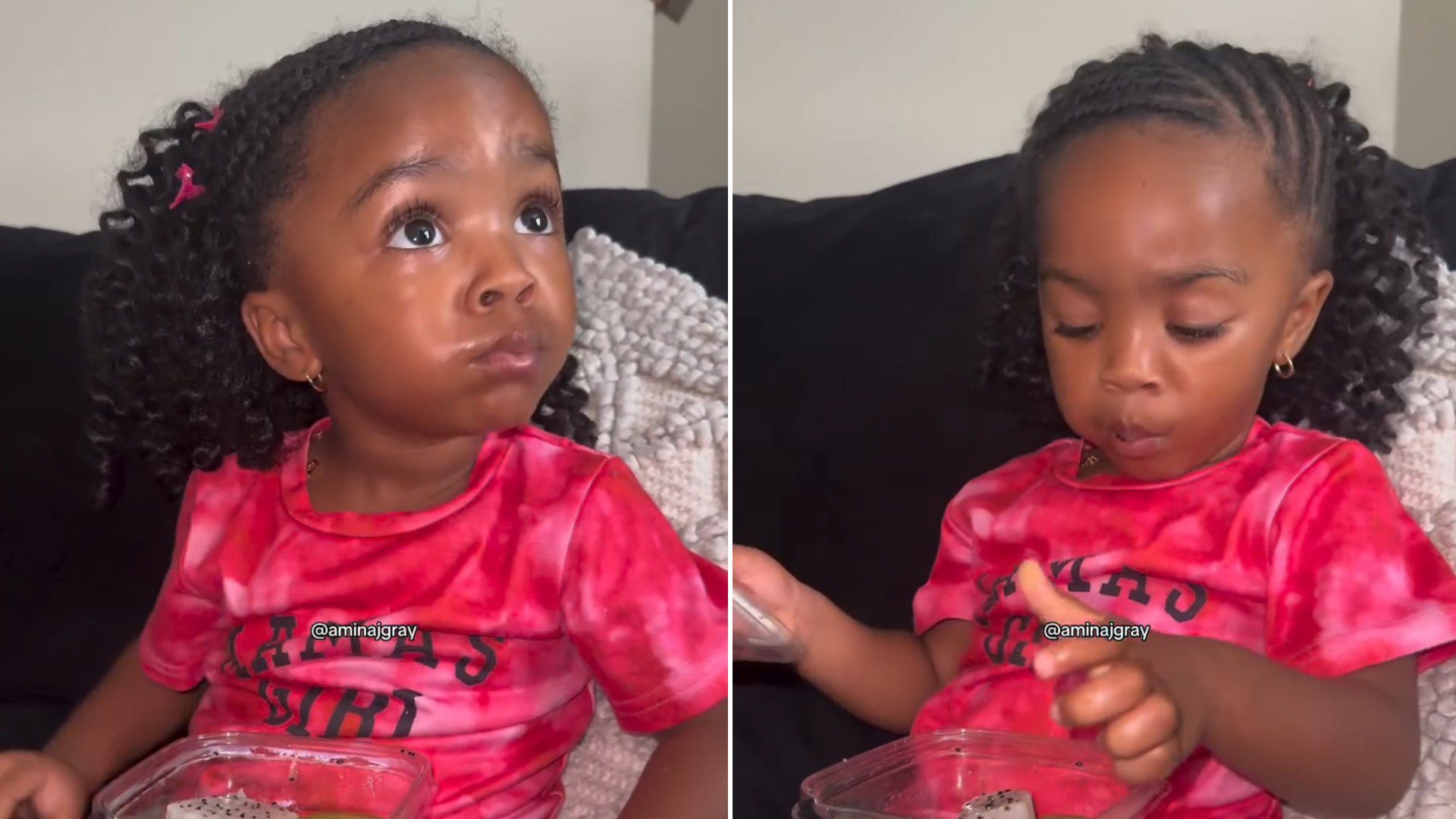
“I looked around like… why is everybody else’s toddler sitting down?!” she wrote in her caption, punctuated with a crying-laughing combination of emojis. “Meanwhile mine is doing laps…” the caption continues, describing a scene most parents of toddlers know intimately: a room full of other people’s children sitting calmly for storytime, and her own child treating the same space as a personal running track, snack in hand.
According to the mother’s account, her toddler spent the session doing laps around the room while also eating fruit, seemingly unbothered by the social expectation to sit still and listen along with the group. In response, the mother gently scolds her child, trying to redirect the energy toward the actual activity everyone else appears to be quietly participating in, though her tone throughout, by her own framing, stays affectionate and amused rather than genuinely frustrated.
Storytime at a library, preschool, or community center is one of those quintessential toddler milestones parents look forward to, a chance to introduce structured group activity, books, songs, and a bit of early socialization. It’s also, notoriously, one of the more humbling parenting experiences, precisely because it puts every toddler’s behavior on public, simultaneous display. There’s nowhere to hide when your child is the one bouncing off the walls while a room full of two and three-year-olds sit in a neat little semicircle, apparently having received a memo about appropriate storytime conduct that your own child somehow missed entirely.
The comparison trap she describes, looking around and wondering why every other toddler seems to have it together, is one nearly every parent falls into at some point, even while knowing, rationally, that toddler behavior varies wildly from child to child and day to day, and that a room full of seemingly perfect, seated children is rarely the full picture. Toddlers are, developmentally, not built for extended stillness, and a child doing laps while snacking on fruit rather than sitting quietly isn’t unusual so much as it’s simply more visible in a group setting where the contrast with other kids’ behavior that particular day happens to be stark.
What makes the video charming rather than just a complaint is the mother’s own self-awareness about the moment. She’s not claiming her child did anything wrong in some serious sense, just narrating, with clear affection, the comedy of expecting a toddler to behave predictably and getting a very different result in real time, in front of an audience of other, apparently better-behaved, toddlers.
The video’s reach, 1.6 million views, speaks to how universally recognizable this exact scenario is. Group activities with toddlers are a reliable source of both joy and mild social embarrassment, and parents seem eager to see that reality reflected honestly rather than glossed over.
Navigating Group Activities With an Active Toddler
It’s completely normal for toddlers to struggle with sitting still during group activities like storytime, even when other children in the same room seem to manage it easily. Early childhood specialists generally note that attention spans and impulse control vary enormously among toddlers, and comparing one child’s behavior to another’s in the moment rarely reflects anything meaningful about either child’s development. Bringing a small snack, a favorite toy, or simply lowering expectations for how long a very young child can realistically sit still can make these outings less stressful for everyone involved. Gentle redirection, rather than harsh correction, tends to work best with toddlers, who are still building the self-regulation skills that most adults take for granted. And a little humor about the chaos, as this mother demonstrated, tends to make these public parenting moments a lot more bearable.