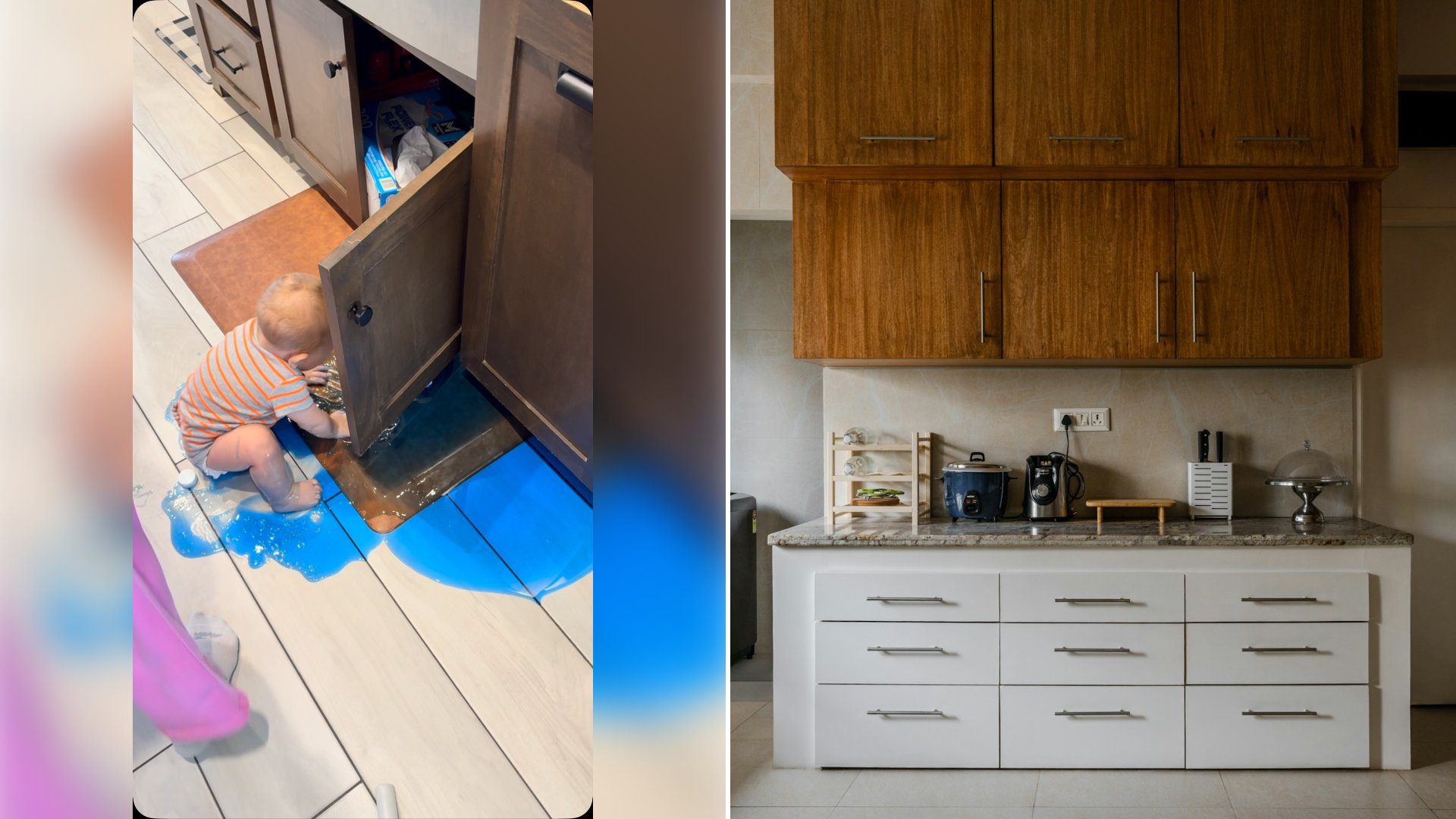
The first shot is the whole story: a baby sitting in front of an open cabinet under the kitchen sink, with a bright blue puddle of soap spreading across the pale plank floor around him. The Instagram reel from kelciepickard then follows the cleanup from start to finish.
Her caption heads off the obvious comment before anyone can make it. “Before anybody says a word about getting a childproof lock on these under sink cabinets,” she writes, “I had locks on these doors for 8 years until recently the cabinet door (yes, the literal entire door) got ripped off.” Since “there’s nothing besides soap under here,” she says, she had not replaced the lock yet. “Jokes on me.”
What follows is a mom working fast. She lifts the baby straight into the farmhouse sink and rinses him off under the faucet, and he cries through part of what comes next. Then she is down on her knees in pink pants and a red headband, pressing towels into the puddle, pulling the soaked mat away from the cabinet base, wiping along the toe kick under the dishwasher and laying fresh towels down while the baby crawls back over beside her. By the end of the clip a spin mop with a red handle has come out for the final pass.
She keeps the tone light. “This is pretty standard stuff with 4 boys at this point,” the caption says, and the floor and the baby, by her account, are “extra clean now.”
Why the Cabinet Under the Sink Gets So Much Attention
The U.S. Consumer Product Safety Commission says nearly 1 million children under age five are exposed to potentially poisonous medicines and household chemicals each year, and advises storing household products in cabinets with child safety latches or locks, away from food and medicine and in their original containers.
The CPSC’s childproofing guide says latches “can help prevent children from gaining access to medicines, laundry detergent, household cleaners,” and tells parents to look for ones “that adults can easily install and use” but that are “sturdy enough to withstand pulls and tugs from children.” It is also frank about the limits: “no device is completely childproof; determined toddlers have been known to overcome or disable them.”
If Your Child Gets Into the Dish Soap
She says it was soap, and the video shows the baby playing in it, not drinking it. If your own child does get some in the mouth or eyes, the Poison Control guidance on hand dish soap says swallowing it “can cause nausea, vomiting, or diarrhea,” that small amounts usually cause mild stomach upset, and that choking on it can let soap into the lungs. Its first steps:
- Mouth: rinse the mouth with water, have the child take small sips of water, and get expert guidance right away.
- Eyes: rinse the eye immediately with water, and check exactly which product it was, since some household cleaners contain strong acids or bases.
- Call Poison Control at 1 800 222 1222, or use the webPOISONCONTROL online tool. Poison Control describes the service as free, confidential and available 24 hours a day.
- Per the AAP: do not make your child vomit, and call 911 if the child is unconscious, not breathing or having seizures. Have the child’s age and weight and the product bottle ready when you call.
For a household in her position, with a broken door and a lock waiting to be replaced, the fix in the meantime is to move every bottle from under the sink to a higher cabinet that does latch, keep each one in its original container as the CPSC advises, and refit a latch as soon as the door is back on its hinges.
More from Decluttering Mom
- 6 Things Under Your Kitchen Sink You Should Clear Out This Weekend
- 10 Things You Should Never Store Under the Kitchen Sink
- Mom Says She Blamed an Older Couple for a Smell in Walmart, Then Slipped Cartoon Style and Realized Her Toddler’s Diaper Had Leaked Through the Cart and Left a Trail Across the Store