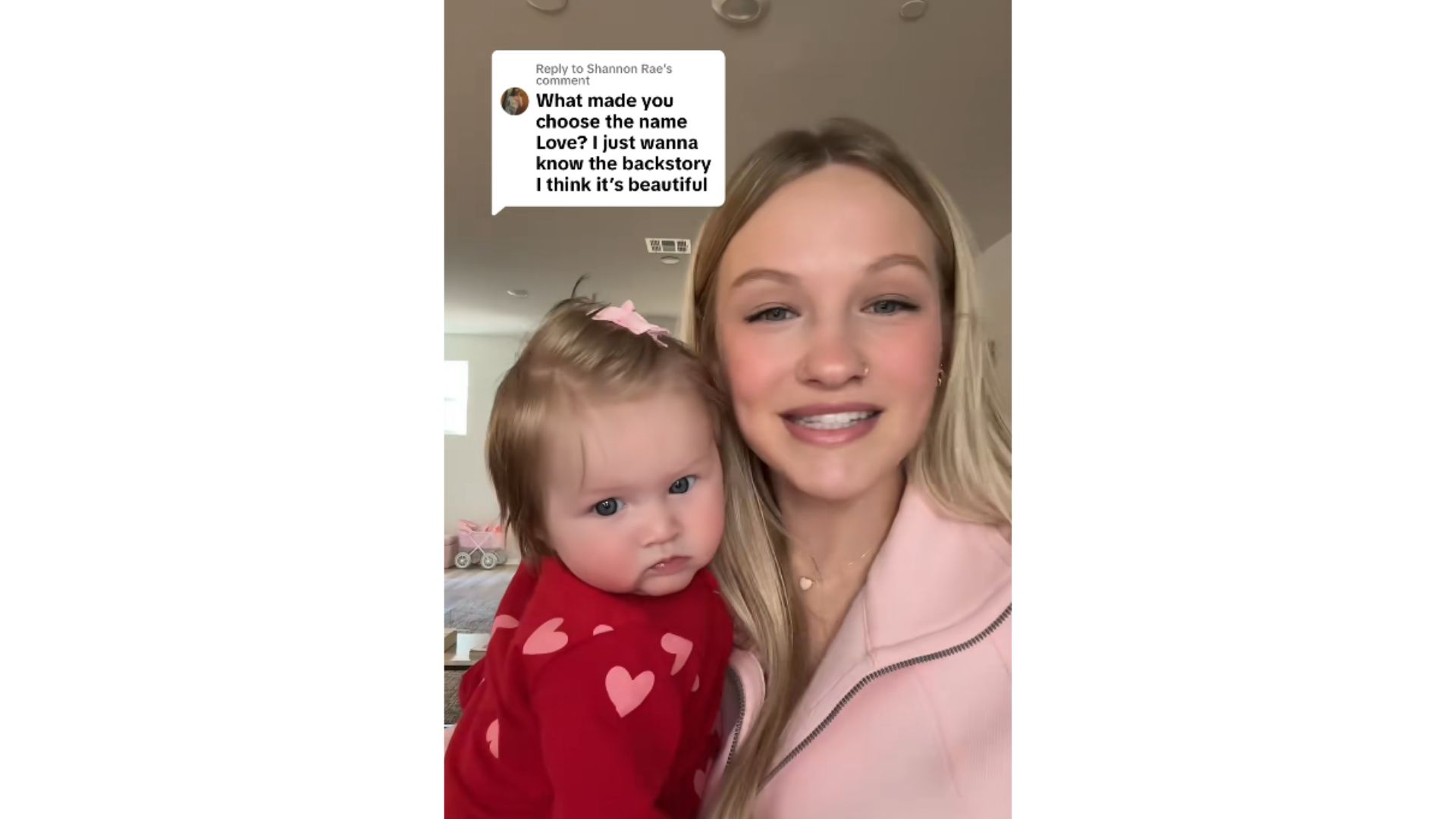
Some baby names come from family trees, some from favorite books, and some, like McKenzie Schreiner’s, come from wordplay that only makes sense once you say it out loud. Schreiner, who posts as @lifewithlovey_, named her daughter Love. Paired with the middle name Lea, a name that has been passed down in the family, the two together read almost like a single word: Lovely.
Schreiner shared the reasoning in a TikTok video that walked viewers through how the name came together. Lea wasn’t chosen at random. According to Schreiner, it holds meaning within her family, the kind of middle name that gets handed down the way an heirloom might. Love was the first name she and her partner wanted for their daughter from the start, a word that doubles as both a name and a sentiment. When the two were placed together, the happy accident of “Love Lea” sounding like “Lovely” sealed the decision. It wasn’t just a name; it was a small piece of wordplay the family could carry with them every time they said it.
Not everyone who watched the video reacted warmly. In the comments, a number of viewers raised concerns about how an unconventional first name might follow the child as she grows up. Some argued that a name like Love could invite teasing in school hallways or raised eyebrows in professional settings later in life. Others worried that a name built around a concept rather than a traditional given name might put an unfair weight on a child who never got a say in the decision. The criticism wasn’t universally harsh, but it was persistent enough that Schreiner felt the need to address it directly.
In her response, Schreiner defended the name as a deliberate and loving choice rather than something picked on a whim. She pointed out that names carrying big, abstract meanings are far from new, and that plenty of parents choose names tied to virtues, nature, or emotion without their children being defined or limited by them. For Schreiner, “Love” wasn’t meant to be a gimmick. It was meant to be exactly what it says: a name that reflects how her family feels about the daughter they were welcoming.
She also pushed back gently on the idea that an unusual name automatically sets a child up for a harder life. Schreiner noted that names once considered unconventional become ordinary within a generation, and that the internet in particular has a habit of reacting strongly to names it hasn’t heard often, only for those same names to become common a few years later. Her daughter, she said, will grow up knowing exactly why she was named Love Lea, and knowing that the name was chosen with intention rather than carelessness.
The debate under Schreiner’s video reflects a much bigger, ongoing conversation among parents about how much a first name really shapes a child’s future, and how much of that concern is really about the parent’s taste rather than the child’s wellbeing. Naming a baby is one of the first major decisions parents make, often before they’ve met the tiny personality who will eventually grow into that name, which is part of why it can feel so high-stakes.
Choosing An Unconventional Name: What Actually Matters
Parents considering a name like Love Lea, or any name that leans creative, symbolic, or unusual, don’t have to choose between meaning and practicality. A few considerations tend to matter more in the long run than whether a name is common.
- Say it in different contexts before committing. Try the name in a classroom roll call, a job interview introduction, and a casual nickname to see how it holds up in everyday situations.
- Consider the nickname, not just the full name. Kids often go by a shortened or altered version of their given name among friends, so it helps to like the options a name naturally produces.
- Give the name a story the child can tell. Names with real family meaning, like Schreiner’s choice of Lea, tend to become a source of pride once a child is old enough to understand the reasoning behind them.
- Remember that reactions to new names fade fast. Names that sound unusual to one generation often become completely normal for the next, especially once a few notable people share the name.
- Trust the parents who did the thinking. Outsiders react to a name in the first few seconds of hearing it; parents typically spend months weighing the decision, and that context is often missing from a stranger’s quick judgment.
For Schreiner, the name Love Lea isn’t a trend or a stunt. It’s a small, deliberate piece of wordplay wrapped around a family middle name, built to remind her daughter, every time someone says it, exactly how she was welcomed into the world.