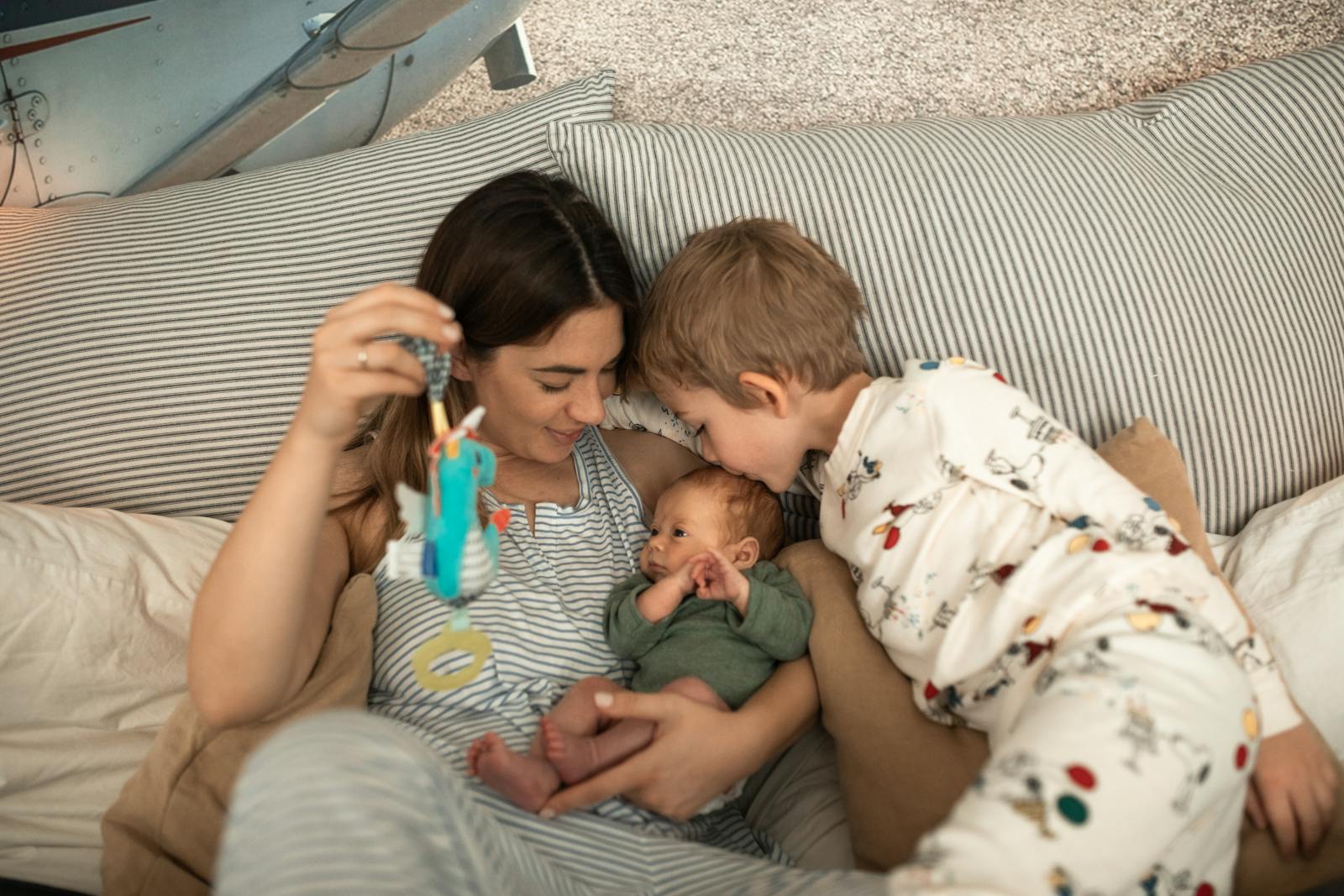
A mother juggling life with both a toddler and a newborn recently sparked a conversation that many parents are quietly having behind closed doors. She’s questioning whether it’s acceptable to skip the traditional Mother’s Day visits this year, admitting she’s simply too exhausted to play host while managing two young children.
Skipping Mother’s Day hosting duties when caring for a toddler and newborn is not rude—it’s a reasonable boundary that prioritizes the well-being of both the mother and her children during an overwhelming time. The question has resonated with parents across social media who find themselves torn between family expectations and their own limitations.
This situation highlights the tension between wanting to honor traditions and recognizing when those traditions become more burden than celebration. The discussion raises questions about what constitutes appropriate boundaries during major holidays and whether mothers should feel guilty for prioritizing their own mental and physical health during demanding life stages.

Is It Rude To Skip Mother’s Day Visits as a Mom of a Toddler and Newborn?
Many new moms grapple with the tension between honoring their own mothers and mothers-in-law while managing the overwhelming demands of caring for multiple young children. The question of skipping visits often centers on whether prioritizing rest makes someone ungrateful or if family members should understand the unique exhaustion of this life stage.
Understanding Your Own Needs
A mother juggling a toddler and newborn faces physical and emotional demands that differ significantly from those with older children. Sleep deprivation becomes compounded when one child still needs nighttime care while another requires constant daytime supervision.
The postpartum period with a newborn already requires recovery time. Adding a mobile toddler to the equation means there’s rarely a moment to sit down. Many mothers in this situation find themselves running on empty, barely managing basic daily tasks.
Some mothers report feeling guilty about choosing rest over family obligations on Mother’s Day. One mom mentioned texting her mother-in-law a happy Mother’s Day message but skipping an in-person visit, later questioning whether that made her inconsiderate. The reality is that acknowledging limitations doesn’t reflect poorly on someone’s character—it reflects an honest assessment of capacity.
How Exhaustion Changes the Dynamics
Hosting or traveling with young children transforms what should be a relaxing day into additional labor. Packing diaper bags, coordinating nap schedules, and managing meltdowns in unfamiliar settings adds stress rather than relief.
The expectation that mothers should entertain guests while caring for demanding children creates an impossible situation. One mother pointed out that Mother’s Day should be for moms, not grandmas, questioning why she should host an adult visitor and three children on what’s supposed to be her special day.
Travel with a toddler and newborn requires coordinating car seats, multiple bags, and constant attention to safety. What might be a simple hour-long drive becomes an expedition requiring military-level planning.
Family Expectations Versus Personal Boundaries
Extended family members often expect Mother’s Day gatherings without considering the new mother’s circumstances. Distance and having young children can make traditional visits impractical, yet some family members still express disappointment when a mother chooses to skip the celebration.
Etiquette experts suggest that acknowledging mothers-in-law and your own mother strengthens family bonds, but this doesn’t necessarily require in-person attendance. A thoughtful card or phone call can serve the same purpose without the physical toll of travel or hosting.
The shift in priorities becomes particularly stark when a woman becomes a mother herself. What once was a day dedicated to honoring her own mother now includes her role as the mother being celebrated.
Coping With Mother’s Day Pressure and Hosting Expectations
Many mothers with young children face tension between family expectations and their own exhaustion levels during Mother’s Day celebrations. The pressure to host gatherings while managing a toddler and newborn creates stress that can overshadow what’s meant to be a celebratory day.
Communicating Your Feelings Honestly
Some moms find themselves torn between meeting Mother’s Day expectations and acknowledging their physical and emotional limits. One mother with two young children expressed concern about whether declining to host extended family made her rude or ungrateful.
She worried about disappointing relatives who looked forward to the annual gathering. Her hesitation stemmed from years of tradition and not wanting to seem like she wasn’t appreciating the day meant to honor her.
The reality was that she felt stretched beyond capacity. Between feeding schedules, diaper changes, and managing a toddler’s needs, adding meal preparation and entertaining felt impossible. She questioned if being honest about her exhaustion would hurt feelings or create family friction.
Alternative Ways To Celebrate
Rather than hosting at home, some exhausted mothers explore scaled-back options that reduce their workload. A few families shift celebrations to restaurants or parks where the mother doesn’t need to cook or clean. Others choose video calls instead of in-person visits, allowing brief connections without the energy drain of hosting.
One approach involves spreading celebrations across multiple weekends. This lets grandparents and extended family each have shorter, separate visits rather than one overwhelming gathering. Some mothers request that visitors bring prepared food or take on specific tasks like setting up or washing dishes.
Focusing on small, meaningful gestures becomes the priority when traditional plans feel unmanageable. A quiet morning with just her immediate family might better serve a mother dealing with sleep deprivation than a full house of guests.
Balancing Self-Care With Traditions
The conflict between honoring family traditions and protecting personal wellbeing creates guilt for many new mothers. She may feel torn between what others expect and what her body and mind actually need during this demanding phase of parenting.
Being a mother to toddlers can intensify anxiety, especially when combined with caring for an infant. The constant demands leave little energy for anything beyond basic daily survival. Adding hosting duties on top of that baseline exhaustion can push someone past their breaking point.
Some mothers wonder if prioritizing rest over celebration makes them selfish. They struggle with the idea that declining to host might disappoint people who want to show appreciation for them, even though the celebration itself becomes another task on their list.
More from Decluttering Mom: