Most people assume the hardest stretch for a mom of two young kids is the one happening right now: a newborn just a week old alongside a two and a half year old who needs constant supervision. But according to this mother, the late pregnancy months were actually worse.
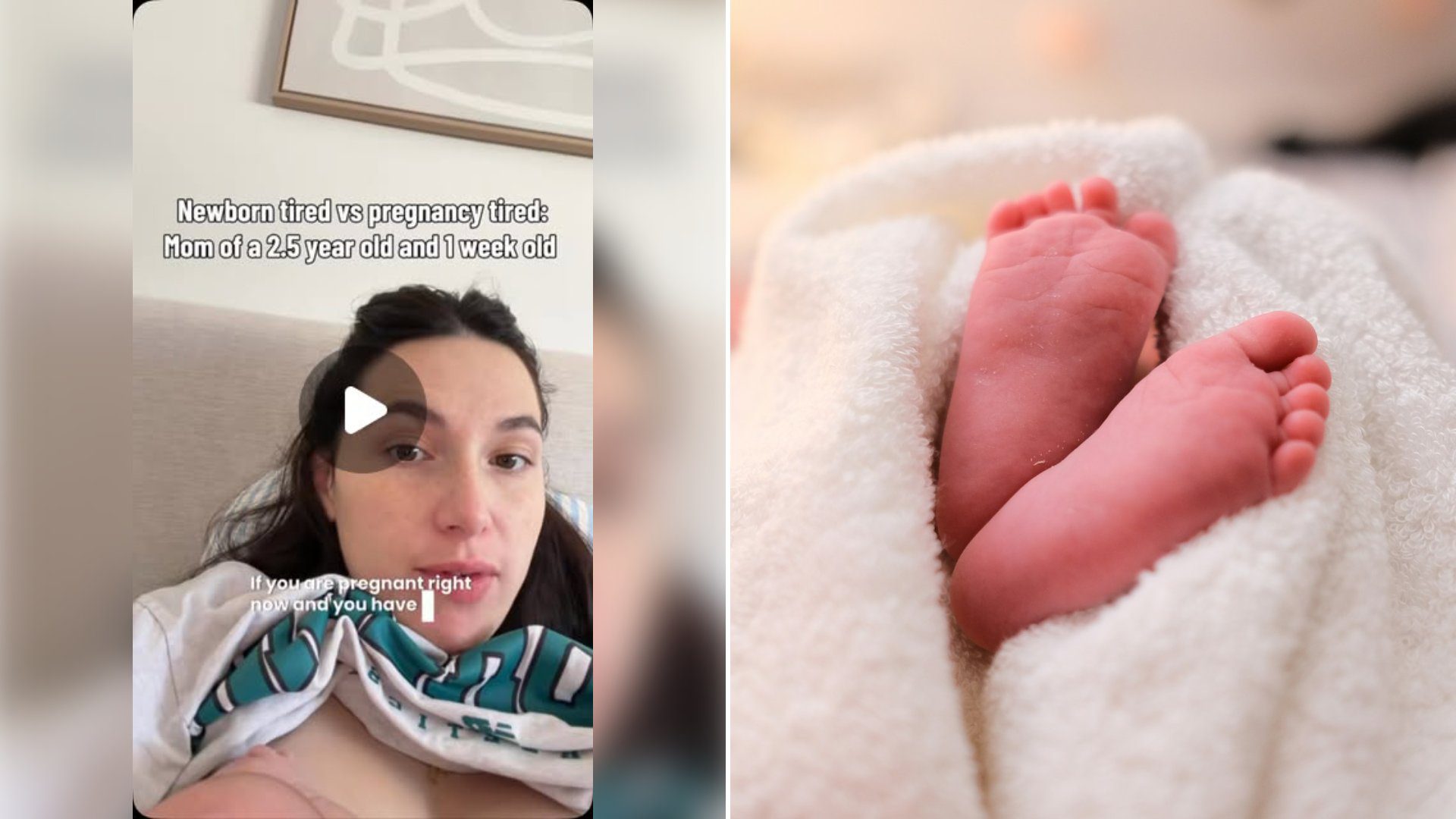
In the video posted by @kenzieebrazil, the mother of the two and a half year old and a newborn only a week old shares an opinion that she says shocked even her own friends: recovering from birth while caring for a brand new baby is, in her experience, genuinely less exhausting than being heavily pregnant while simultaneously chasing after an active toddler. It’s a counterintuitive claim on its face, since postpartum recovery involves healing from birth itself on top of newborn care, but she argues the physical toll of late pregnancy combined with toddler-wrangling was the harder combination.
There’s a legitimate physiological case for her claim, even if it runs against the common assumption that birth recovery is automatically the harder of the two. Late pregnancy, particularly the third trimester, carries its own significant physical burden: a rapidly growing uterus compresses the diaphragm and bladder, hormonal shifts loosen joints and ligaments in ways that cause pelvic and back pain, and simple tasks like bending, lifting, or getting up from the floor become progressively more difficult. All of that happens while a parent of a toddler is still expected to lift, chase, carry, and keep up with a child who has no concept of slowing down for anyone’s comfort.
By contrast, the week immediately after birth, while undeniably hard, comes with a few practical advantages that late pregnancy doesn’t offer. The weight that was compressing internal organs and joints is gone. Many new mothers describe an immediate, noticeable relief in mobility right after delivery, even while dealing with incision or perineal healing, simply because they’re no longer carrying the additional weight and pressure of a full-term pregnancy. Postpartum recovery also typically comes with more built-in rest expectations and support from partners or family in the first days, where late pregnancy often does not, since a visibly pregnant parent of a toddler is still expected to function at full capacity right up until labor begins.
Obstetric providers generally frame the two experiences as different kinds of hard rather than ranking one as objectively worse, since so much depends on the individual pregnancy, the delivery itself, and how much support a mother has in each window. A difficult delivery with complications or a cesarean recovery is going to carry a heavier physical burden than a straightforward vaginal birth, just as a physically easy pregnancy will differ enormously from one marked by severe nausea, pelvic pain, or other complications. What this mother’s video captures well, though, is that pregnancy’s physical demands don’t pause for toddler parenting duties the way labor and delivery create a hard, visible line that other people recognize and tend to show up around.
That visibility gap may be part of why her claim shocked her friends. Late pregnancy is often treated culturally as the easy, even joyful, lead-up to the real event, while the postpartum period gets flagged as the difficult stretch requiring meal trains and help. Her video flips that assumption by pointing out that invisible physical strain doesn’t always track with how much sympathy or support a parent receives, and that the demands of toddlerhood don’t pause just because a parent is nine months pregnant and running on fumes.
More from Decluttering Mom
- Mom Lying in a Hospital Bed Beside Her Newborn Twins Looks at a Photo of Her Toddler on Her Phone and Says No One Prepared Her for the Grief of Her Firstborn Not Being Her Baby
- Mom Who Told Her Own Mother She Was Pregnant With Baby Number Four Just 8 Months After Her Husband’s Vasectomy Now Shows Grandma Holding Their Little Surprise
- Mom Says She Was Already in Early Labor While Filming Herself Caring for Her Baby Chicks and Did Not Realize It Until Hours Later, Then Shares How Her Unmedicated Midwife Birth Went