

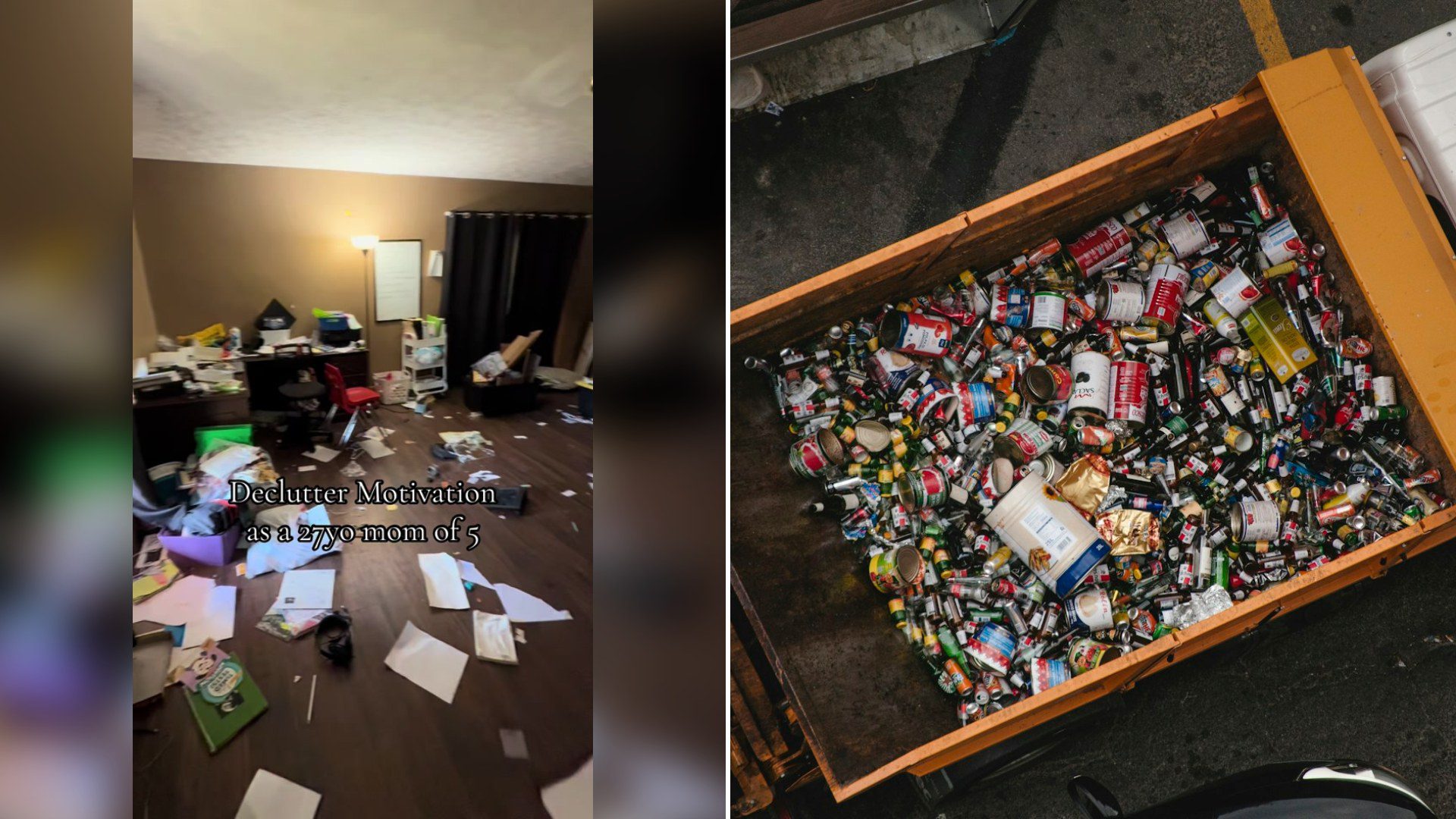
Every parent knows the cycle. You pick up the toys, and ten minutes later they are all over the floor again. Mom of five @gwennewg says she lived that cycle for a long time, until she finally decided the room would be better off with nothing in it at all. Now she is sharing the “before,” with a warning in her caption to shield your eyes, in the hope that it inspires you to declutter today.

@gwennewg
“Let This Be Your Sign to Declutter”
She opens by saying that this footage is from a couple of months ago, and the room is empty now. The problem, as she tells it, was that her kids just kept ripping everything out. She says she thought she could keep it all cleaned up, so she would pick it up and then do it all over again. Her verdict on that plan: not a good idea.
Her solution was dramatic. She threw it all away. The room that once held a mountain of belongings now holds nothing.
A Little Embarrassment, A Lot of Honesty
She admits she was reluctant to post this. She says she has shared some pretty wild things online and has had people rip her to shreds, so she is not sure why she did not post this earlier. Her best guess is that she was embarrassed by how bad the room was, which she notes is unusual for her, since she does not get embarrassed often.
The room, she says, stayed destroyed all the freaking time, and she had no idea why. Then she shares a confession that many parents will recognize: she does not know where all the stuff comes from because she does not even buy anything. People give her things, and she takes them, as she puts it, like a crazy person. She laughs it off and says they are backtracking and getting everything fixed.
The Empty Room Surprise
Perhaps the most interesting part is what happened after the clean out. She says her kids have more fun in an empty room than they did with all the junk they dragged out every single day. In the empty room, they run around and do flips.
It is a lesson in how children play. Many parents worry that fewer toys means a less stimulating childhood. But a bare floor gives kids space to move, imagine and invent their own games, and it frees the parent from the daily job of picking everything back up. Her summary for anyone who needs motivation: less mess, less stress.
Even watching the footage back stressed her out, she says. She found herself wondering why she kept doing the same thing over and over. But she closes with grace: it is okay, because it is in the past now.
Why Kids Do Better With Less
Her experience lines up with something many early childhood educators have long observed. When children have fewer items to choose from, they often play longer and more creatively with each one. A huge pile of toys can feel overwhelming to a little one, and it often leads to dumping everything out without really playing with any of it.
If you are thinking about trying a similar reset, there are gentler ways to do it than throwing away an entire room.
Try a toy rotation
Keep a small selection of toys out and store the rest in bins out of sight. Every week or two, swap a few. The old toys feel new again, and the room stays manageable.
Use the “box test”
Before the big sort, set out one or two boxes and decide that only what fits inside gets to stay in the play space. The boundaries are clear, and the kids learn to choose their favorites.
Sort broken and missing pieces first
Puzzles with missing pieces, games without rules and toys that no longer work are the easiest things to remove. They add to the pile without adding any fun.
Give kids a say
Depending on their ages, let your children help choose what goes and what stays. Children who help decide are often more willing to put things away, and they get a lesson in giving to others.
Pause the incoming stuff
She points out that she does not buy much, but people hand her things and she accepts them. It is worth gently telling family and friends what you do and do not need. You can say thank you without taking home every bag of hand-me-downs. Passing along only what you will truly use keeps the pile from growing back.
Try a one in, one out rule
Whenever a new toy or outfit comes into the house, an older one goes out to make room for it. It is a simple habit that keeps the total from creeping back up, and it teaches children that every belonging needs a place to live. Start small, with just the toy box, and add other areas as the habit takes hold.
Starting Is the Hardest Part
What stands out in her story is how simple the lesson is. A room full of things that are never put away is a room that never gets to be a room. When the clutter goes, the space is freed up for what a play space is really for: playing, resting and growing.
You do not have to remove everything to feel the benefit. Start with a single basket, a single shelf or the most chaotic corner. Take a quick look at what your children actually play with, and set aside the rest for donation or storage. If a mom of five can reset a room that kept falling apart, you can reclaim at least one small space this week.