The first shot of the reel is a man asleep in an eye mask under the title “Mornings with 4 kids + a baby.” The second is his wife, already up, walking through a dark house in pink pajamas. By the time the first timestamp appears on screen, 5:09 AM, she is in the laundry room, bent over the stacked washer and dryer. At 5:10 the washer is running and she is standing in front of it with an armful of laundry.
That is how the morning starts for the mom who posts as krystiana, and the video follows her, clock reading by clock reading, for the next three hours. Nothing is explained in text. The only words on screen are the title and the times, and the only commentary is her caption, which is about one moment in the kitchen: “In the carton or trash? I need answers.”
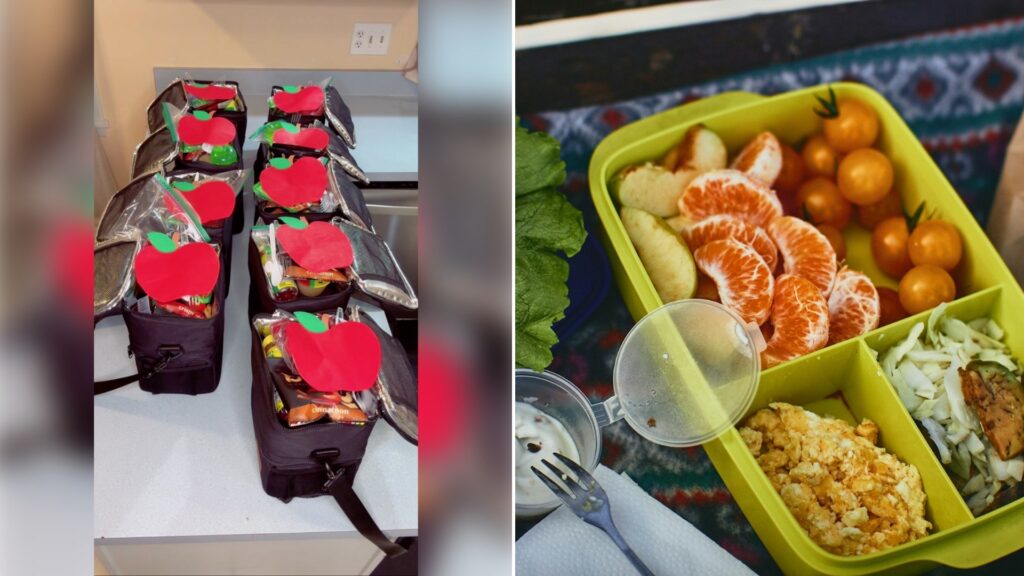
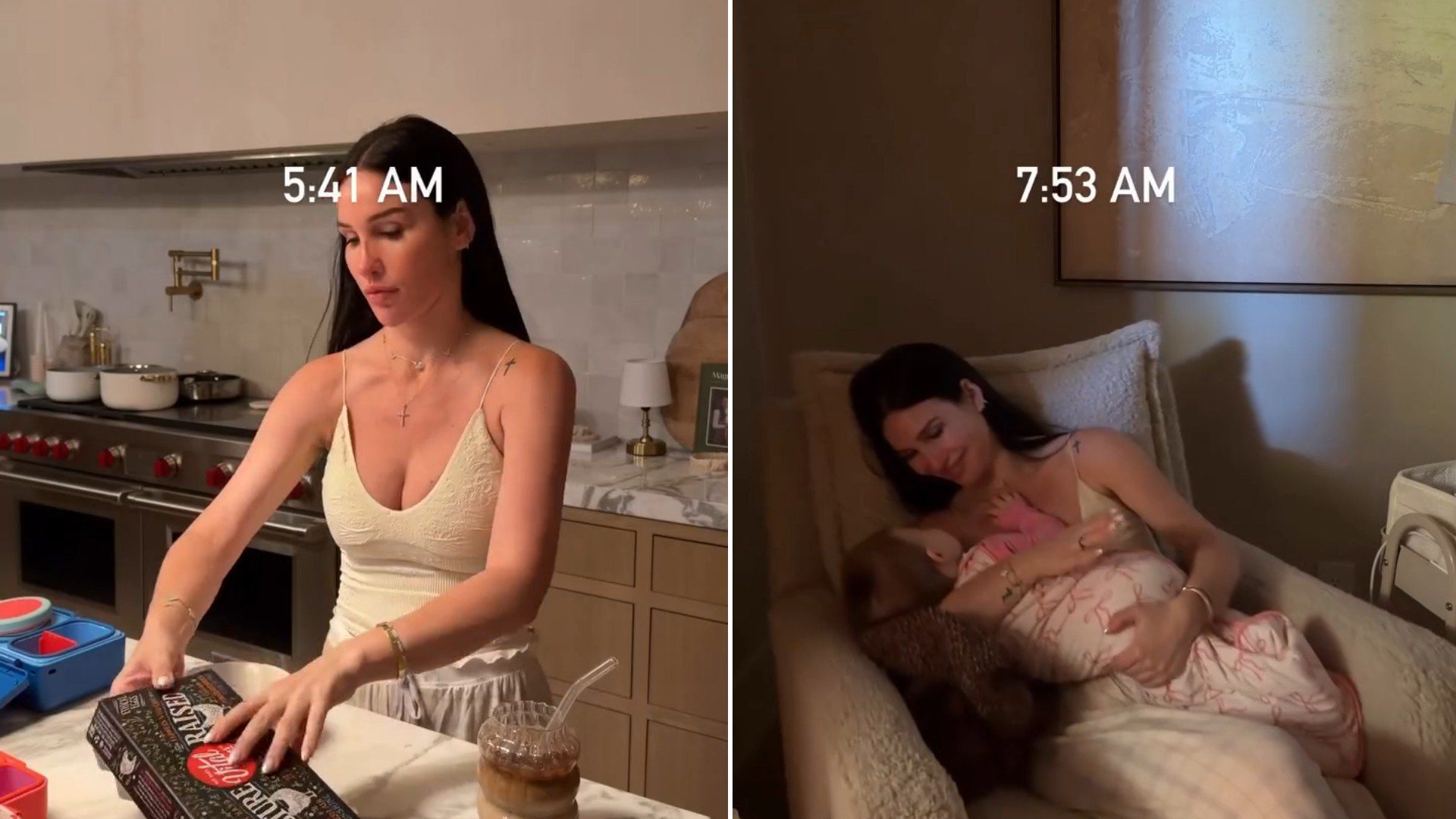
That moment comes at 5:41 AM. By then she has changed into a cream top and plaid pants, found her husband relocated to the couch under a blanket, and poured herself an iced coffee at 5:33. Lunch boxes are open on the marble island. She flips open a carton of brown eggs, looks into it, and then lifts the whole thing up and tilts it toward the camera, pointing at what is inside. Her husband wanders into the frame in a black hoodie with a mug in his hand, and the two of them have an exchange over the carton that involves a long look from him and a laugh from her. Then she gets on with it, cracking eggs into a bowl while he stands at her shoulder.
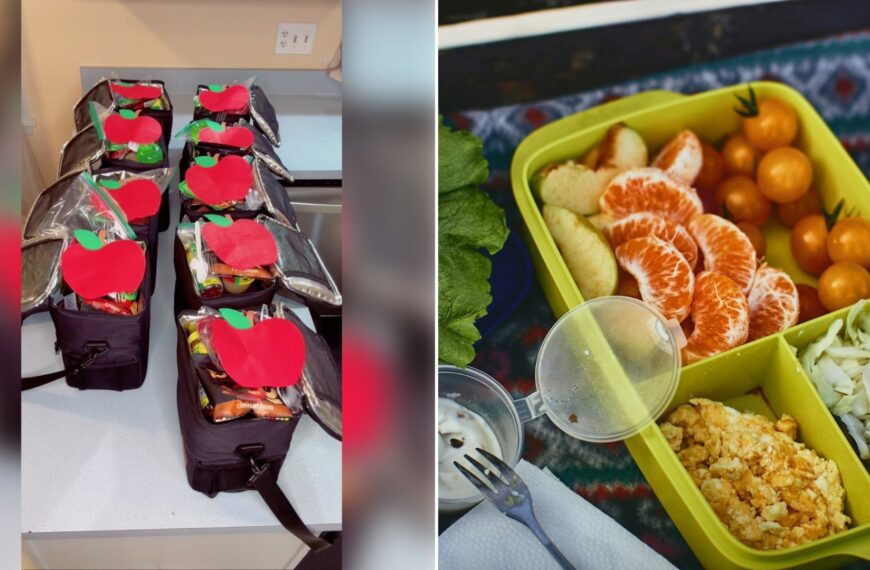
The breakfast and lunch prep continues from there. She slices strawberries onto a plate, the blue lunch boxes fill up with fruit, and at 5:58 there is bacon in a pan.
Only then do the children come into it. At 6:06 she opens the door to a dark bedroom where a night light is glowing. At 6:08 she is making the beds in that room, two spindle beds with gingham covers, pulling the quilts flat while the kids are barely out of them. At 6:12 she is walking two of the older children through a doorway and opening the curtains. At 6:17 she pushes open another door, then ducks into the laundry room to fold. At 6:29 she is pushing a door open again.
The baby is last. At 6:32 she lifts her out of the crib, changes her, and carries her into the living room to her dad, who hoists her up in the air. That frees both of her hands for 6:39, when she is at the bathroom sink doing hair, first gathering one child’s long curls into a ponytail and then combing a boy’s hair flat.
At 7:02 she is packing. Backpacks are lined up on the counter and she is zipping lunch boxes into them one at a time. At 7:10 she is standing in an open glass doorway with the baby on her hip, looking out.
The last stretch belongs to the baby. At 7:12 she is clearing the breakfast table with the baby in a high chair. At 7:29 the two of them are sitting on the floor of a playpen. At 7:49 she is making a bottle one-handed. At 7:53 she is lying back in an armchair with the baby on her chest, eyes closed. At 8:03 she is carrying her to the crib, and at 8:07, the final timestamp, she is standing alone, pushing her hair back.
Seen as a schedule, the video is useful because of where she puts things. Everything that does not need a child present happens before 6:06. The laundry is turned over, she is dressed, the coffee is made, and breakfast and lunches are well underway before the first bedroom door opens. Parents who feel behind from the minute the kids wake up may find that moving even one of those jobs earlier changes the whole morning.
She also does not get everyone up at once. The first bedroom door opens at 6:06, more doors follow at 6:17 and 6:29, and the baby is lifted out of the crib at 6:32. Staggering the wake-ups means one group is up and moving before the next needs her, and the youngest, who needs the most hands-on care, comes last and goes straight to the other parent.
The small habits count too. Beds get made the moment they are empty, so nobody has to go back to that room. Hair happens in one place, one child after another. Bags are packed at a single counter with the lunches already finished, more than an hour after the food was made. And once the bags are out the door, the reset is quick: the table at 7:12, a bottle at 7:49, and the baby carried to her crib at 8:03.
As for the caption, the reel never puts an answer on screen. The version of that argument most kitchens have is about eggshells, and whether the empty halves go back into the carton beside the whole eggs or straight into the trash. On that one, food safety advice is clear. Shells carry raw egg residue, so they should go in the trash or the compost and not back in with eggs that are still going to be stored and eaten. The carton itself goes out once it is empty.