
By the time a Florida mom of two finally heard the words “multiple myeloma,” she had already spent months being told her crushing fatigue and back pain were just part of life with a newborn. Her story is a sharp reminder that serious illness can hide behind the most ordinary postpartum complaints, and that parents, especially mothers, are still too often expected to simply power through.
Instead of a passing phase, her “postpartum issues” turned out to be an aggressive blood cancer that usually hits people decades older. The gap between those two explanations, normal recovery versus incurable disease, is exactly where too many patients get lost.
When ‘just postpartum’ is something far more serious
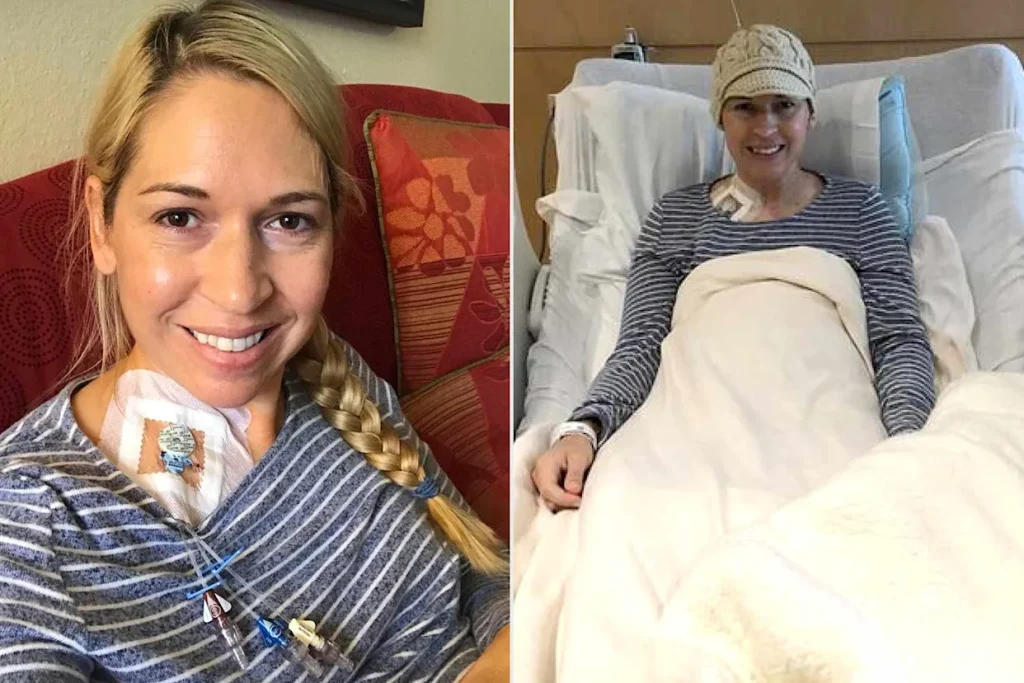
Shortly after giving birth to her second daughter, Corinne Torney started noticing that her body did not feel like it was bouncing back. The back pain, exhaustion, and night sweats that followed were brushed off as the predictable fallout of sleepless nights and lifting babies, the kind of symptoms friends and even clinicians often chalk up to the chaos of early motherhood. Instead of fading, the problems stacked up, and the reassurance that this was all part of recovery began to sound less like comfort and more like a dismissal of what she knew in her gut was wrong.
Corinne Torney lives in Florida, and she is not the stereotype of a multiple myeloma patient. The cancer she was eventually diagnosed with is a rare blood cancer that typically affects people who are ages 65 and older, not a young mother juggling diapers and daycare. Yet her experience tracks with a pattern that specialists see again and again: when a patient does not fit the expected profile, vague symptoms like fatigue and pain are more likely to be waved away instead of fully investigated.
Multiple myeloma does not care how old your kids are
Corinne Torney’s diagnosis landed at a moment when her life was supposed to be settling into a new rhythm with two small children. Instead, she was told she had an incurable cancer and would need to step back from the classroom job she loved in Hillsborough County to focus on treatment. In local interviews, Torney has urged other parents to push for answers if something feels off, stressing that get an answer from a doctor that does not sit right, it is worth seeking a second, third, or even fourth opinion. Her message is blunt: no one else lives in your body, and no one else is raising your kids, so you are allowed to insist on being taken seriously.
Her story echoes another young mother, Michelle, who also spent months being told her symptoms were nothing to worry about. Michelle’s path to diagnosis was long and frustrating, with back pain and sinus infections initially brushed off as minor issues before she finally learned she had multiple myeloma. In a separate account, Dec Michelle explains that she was diagnosed in 2016 at the age of 35, when she had a one-year-old and a 5-year-old at home, and that her early complaints were also minimized. These parallel experiences, separated by years and geography, underline a hard truth: aggressive blood cancers can and do strike people in the thick of parenting young children, and the health system is still catching up to that reality.
Advocacy, second opinions, and the cost of being brushed off
By the time Corinne Torney finally received a full workup, her cancer had advanced far beyond what anyone wants to hear in their thirties. She has described how her initial concerns were treated as routine postpartum discomfort, only for later scans and blood tests to reveal extensive disease. In one account, the framing is stark, noting that her symptoms were minimized and Diagnosed with Incurable Cancer. That whiplash, from “you are fine” to “this will never fully go away,” is not just emotionally brutal, it can also narrow the treatment window for a disease that responds best when caught early.
Her experience has turned Torney into a vocal advocate for self-advocacy, especially for women whose symptoms are too easily folded into a narrative of stress, hormones, or parenting burnout. In local coverage, she has urged others to be their own advocate after her incurable cancer diagnosis, pointing out that statistically, multiple myeloma is expected in much older patients, which can bias clinicians away from considering it in someone her age. Another detailed report on her case notes how her chronic fatigue and back pain were initially labeled as Postpartum Issues, only for later testing to reveal the real cause.
For patients and families, the takeaway is not to panic at every ache, but to notice patterns. Symptoms that are getting worse instead of better, pain that does not respond to basic care, or fatigue that feels bone deep rather than sleep related all deserve a closer look. Torney’s case, along with the experiences of Dec Michelle and others, shows how easily serious disease can hide in plain sight when everyone assumes a young mom is simply tired. Her story, and the stories of other parents living with multiple myeloma, are a push to clinicians and families alike to recognize that “just postpartum” should never be the end of the conversation when a patient keeps saying something is wrong.
More from Decluttering Mom: