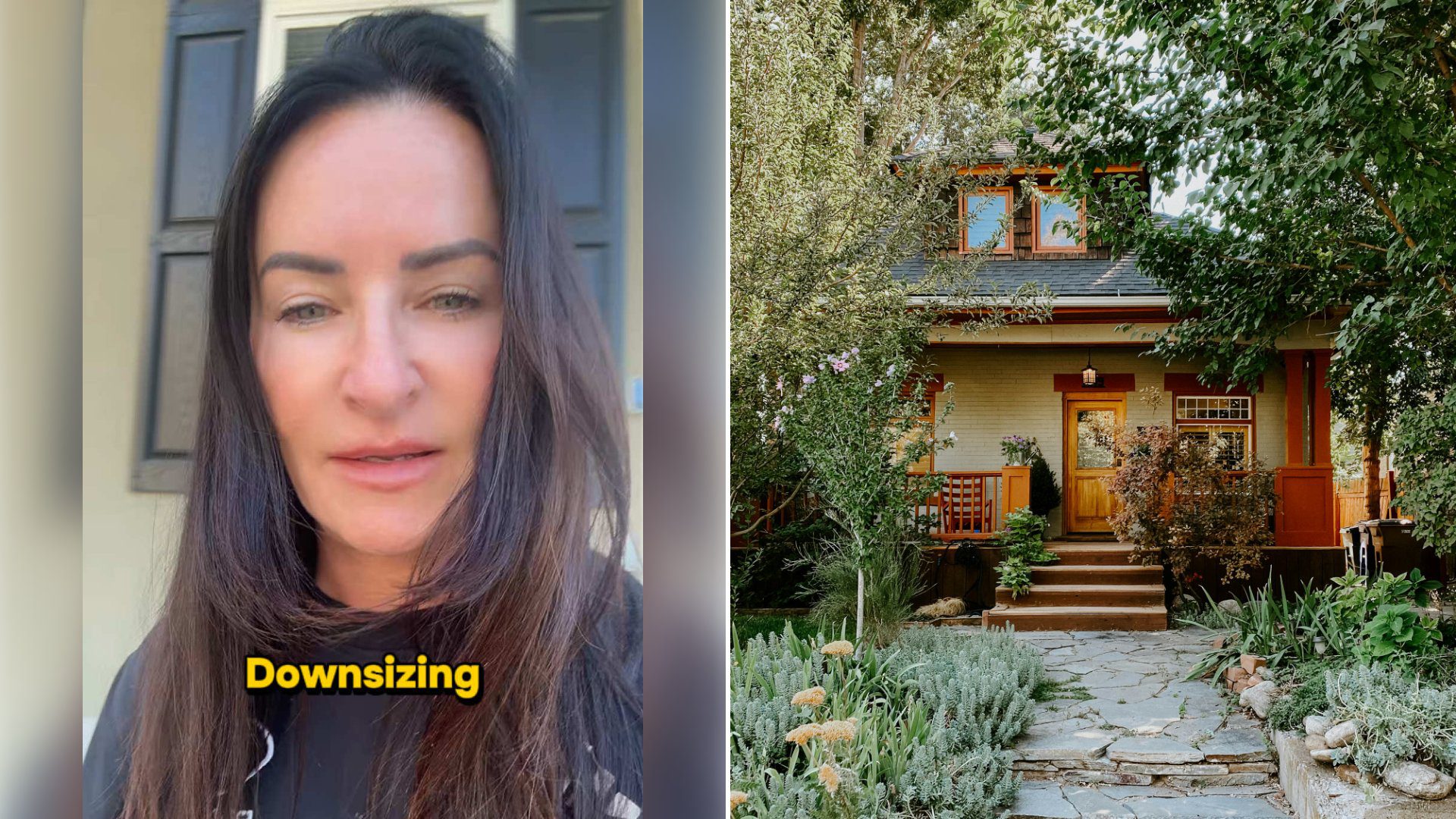
A video from the account Coach Steph shows a woman speaking directly to the camera on what looks like a front porch, with “Downsizing” stamped across the screen in bold yellow text. Her caption frames the move in a single phrase: “Uno Reverse…. downsizing & simplifying. Less maintenance = more TIME & PEACE & TRAVEL!” tagged with #50, #downsizing, #mom, #peace, and #time. The clip, posted after 20 years in the same home, has pulled in more than 50,000 likes, over 4,200 comments, and 12,500 shares from people clearly going through, or dreading, the exact same decision.
@coachstephbritt Uno Reverse…. downsizing & simplifying. Less maintenance = more TIME & PEACE & TRAVEL! 🧳 🌎 🇮🇹 ✈️ #downsizing #mom #peace #time
The “Uno Reverse” framing is doing real work here. For two decades, a bigger home with more space was the upgrade: more rooms for kids, more storage, more square footage to grow into. Once the kids are grown and gone, that same square footage flips from an asset into a burden, more rooms to clean, more systems to maintain, more yard to mow, more stuff accumulated over 20 years that now has to be sorted through before a move can even happen. Reversing that decision, the video argues, isn’t a step backward; it’s trading square footage for time, and for a 50-year-old looking at the next chapter, time reads differently than it did at 30.
The move itself is rarely as simple as the caption’s three-word summary suggests. Industry cost breakdowns for 2026 put the price of a local move, even a straightforward one without long-distance hauling, in the range of several hundred to a few thousand dollars depending on home size, how much professional labor is hired, and how far the new place is from the old one; a full-service move out of a 20-year family home, with its accumulated furniture and storage, tends to land well above a studio or one-bedroom relocation. That’s before factoring in the sorting work itself, which is often the part people underestimate most: two decades in one house means two decades of decisions about what comes along and what doesn’t, made room by room, often under a deadline.
What the video’s own framing gets right is the trade on the other side of that cost. A smaller home generally means a smaller mortgage or rent payment, lower property taxes, less in utility bills, and meaningfully less time spent on upkeep, time that empty-nest-stage parents are, by definition, no longer spending on school runs, kids’ activities, or a house sized for a family that no longer lives there full time. Surveys of people going through this exact transition consistently cite the same handful of motivations: wanting less maintenance, wanting to free up equity, and wanting the flexibility to travel without worrying about an empty, high-maintenance house sitting back home.
For anyone eyeing the same move, the practical sequencing matters more than the emotional decision. Getting a real moving estimate early, from more than one mover, avoids the sticker shock of a bill that didn’t account for a 20-year accumulation of belongings. Sorting and downsizing possessions before the move, rather than packing everything and sorting later in a smaller space, cuts both the moving bill and the number of boxes that end up unopened in a new garage. And setting a firm cutoff date for decisions, rather than letting sorting drag on indefinitely, keeps a simplifying move from becoming its own long, draining project. The destination this video is selling, after all, isn’t a smaller house. It’s the time and peace that come from not maintaining a bigger one.
More from Decluttering Mom
- Former New Orleans Homeowner Says She Sold 99 Percent of Everything She Owned in 2007, Left With a Backpack and Has Lived in Studio Apartments for Almost 20 Years Since
- Homeowner Clearing the Hoarded Condo She Inherited From Her Late Dad Says She Was Punished as a Child for Throwing Things Away and Stopped Visiting to Keep Them Close
- Homeowner Whose Husband Said He Could Not See the Garage Floor Hauls Out Four Years of Stuff, Patches and Paints One Wall White, Then Hangs Bikes, Helmets and a Vacuum on Rails