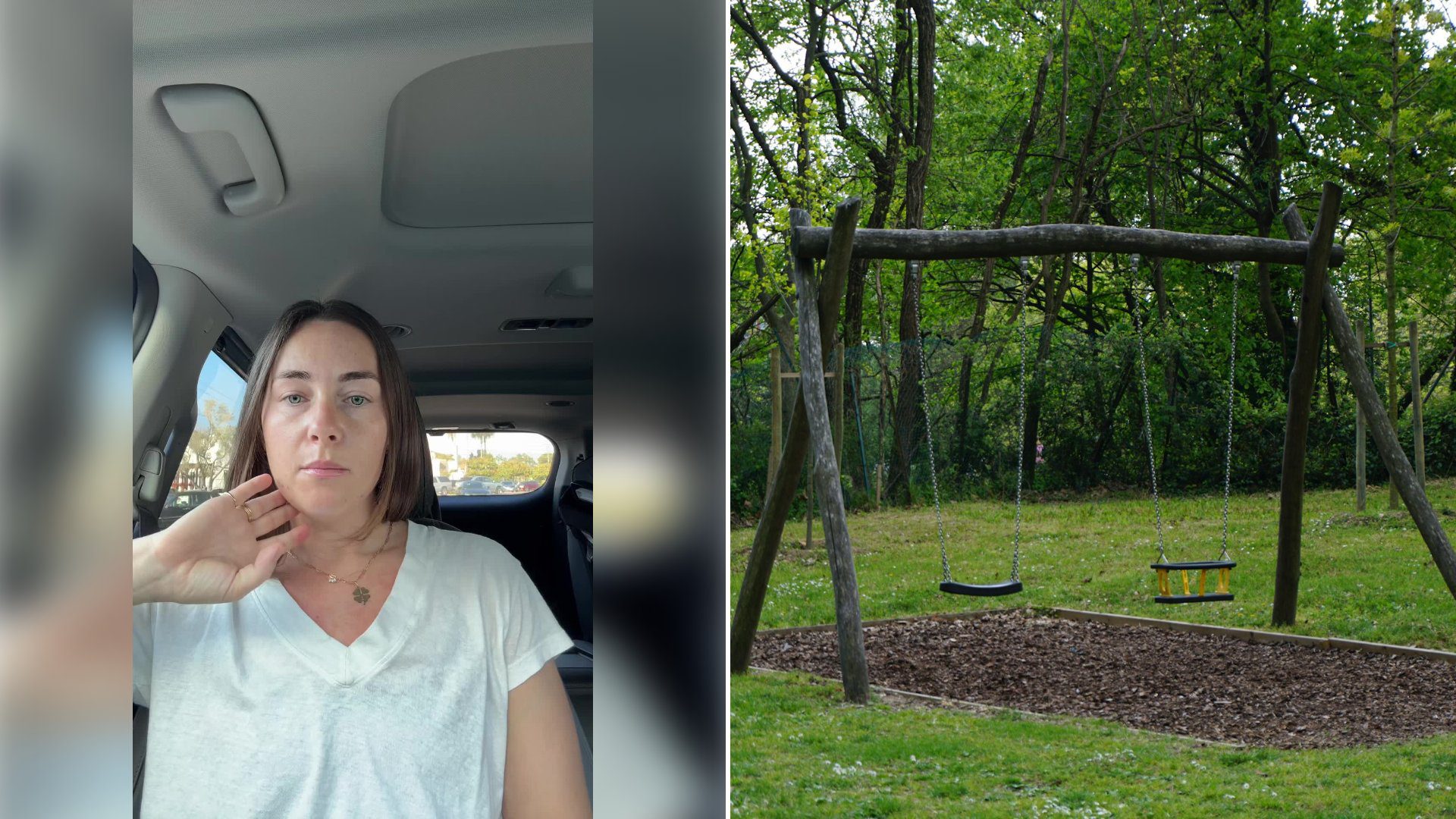
“My four and a half year old has been hit twice by the same boy at school, and both times she’s told him, please stop. I do not like that.” That is how @haleyreidtay, who goes by Haley on TikTok, opens a short video filmed from the driver’s seat of her car.
She then tells viewers what she said to her daughter when she heard about it. “The third time he does it, you are allowed to do whatever you need to do to get the point across that he’s not allowed to touch you,” Haley recalls telling her. “You can hit him back, you can yell and scream at him.” The only goal she gave the girl, she says, was to “make sure he knows that he’s not allowed to touch you.”
Haley admits the decision did not come easily. “At first I did feel a little bit conflicted over this,” she says, and then: “Not anymore.” Her reason is about the message she believes boys and girls each receive. In her words, she will not contribute to a society “that tells boys it is okay to hurt other people and expects the girls to just ask them nicely to stop.”
She goes further in the second half of the video. Boys, she argues, “are told all of their lives that they are more important,” and adults worry more about what might happen to them than about what they are doing to other people. She connects that pattern to men who go on to commit sexual violence against women, and her caption makes the same link, saying “it starts in preschool.” She ends by repeating that she is “not contributing to that society anymore.” The video does not say whether a third incident has happened.
What the Federal Bullying Guidance Says
Her daughter already did what young children are usually taught to do first. A guide for early education providers published on the federal government’s StopBullying.gov says children at this age “should be taught to say ‘STOP’ and to immediately go get an adult,” and that staff may need to explain that reporting is not tattling, because “reporting is necessary to keep children safe.”
The same guide notes that younger children tend to see bullying simply as hurtful and aggressive behavior, without recognizing the repetition or power imbalance that older kids and adults look for. It tells caregivers to step in quickly to stop aggression, explain calmly why it hurt someone, and share aggressive behavior with parents.
On hitting back, the federal advice parts ways with Haley’s. StopBullying.gov’s page on supporting the children involved says plainly, “Do not tell the child to physically fight back against the child who is bullying,” warning that it “could get the child hurt, suspended, or expelled.” The same page tells parents to “assure the child that bullying is not their fault,” never to tell the child to ignore it, and to work with the school rather than contacting the other family directly, since that “may make matters worse.”
If Your Child Says the Same Classmate Keeps Hitting
Start by getting the details from your child in a calm moment: when it happened, where in the classroom or playground, what the other child did, and what your child said back. Haley’s daughter could tell her exactly what she said both times, which is the kind of detail a teacher can act on.
Tell your child it is not their fault, and praise what they already did right. Saying “please stop, I do not like that” is a clear boundary for a four year old, and hearing that it was the right move makes it more likely they will use it again.
Write down each incident with the date and what your child reported, then contact the teacher or director in writing the same day. Ask what the staff saw, what they will do to stop it, and how they will tell you if it happens again. A dated note gives the school something concrete to follow up on.
Give your child a third step that does not depend on luck. Practice it at home: say stop in a loud, firm voice, move away from the other child, and go straight to a grown up. Role play it a few times so the words come out under stress.
If you do decide, as Haley did, that your child may defend herself, know the school’s rules before the third time comes. Ask how the program handles a child who hits back, so a defensive shove does not leave your child the one sent home.
More from Decluttering Mom
- My Daughter Came Home Crying After a Boy Threatened to Hurt Her at School, and the School’s Response Left Me Even More Furious
- She’s Speaking Out After Her Daughter Was Bullied by Classmates
- Mother Says Her Son Spent His First Preschool Day Trying to Join Other Children, Then Came Home and Fell Asleep After Playing Alone All Day at School